
SpySeller

How Much Money Can You Make Selling on Etsy?

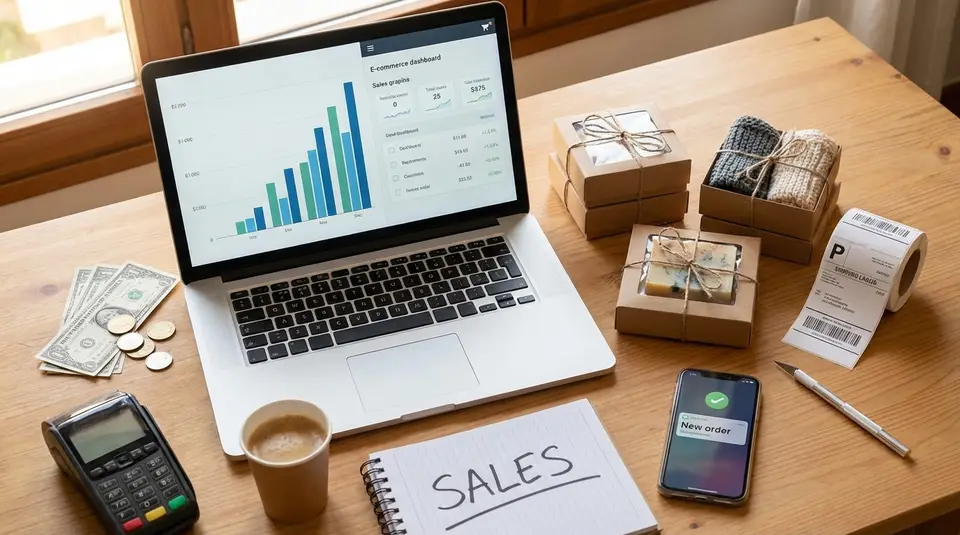
How much money you can make selling on Etsy depends hugely on your niche, pricing, and how seriously you treat your shop. Many new sellers earn under $100 per month, while growing shops commonly reach $500–$1,000+ per month, and a smaller group of top sellers make full‑time incomes or even six figures a year.

In this guide, you’ll see realistic income ranges, how Etsy fees and expenses affect profit, and what separates casual hobby sellers from successful Etsy businesses. By understanding the numbers and the work involved, you’ll be able to decide what “success” looks like for you and how much money you can make selling on Etsy.

What does a “typical” Etsy income really look like?

A “typical” Etsy income is much smaller than the viral six‑figure screenshots you see online. Etsy is huge, but most sellers treat it as a side income, and earnings are very uneven across the platform.

Recent marketplace data shows sellers collectively earned a little over 10 billion dollars in 2024, spread across roughly 5–8 million active shops, depending on how you count them. That works out to only around $1,000–$3,000 per seller per year on average, and many shops are barely active at all.

So think of Etsy income like a pyramid: a big base of tiny or inactive shops, a middle layer of steady side hustles, and a very thin top of high earners.

Average monthly and yearly earnings people report

When you look at surveys and platform‑wide stats together, a rough picture emerges:

  • Many casual or new sellers report $0–$100 per month while they are learning the basics and only have a few listings.
  • Once a shop is reasonably set up and getting consistent orders, $100–$1,000 per month in revenue is common for active but still small shops.
  • Independent analyses that combine Etsy’s seller counts with total seller revenue suggest that the “average” seller lands around $1,000–$3,000 per year, while only a minority cross $10,000+ per year.

Remember, these are revenue numbers, not profit. After materials, fees, and taxes, take‑home income is lower.

How much beginners usually make in their first year

Most beginners start slowly. In the first few months, it is very normal to see only a handful of sales:

  • Many new shops earn $0–$100 in their first month, then gradually climb as they improve photos, SEO, and pricing.
  • For sellers who stick with it and keep adding products, a first‑year total of roughly $1,000–$10,000 in revenue is a realistic range, with the lower end being more common.

A lot depends on how quickly you learn the platform, how many listings you create, and whether your niche has steady demand. Many shops never move past “beer‑money” levels, but a focused beginner can absolutely reach a few hundred dollars a month by the end of year one.

What top 1% Etsy shops can earn at the high end

At the very top, Etsy income can be huge, but these shops are rare and usually run like full businesses.

Studies of income distribution on Etsy suggest that roughly the top 1% of sellers capture a large share of total revenue, often running multiple staff, outsourcing production, or using scalable models like print‑on‑demand and digital products.

Public examples and income reports show:

  • Some leading shops generate hundreds of thousands of dollars in yearly revenue, and a small fraction reach seven figures.
  • Third‑party analyses of seller data mention top earners making $50,000+ per month, especially in high‑volume niches like jewelry, personalized gifts, and print‑on‑demand.

These results are absolutely possible, but they are not typical. They usually come after years of testing products, building a strong brand, and treating the Etsy shop as a serious, data‑driven business rather than a casual craft project.

How much can you make on Etsy as a side hustle vs full-time?

Income ranges for casual and hobby sellers

If you treat Etsy as a light side hobby, the income is usually small but fun. Many casual sellers list a few items, do little or no marketing, and pop into their shop when they have time. Surveys and recent income breakdowns suggest these hobby shops often bring in around 50 to 300 dollars per month in revenue once they have a few sales coming in.

Over a year, that works out to roughly 600 to 3,000 dollars, which often just covers craft supplies or gives a bit of extra spending money. Platform-wide data also shows that a large share of Etsy sellers earn only a modest amount, using it mainly as supplemental income rather than a main paycheck.

This level is perfect if you want to test ideas, learn the platform, or simply fund your hobby without pressure.

What part-time but serious sellers tend to earn

Once you move from “I list things when I feel like it” to “I have a plan,” your Etsy income picture changes a lot. Part-time but serious sellers usually:

  • Work 10 to 20 hours per week on their shop
  • Keep a focused product line and improve listings regularly
  • Pay attention to SEO, photos, and customer service

At this stage, realistic ranges from multiple recent guides put side‑hustle shops around 500 to 2,500 dollars per month in revenue, depending on niche, pricing, and how optimized the shop is.

Some digital or print‑on‑demand shops that scale well can push into the 1,000 to 2,000 dollars per month range with part‑time hours, especially after the first year, because they are not limited by how many items they can physically make.

For many people in the United States, that level feels like a strong side hustle: it can cover a car payment, student loans, or a chunk of rent while you keep your main job.

Realistic income potential for full-time Etsy shop owners

Full-time Etsy shop owners treat their store like a real business. They often work 30 to 40+ hours per week, track their numbers, and reinvest in tools, branding, and marketing. For these sellers, several up‑to‑date income breakdowns show a common range of about 3,000 to 10,000 dollars per month in revenue once the shop is established.

Plenty of full‑time shops sit in the 2,000 to 5,000 dollars per month band, which can be a solid living in many areas after costs, especially if overhead is low.

At the very top, the top 1 percent of Etsy sellers can reach six‑ or even seven‑figure annual revenue, but they are rare and usually have huge order volume, strong systems, and often a team.

So, is a full‑time income on Etsy possible? Yes, but it usually comes after months or years of consistent work, smart product choices, and a willingness to treat your shop as a real business rather than a casual side project.

What actually affects how much money you make on Etsy?

How much you earn on Etsy is not random. It mostly comes down to what you sell, how you present it, and how many people actually see it. Let’s break down the big levers you can control.

Niche and product type (digital, handmade, vintage, supplies)

Your niche and product type shape both your prices and your workload.

  • Digital products (printables, templates, digital art) usually have high margins because there is no inventory or shipping. The challenge is competition and the need for strong SEO and design to stand out.
  • Handmade items can command higher prices if they are unique, personalized, or labor‑intensive. But your income is limited by how fast you can produce and fulfill orders.
  • Vintage depends heavily on sourcing. Rare, on‑trend, or branded pieces can sell for premium prices, but finding and listing them takes time and knowledge.
  • Supplies (beads, blanks, patterns, craft materials) often sell in higher volume with lower margins per item. Many successful supply shops rely on repeat buyers and bulk orders.

Within each type, a clear, focused niche usually earns more than a “sell everything” shop, because buyers and Etsy’s algorithm both understand what you are about.

Pricing, perceived value, and order size

On Etsy, perceived value matters as much as the actual price. Shoppers judge value based on:

  • Quality of photos and branding
  • How premium or unique the product feels
  • Clear descriptions, sizing, and materials
  • Processing time, shipping speed, and policies

If your pricing is too low, people may assume the quality is poor. If it is too high without a clear reason, they will click away. The sweet spot is a price that covers your costs, pays you for your time, and still feels fair for the level of craftsmanship or usefulness.

Average order size also affects income. Sellers who offer bundles, sets, or add‑ons (like gift wrap or personalization fees) often earn more per customer than those who only sell single low‑priced items.

Photos, branding, and social proof (reviews + favorites)

Your photos and branding are what turn views into sales.

  • Photos should be bright, clear, and show the product in use and up close. Since most Etsy traffic is now on mobile, images need to be easy to understand at a glance.
  • Branding includes your logo, banner, listing style, and tone of voice. A consistent look builds trust and makes your shop feel like a real brand, not a random side project.
  • Social proof is huge. Reviews, star ratings, and even the number of sales and favorites signal that other people trust you. A listing with strong reviews can convert far better than a similar one with no history, which directly boosts your revenue.

Happy customers who leave detailed reviews and photos often become your best marketing asset.

Traffic sources: Etsy search, social media, email, and ads

You cannot make money on Etsy without traffic, and most shops get a mix of:

  • Etsy search and browse. For many sellers, this is the main source of visits. Good keywords in your titles, tags, and descriptions help Etsy match your listings to what buyers are typing in.
  • Etsy Ads and Offsite Ads. Paid ads can push your listings higher in search or show them on other sites. Used wisely, they can increase traffic and test which products are worth scaling.
  • Social media. Platforms like Instagram, TikTok, Pinterest, and Facebook can send highly targeted visitors who already like your style. This is especially powerful for visual niches like jewelry, home décor, and art.
  • Email and repeat buyers. A simple email list or newsletter can bring past customers back for new launches, seasonal products, or bundles. Even though email is a smaller traffic source overall, it often converts very well because those people already know you.

The more high‑quality traffic you can attract from several sources, the more stable and scalable your Etsy income becomes.

How much do Etsy fees and costs eat into your profits?

Listing, transaction, and payment processing fees explained

Etsy fees look small on paper, but together they take a noticeable bite out of every sale. As of late 2025, here are the main ones to understand in the United States:

  • Listing fee: You pay $0.20 per listing every time you create or renew a listing, whether it sells or not. It lasts up to 4 months.
  • Transaction fee: Etsy charges a 6.5% transaction fee on the item price plus the shipping and gift wrap you charge the buyer.
  • Payment processing fee (Etsy Payments): In the U.S., this is typically 3% + $0.25 per order. This is similar to credit card processing on other platforms.

These three are the core Etsy fees that hit almost every order. When you add them up, it is common to see around 10–15% of your sale price go to Etsy before you even think about materials or your time.


Extra costs like Etsy Ads, offsite ads, and shipping labels

On top of the standard fees, there are optional or situational costs that can shrink your profit if you are not watching them:

  • Etsy Ads: You set a daily budget and pay per click. If your ads are not converting well, ad spend can easily eat 10–30% of your revenue.
  • Offsite Ads: If Etsy promotes your listing off the platform and that ad leads to a sale, you pay an extra advertising fee (a percentage of the order total). This only applies when the sale is attributed to those ads.
  • Shipping labels: If you buy labels through Etsy, the cost is deducted from your balance. It is convenient, but still a real expense that must be included in your pricing.
  • Currency conversion and regulatory fees (where applicable): If you sell internationally, there may be small extra percentages for currency conversion or compliance fees.

None of these are “bad” by themselves, but they must be part of your pricing math, not an afterthought.


Material, packaging, and labor costs most new sellers forget

Many new Etsy sellers only think about the cost of materials and ignore everything else. To get a realistic profit number, you should include:

  • Materials: The obvious stuff like beads, fabric, paper, ink, blanks, or digital tools you pay for.
  • Packaging: Boxes, mailers, tissue paper, tape, stickers, thank-you cards, and any protective padding.
  • Shipping supplies: Labels, printer ink, scale, and any special inserts.
  • Labor: Your time to design, make, photograph, list, pack, and ship. Even if you do not pay yourself an hourly wage yet, it is smart to estimate one so you know if the shop is truly worth your time.
  • Overhead: A share of things like software subscriptions, design tools, equipment, and even a portion of your workspace costs if you choose to track them.

When you add all of this up, it is common for total costs (fees + materials + labor) to reach 60–80% of your sale price if your prices are low or your products are time‑intensive.


Simple example: turning a $30 sale into real take-home profit

Let’s walk through a simple, realistic example for a U.S. Etsy seller making a $30 sale (item price only, not including tax the buyer pays).

Assume:

  • Item price: $30
  • Buyer pays $5 shipping
  • You buy a shipping label for $4
  • Materials and packaging cost you $8
  • You are not using Etsy Ads for this order

1. Etsy fees

  • Listing fee: $0.20
  • Transaction fee: 6.5% of item + shipping
  • 6.5% of $35 = $2.28
  • Payment processing fee: 3% + $0.25 on $35
  • 3% of $35 = $1.05
  • $1.05 + $0.25 = $1.30

Total Etsy + payment fees:

  • $0.20 + $2.28 + $1.30 = $3.78

2. Shipping and product costs

  • Shipping label: $4.00
  • Materials + packaging: $8.00

Total non‑Etsy costs:

  • $4.00 + $8.00 = $12.00

3. Your real profit

  • Revenue from buyer: $30 item + $5 shipping = $35.00
  • Minus Etsy + payment fees: $3.78
  • Minus shipping + materials: $12.00

Net profit:

  • $35.00 − $3.78 − $12.00 = $19.22

So from a $30 product, you actually keep about $19 before counting your own labor and any overhead. If it took you an hour to make and ship that order, you are paying yourself about $19/hour. If it took two hours, that drops to about $9.50/hour.

This is why understanding Etsy fees and costs is so important. Once you know how much they eat into your profits, you can price with confidence and build a shop that actually pays you, not just keeps you busy.

What are realistic income examples by product type?

How much you can make selling digital downloads and printables

Digital downloads and printables are one of the highest‑margin product types on Etsy, because you create a file once and sell it many times. Profit margins of 70–90% after Etsy fees are common when you price well and design in-demand products.

For realistic income ranges, many new printable and digital download shops earn anywhere from $0 to $100 per month in the first few months while they learn the platform. With a focused niche and 20–50 solid listings, it is common to see $100–$500 per month. Consistent, optimized shops that treat this like a real business often reach $500–$2,000+ per month, and a small minority of top sellers report $5,000–$10,000+ per month in revenue from digital products alone.

Your actual income depends heavily on your niche (planners vs. wall art vs. business templates), how well you understand SEO, and how many high‑quality listings you publish.

Typical earnings for handmade jewelry and accessories

Handmade jewelry and accessories usually have lower margins than digital products but can command strong prices if your designs feel unique and well branded. Studies of Etsy jewelry pricing show many personalized or semi‑custom pieces selling in the $30–$70 range, with efficient makers keeping 40–60% of that as profit after materials and fees.

In practice, a small, newer jewelry shop might bring in $100–$300 per month in revenue with a handful of sales each week. Once you have a recognizable style, repeat buyers, and a good review base, it is realistic to see $500–$2,000 per month. Established brands with strong social media and higher‑priced pieces can grow into the $3,000–$10,000+ per month range, but that usually requires streamlined production, help with fulfillment, and a clear brand story.

Income potential for clothing, home décor, and personalized gifts

Clothing, home décor, and personalized gifts sit in a “middle” zone: higher order values, but more work per order. Custom shirts, sweatshirts, and similar apparel often sell for $20–$50 each, while personalized home décor and gift items (signs, cutting boards, pillows, ornaments) can range from $25–$100+ depending on complexity.

For many small shops, that translates to a few hundred dollars per month at first. Sellers who dial in a specific audience (for example, weddings, baby gifts, or pet lovers) and build a catalog of bestsellers can grow to $1,000–$5,000 per month. Top performers who combine Etsy with outside traffic and premium pricing sometimes reach five‑figure monthly revenue, but that is the exception, not the rule.

What sellers of craft supplies, tools, and print‑on‑demand can expect

Craft supplies and tools usually run on lower margins but higher volume. Many supply items are priced under $10–$20, so you need a lot of orders to hit big income numbers. Successful supply shops often rely on repeat buyers and bulk orders; realistic ranges are $500–$3,000 per month for steady, well‑reviewed stores, with some niche wholesalers going higher if they move serious volume.

Print‑on‑demand (POD) sellers, who design graphics that are printed and shipped by a third‑party provider, typically see profit margins around 20–40% per sale after production costs and Etsy fees.

Across many case studies, realistic POD profit looks like:

  • Side‑hustle level: about $50–$500 per month once you have a few winning designs.
  • Serious part‑time: roughly $1,000–$4,000 per month with a focused niche, strong listings, and some ad spend.
  • Full‑time level: $5,000–$10,000+ per month in profit for a small minority of highly optimized shops with lots of proven designs and consistent marketing.

So by product type, income on Etsy can range from “nice coffee money” to a serious salary. The key is matching your expectations to your category, your prices, and how much time you are truly willing to invest.

How long does it usually take for an Etsy shop to make good money?

Common timelines for first sale, $500/month, and $1,000/month

Most new Etsy shops do not explode overnight. For a typical, reasonably well set up shop:

  • First sale: Many sellers see their first order within 1 to 4 weeks, especially if they have at least 10–20 listings and share their shop on social media. Some get a sale in a few days, while others wait 1–3 months if they list slowly or do little promotion.

  • Reaching around $500/month in revenue: With consistent work on listings, photos, and SEO, a lot of “serious side‑hustle” shops reach $300–$600 per month somewhere around months 4–6. That is often the point where they have 20–50 listings and a handful of reviews.

  • Reaching around $1,000/month in revenue: Hitting roughly $500–$1,000+ per month is realistic in about 6–12 months for sellers who treat their shop like a real business and keep improving. Some data and case studies suggest many shops that do reach $1,000/month do so in the 12–18 month range.

These ranges assume you are actively adding products, learning Etsy SEO, and improving your offers. If you only list a few items and rarely log in, everything takes much longer.

Why some shops grow quickly while others stall

Shops that grow fast usually have a few things in common:

  • In‑demand niche and clear target customer. They sell what people are already searching for, not just what they personally feel like making.
  • Enough listings. Stores with 20–50+ well‑optimized listings give Etsy more chances to show them in search and discover “winners.” Very small catalogs tend to grow slowly.
  • Strong SEO and photos. They use relevant keywords in titles, tags, and descriptions, and their photos make the product look trustworthy and desirable.
  • Consistent activity. They tweak listings, add new products, and respond quickly to messages, which helps both the algorithm and conversion rate.

Shops stall when:

  • They sit at under 10–15 listings for months.
  • The niche is extremely saturated with no clear twist or value.
  • Pricing is off (either too high for the perceived value or so low that buyers are suspicious).
  • The owner gives up testing and assumes “Etsy is dead” instead of adjusting.

Signs your shop is ready to scale your income

You do not need thousands of sales to start thinking bigger. Your Etsy shop is usually ready to scale when:

  • You get views and favorites every week, not just when you post on social media. That means Etsy search is starting to work for you.
  • You have at least one proven bestseller that sells repeatedly without heavy promotion.
  • Conversion rate is healthy (for many niches, something in the 2–5%+ range is a good sign) and reviews are mostly 5 stars.
  • You understand your customer. You can clearly describe who buys from you, why they choose your product, and which keywords they use.
  • You can fulfill orders reliably. Your production and shipping process feels smooth enough that doubling orders would be exciting, not terrifying.

When those pieces are in place, putting in more time, adding related products, or testing ads and email marketing has a much better chance of turning your Etsy shop from “occasional pocket money” into steady, meaningful income.

How many sales do you need to hit your income goal?

Working backwards from $500, $1,000, and $5,000 per month

To figure out how many Etsy sales you need, start with profit per order, not the sale price. Profit is what is left after Etsy fees, materials, packaging, and shipping you pay for.

Let’s use a simple example:

  • Average order value: $30
  • After all costs and fees, you keep about $15 profit per order

Now work backwards:

  • To make $500/month: $500 ÷ $15 ≈ 34 orders per month (about 1–2 orders per day)

  • To make $1,000/month: $1,000 ÷ $15 ≈ 67 orders per month (about 2–3 orders per day)

  • To make $5,000/month: $5,000 ÷ $15 ≈ 334 orders per month (about 11 orders per day)

If your profit per order is higher, you need fewer sales. If it is lower, you need more. That is why knowing your real profit margin is so important.


Balancing price, profit margin, and sales volume

Your Etsy income is a mix of three levers:

  1. Price Higher prices mean you can earn more with fewer orders, but only if buyers still see the value.

  2. Profit margin This is the percentage you keep after all costs. A $40 item with $10 profit is less powerful than a $25 item with $15 profit.

  3. Sales volume Lower-priced items often sell more frequently, but you may need a lot of orders to reach your goal.

Most healthy shops aim for at least 30–50% profit margin after Etsy fees and costs. Then they adjust price and product mix so they are not relying on an unrealistic number of daily orders.


Sample income math for low-ticket vs higher-ticket products

Here is how the math can look in two different Etsy shops:

Low-ticket example

  • Product price: $8 digital download
  • After fees and taxes on the platform, you might keep about $6 profit
  • To reach $1,000/month: $1,000 ÷ $6 ≈ 167 sales per month (about 5–6 sales per day)

Higher-ticket example

  • Product price: $60 handmade item
  • After materials, packaging, and fees, you keep about $25 profit
  • To reach $1,000/month: $1,000 ÷ $25 = 40 sales per month (about 1–2 sales per day)

Both paths can work. Low-ticket products lean on volume and strong traffic, while higher-ticket products lean on perceived value and great branding. The sweet spot for many Etsy sellers is a mix: a few higher-priced items, plus smaller add-ons or bundles that raise the average order value without needing a huge jump in traffic.

How can you safely increase your Etsy income over time?

Improving listings and SEO instead of just lowering prices

If sales are slow, it is tempting to slash prices. On Etsy, that usually hurts more than it helps. A better long‑term way to increase your Etsy income is to improve your listings and SEO so more of the right buyers find you and feel confident enough to purchase.

Start with your titles and tags. Use clear, specific phrases that real shoppers would type, like “personalized birth flower necklace” instead of only “necklace.” Include key details such as material, style, and occasion. Modern Etsy search and external tools now favor natural, descriptive language in titles and descriptions, not awkward keyword stuffing, so write like you are talking to a customer and sprinkle important phrases in naturally.

Next, upgrade your photos and videos. Bright, sharp images on a clean background, plus at least one lifestyle photo, can dramatically improve click‑through and conversion rates. Etsy has also been giving extra visibility to listings that include video, so even a simple 10–15 second clip showing the product in use can help.

Finally, strengthen your listing quality signals. Fill out attributes, use all photo slots, write a detailed description that answers common questions, and keep processing and shipping times realistic. Listings that convert well and get strong reviews tend to rise in search, which increases your income without a race to the bottom on price.

Testing bundles, add‑ons, and higher-priced versions

Once your core listings are solid, you can grow Etsy income by gently increasing the value of each order instead of just chasing more orders.

Bundles are a simple place to start. Combine related items (for example, a printable planner plus matching stickers, or a necklace plus earrings) at a small discount compared with buying each piece alone. This raises your average order value while still feeling like a deal to the buyer.

Add‑ons work well for both digital and physical products. Offer gift wrapping, rush processing, personalization, or matching items as optional upgrades. Many shoppers are happy to pay a bit more for convenience or a more special gift.

You can also test premium versions of your bestsellers. Think higher‑end materials, larger sizes, deluxe sets, or commercial‑use licenses for digital files. Price these confidently based on the extra value, not just a small markup. Track which options actually sell; keep the winners and quietly retire the rest. Over time, this mix of bundles, add‑ons, and premium versions can lift your income even if your basic product prices stay the same.

When to add new products or open a second Etsy shop

New products are one of the safest ways to grow on Etsy, but timing matters. In most cases, it is best to:

  1. Get a few listings consistently selling.
  2. Use what you learn from those sales and reviews to design related products for the same audience.

If your current customers keep asking for variations, matching items, or different sizes, that is a strong sign it is time to expand your product line.

Opening a second Etsy shop is a bigger step and should usually come later. Etsy does allow multiple shops, but each one must have its own account and email, and you must list all of your shops in the public profile of each account.

A second shop makes sense when:

  • You have one established shop that runs smoothly.
  • The new products target a very different audience or niche (for example, vintage clothing vs. digital planners).
  • Mixing everything into one storefront would confuse buyers or weaken your branding.

If you are still struggling to keep up with messages, orders, or marketing in your first shop, focus on improving and expanding that one before splitting your attention. A well‑optimized, clearly branded single shop usually grows income faster than two half‑managed ones.

When Etsy income becomes taxable in the United States

In the United States, Etsy income is usually taxable as soon as you are trying to make a profit, even if you only earn a few hundred dollars. The IRS treats Etsy income as self‑employment income, not “just hobby money,” once you are running it with a business intent.

You must report your Etsy profits on your tax return if your net income (income minus expenses) is at least $400 in a year, because that is when self‑employment tax kicks in. Even below that, the income is still technically taxable, it just may not trigger self‑employment tax.

Etsy and its payment processors may send you a Form 1099‑K if you pass certain thresholds in a calendar year. The federal threshold is currently high, but some states have much lower thresholds. Do not wait for a form to “make it real.” You are required to report your Etsy income whether or not you receive a 1099.

Tracking revenue, fees, and expenses so tax time isn’t scary

The easiest way to keep Etsy taxes under control is to track everything from day one. You do not need fancy software to start. A simple spreadsheet or notebook can work if you are consistent.

At a minimum, keep a record of:

  • Revenue: every payout or sale amount.
  • Platform fees: listing fees, transaction fees, payment processing fees, and ad costs.
  • Direct costs: materials, packaging, shipping labels, and any outsourced labor.
  • Overhead: tools, equipment, subscriptions, a portion of internet or home office if it qualifies.

Save receipts and download your Etsy statements regularly so you are not digging through a year’s worth of data in March. Set a recurring weekly or monthly “money date” to log sales and expenses. When tax time comes, you will already know your total income, total expenses, and net profit, which is what you are taxed on.

When it’s worth talking to a tax pro or forming an LLC

You do not need a tax professional or LLC to open an Etsy shop, but both can become helpful as your income grows. A quick chat with a tax pro is usually worth it when:

  • Your shop starts earning a few thousand dollars a year in profit.
  • You are unsure how to handle home office, mileage, or shared expenses.
  • You have income from multiple sources and want to avoid mistakes or penalties.

Forming an LLC is a legal decision, not a magic tax hack. Many small Etsy sellers operate as sole proprietors for a while. An LLC can be worth exploring when you:

  • Have steady, meaningful profit and want clearer separation between personal and business assets.
  • Work with higher‑risk products (for example, items used on the body, for babies, or in the home).
  • Plan to grow beyond a casual side hustle and want a more formal business structure.

A local tax professional or small‑business attorney can help you decide what fits your situation. The goal is simple: protect yourself, stay compliant, and keep more of the money your Etsy shop works so hard to earn.

Is making a full-time income on Etsy realistic for you?

Matching your goals, time, and skills with income expectations

Making a full-time income on Etsy is possible, but it is not typical. Recent data suggests the average Etsy seller makes only a few thousand dollars per year, while a smaller group earns enough to replace or exceed a traditional salary.

So the real question is not “Can people do it?” but “Is it realistic for you?”

It becomes more realistic if:

  • You can treat your Etsy shop like a real business, not just a creative outlet. That means consistent hours each week for product development, listing optimization, marketing, and customer service.
  • Your skills line up with what sells well on Etsy right now: strong product design, good photography, clear writing, and at least basic marketing and analytics.
  • Your income goal matches your capacity. Replacing a $30,000 salary is very different from replacing $90,000. Many full-time Etsy sellers combine Etsy with other income streams like wholesale, their own website, or teaching.

If you can realistically commit 15–20 focused hours per week and are willing to learn business skills (not just make pretty things), a part-time or even full-time income becomes much more achievable over time.

Red flags that Etsy might stay a small side hustle

Etsy will probably remain a small side hustle if several of these feel true for you:

  • You dislike marketing and never want to promote your shop. Etsy search can bring traffic, but competition is intense and relying on “post and pray” rarely leads to high income.
  • You cannot or do not want to raise prices. If your products are very time‑intensive and you feel “guilty” charging what they are worth, your hourly income will stay low.
  • You have no time buffer. If you can only work on your shop in tiny, irregular pockets of time, growth will be slow and unpredictable.
  • You are attached to products that do not sell. Successful sellers test, pivot, and sometimes let go of favorite designs that buyers simply are not choosing.
  • You need full-time income immediately. Etsy usually takes months or longer to build. If you must cover all your bills in the next 1–2 months, Etsy alone is unlikely to do that safely.

None of these are moral failings. They are just signals that Etsy may be better as a fun, low-pressure income stream rather than your main paycheck.

Simple action plan to test your earning potential in 90 days

Instead of guessing, you can run a 90‑day experiment and let real numbers tell you how realistic a full-time Etsy income might be. Here is a simple, focused plan:

Weeks 1–2: Set up for success

  • Clarify a concrete goal, like “I want to see if I can reach $300 in profit per month within 3 months.”
  • Choose or refine a clear niche and create at least 15–30 well‑photographed, keyword‑optimized listings. More listings usually mean more chances to be found in search.
  • Decide how many hours per week you can truly commit and block them on your calendar.

Weeks 3–8: Drive traffic and improve listings

  • Spend time each week on three things:
  1. improving photos and descriptions,
  2. researching and updating keywords,
  3. promoting on one or two channels you can stick with (for example, Pinterest or short-form video).
  • Track views, favorites, and conversion rate (sales divided by visits). Aim to slowly nudge that conversion rate up through better photos, clearer benefits, and competitive but profitable pricing.

Weeks 9–12: Analyze and project

  • Look at your 90‑day results: total revenue, total profit, and hours worked.
  • Calculate your effective hourly rate (profit ÷ hours).
  • Ask: “If I scaled this up to more listings and more hours, would the numbers move toward my target income?”

If, for example, you reach $300 profit per month on 10 hours per week, that is about $7.50 per hour. Doubling your listings and hours might reasonably move you toward $600–800 per month over time. If you are already near your target hourly rate and enjoy the work, a full-time Etsy income could be a realistic long-term goal.

If, after 90 days of honest effort, you are exhausted, hate the process, and your numbers are tiny, that is valuable information too. It might mean Etsy is perfect as a creative side hustle, while you explore other paths for your main income.

Related posts

Keep reading