
SpySeller

Dimensional Weight: What Etsy Sellers Need to Know

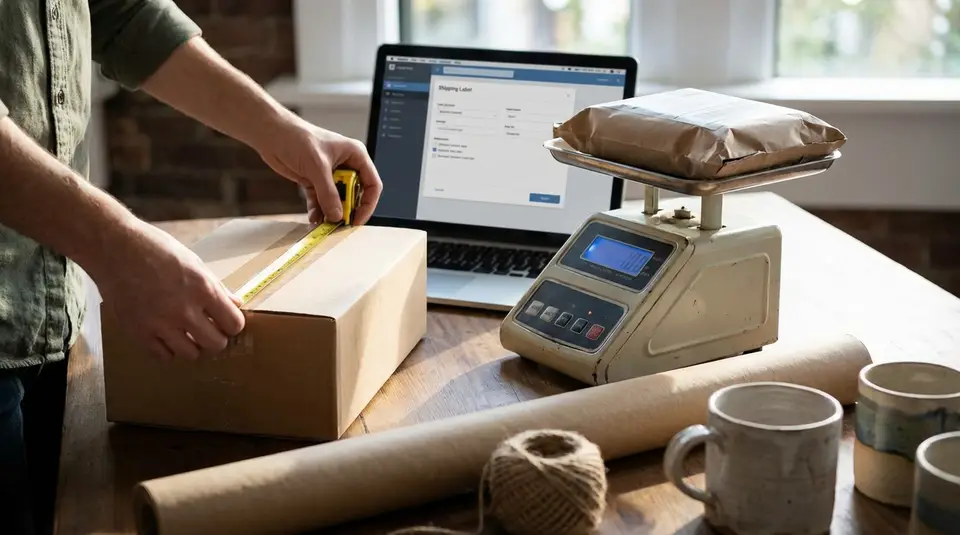
Dimensional weight is how carriers like USPS, UPS, and FedEx price packages based on the space they take up, not just how heavy they are. For Etsy sellers, understanding dimensional weight shipping, carrier DIM factors, and basic dimensional weight calculation is essential if you want to protect your profit on every order.

As ecommerce grows, carriers increasingly charge by whichever is higher: actual weight or DIM weight. That means a light but bulky box of handmade pillows can cost far more to ship than you expect. When you know how dimensional weight works—and how to pack smarter—you can choose better box sizes, set realistic Etsy shipping profiles, and stop losing money to unexpected dimensional weight.

What is dimensional weight and why does it matter for Etsy sellers?

Plain-language explanation of dimensional (DIM) weight

Dimensional weight, or DIM weight, is a way carriers price a package based on how much space it takes up, not just how heavy it is.

Instead of only looking at the scale, they look at the volume of your box: length × width × height. Then they plug that number into a formula to turn “cubic inches” into a “billable weight.” If your box is big and light, the dimensional weight can be higher than the actual weight, and that higher number is what you pay for.

Carriers use DIM weight because trucks and planes run out of space before they hit their weight limits. A giant box of tissue paper costs them more to move than a tiny box of jewelry, even if the jewelry is technically heavier. DIM pricing is their way of charging for that space.

For Etsy sellers, this matters any time you ship bulky but light items: pillows, wreaths, plushies, decor in oversized boxes, or anything with lots of “air” in the packaging. Those are classic DIM-weight traps.

Actual weight vs dimensional weight: which one do you get charged for?

For UPS and FedEx, the rule is simple: They calculate both the actual weight and the dimensional weight, then charge you on whichever is higher.

In practice, that means:

  • A small, dense package (like a 6 × 4 × 2 inch box of metal hardware) is usually billed by actual weight, because the box does not take up much room.
  • A large, fluffy package (like a 20 × 16 × 8 inch box with a wreath) is often billed by dimensional weight, because the box eats up a lot of space.

USPS also uses dimensional weight for many competitive services, especially when a package is over 1 cubic foot or going to higher zones, and it can apply to USPS Ground Advantage and Priority Mail.

So as an Etsy seller, you are effectively charged for the more expensive of the two:

  • If your box is small or dense, the scale wins.
  • If your box is big and light, the tape measure wins.

Common myths Etsy sellers have about DIM pricing

A few dimensional weight myths trip up a lot of Etsy shops:

  1. “DIM weight only applies to huge boxes.” Not true. With current rules and divisors like 139, even medium-size boxes can trigger DIM charges, especially with UPS and FedEx. A box that looks “normal” on your packing table can still have a higher dimensional weight than its actual weight.

  2. “If I ship with USPS, I don’t need to worry about DIM.” USPS absolutely uses dimensional weight and also adds nonstandard-size fees when boxes are long or over 2 cubic feet. That can make a “free” big box very expensive to ship.

  3. “Etsy’s label price will always match what the carrier charges.” If your entered dimensions or weight are wrong, the carrier can re-measure and bill extra, or a shipping platform can pass through adjustment fees. DIM pricing only works in your favor when your data is accurate.

  4. “Rounding doesn’t matter if I’m close.” As of August 18, 2025, UPS and FedEx round every fractional inch up before calculating dimensional weight. That means 10.1 inches is treated as 11 inches, which can bump your DIM weight and your cost.

Understanding how dimensional weight works helps you choose better packaging, set realistic Etsy shipping prices, and avoid those nasty “why was this label so expensive?” surprises.

How USPS, UPS, and FedEx use dimensional weight for small packages

Quick overview of current DIM rules for USPS (Priority, Ground Advantage, etc.)

For Etsy sellers in the US, USPS is usually the most forgiving when it comes to dimensional weight on small packages.

USPS uses dimensional (DIM) weight for Priority Mail and USPS Ground Advantage when a package is larger than 1 cubic foot (1,728 cubic inches). If your box is smaller than that, you are normally charged by actual weight, not DIM weight.

When DIM does apply, USPS uses this basic formula in inches and pounds:

DIM weight = (Length × Width × Height) ÷ 166

The result is rounded up to the next whole pound, and USPS charges whichever is higher: that DIM weight or the real scale weight.

On top of that, USPS now has nonstandard package fees for long or bulky boxes, even if they are not super heavy. For example, extra fees can kick in if:

  • The longest side is over 22 inches
  • The longest side is over 30 inches
  • The box is over 2 cubic feet

These are separate surcharges that stack on top of postage, so big boxes can get expensive fast.

How UPS and FedEx DIM weight compares for typical Etsy packages

UPS and FedEx are stricter about dimensional weight than USPS, especially for e‑commerce parcels.

Both carriers use DIM weight on almost every package, not just large ones. The standard formula for domestic services is:

DIM weight = (Length × Width × Height) ÷ 139

Again, they compare that DIM weight to the actual weight and bill you for whichever is higher.

Starting in August 2025, both UPS and FedEx round every fraction of an inch up before they even do the math. So a box that measures 8.1 × 6.2 × 4.3 inches is treated as 9 × 7 × 5 inches for DIM purposes. That extra “phantom” size can easily add a pound or more to the billed weight.

For a typical Etsy package like a sweatshirt, plush toy, or decor item in a roomy box, UPS and FedEx will often bill by DIM weight, while USPS might still bill by actual weight if the box is under 1 cubic foot. That is why many small sellers lean on USPS for lighter, bulkier items and use UPS or FedEx more for dense, heavier shipments.

When DIM weight usually kicks in for small handmade or vintage items

For most handmade or vintage Etsy items, dimensional weight starts to matter when:

  • Your box is big for its weight (lots of air or padding).
  • One side is long (posters, wreaths, long knitting needles, rolled textiles).
  • You ship soft, puffy things like pillows, plushies, quilts, or bulky sweaters.

With USPS, DIM usually kicks in once your outer box is getting close to or above 1 cubic foot. For example, a 14 × 12 × 10 inch box is 1,680 cubic inches, so it is still under the DIM threshold; a 16 × 12 × 10 inch box is 1,920 cubic inches, so DIM applies.

With UPS and FedEx, there is no “free” size zone. Even a modest box like 12 × 10 × 8 inches is subject to DIM weight. If the item inside only weighs a pound or two, the billed weight can jump several pounds once you apply the 139 divisor and rounding rules.

So in practice, DIM weight tends to hurt:

  • Light, bulky Etsy products in boxes larger than shoe‑box size
  • Orders where you used a box that is “nice and big” but not actually needed
  • Long, awkward shapes that force you into oversized cartons

If your items are small and dense, like jewelry, candles in glass jars, or mini tools, you will usually hit real weight limits long before dimensional weight becomes a problem.

How dimensional weight shows up when you buy Etsy shipping labels

Where Etsy pulls your package size and weight from

When you buy an Etsy shipping label, Etsy does not guess your package details. It pulls size and weight from a few specific places.

For calculated shipping listings, Etsy uses:

  • The “item weight” and “item size when packed” that you entered on the listing, plus
  • The quantity in the order, and
  • Any shipping profile settings that include package info.

If you did not set calculated shipping, or if the order combines several items, Etsy may ask you to enter the package dimensions and total weight manually on the label purchase screen. Those numbers are what the carrier uses to decide if dimensional weight applies.

So, the dimensions that matter for DIM weight are not the raw product size. They are the final outer package size and total packed weight that Etsy sends to USPS, UPS, or FedEx when it rates and prints your label.

If your listing data is old, copied from another product, or based on a guess, Etsy will still use it. That is often where surprise dimensional weight charges start.

How Etsy’s shipping calculator uses dimensions behind the scenes

Behind the scenes, Etsy’s shipping calculator behaves a lot like the carrier websites. When a buyer views shipping or checks out, Etsy sends:

  • Destination ZIP or country
  • Your “from” ZIP
  • Package length, width, height
  • Package weight

The carrier then returns a price based on whichever is higher: actual weight or dimensional weight. Etsy shows that rate to the buyer and later to you on the label screen.

You will not see a big “DIM weight” label in Etsy, but you will see the price jump when your box crosses a dimensional threshold. That is Etsy quietly using the carrier’s DIM rules in the background.

Why Etsy’s calculated shipping might still be off if your data is wrong

Even with calculated shipping turned on, Etsy can only be as accurate as the numbers you give it. Your Etsy shipping label cost can be off if:

  • Your box is larger than the dimensions saved on the listing or profile.
  • You underestimated weight, especially once you add padding, inserts, and tape.
  • You changed packaging (for example, moved from a mailer to a box) but never updated the listing.
  • You entered dimensions in the wrong order or unit (mixing up inches and centimeters, or pounds and ounces).

When that happens, Etsy may quote the buyer a lower rate than the carrier actually charges once the real DIM weight is applied. You still get the label, but your profit shrinks because you are covering the difference.

Accurate, up‑to‑date package dimensions and weights are the easiest way to keep Etsy’s calculated shipping close to what you will actually pay, especially on larger, lighter boxes that are most affected by dimensional weight.

How to calculate dimensional weight step by step (with easy examples)

Simple DIM weight formula Etsy sellers can remember

Dimensional weight sounds scary, but the math is actually simple once you see it a couple of times.

For US carriers, dimensional (DIM) weight is usually calculated like this:

DIM weight (in pounds) = (Length × Width × Height) ÷ DIM divisor

  • Measure in inches
  • Use the outer size of the packed box or mailer
  • The DIM divisor is a number set by the carrier (often around 139 for many services right now, but always check current rules when in doubt)

So in plain language: You multiply the three sides of the package, divide by the carrier’s DIM divisor, then round up to the next whole pound. That final number is the dimensional weight.

When you buy a label, the carrier compares:

  • Actual weight (what the box really weighs on a scale)
  • DIM weight (what it “ships like” based on size)

You are charged on whichever is higher.

If you remember only one thing, remember this: Big box + light item = watch the DIM weight.

Example: small heavy item vs big lightweight item

Let’s compare two Etsy orders going to the same buyer.

1. Small heavy item You sell a solid brass candle holder that weighs 6 lb packed.

  • Box size: 10 × 8 × 4 in
  • Volume: 10 × 8 × 4 = 320
  • DIM divisor (example): 139

DIM weight = 320 ÷ 139 ≈ 2.3 lb, then round up to 3 lb

Now compare:

  • Actual weight: 6 lb
  • DIM weight: 3 lb

The carrier charges you for 6 lb, because it is higher. Here, weight matters more than size.


2. Big lightweight item You sell a fluffy wreath that only weighs 2 lb packed, but you use a roomy box.

  • Box size: 18 × 18 × 8 in
  • Volume: 18 × 18 × 8 = 2592
  • DIM divisor (example): 139

DIM weight = 2592 ÷ 139 ≈ 18.7 lb, round up to 19 lb

Compare:

  • Actual weight: 2 lb
  • DIM weight: 19 lb

You get charged for 19 lb. Same buyer, same distance, but this one costs much more to ship because the box is large and mostly air. That is dimensional weight in action.

How to round your measurements so carriers don’t surprise-charge you

Carriers are picky about rounding, and this is where many Etsy sellers get surprise fees.

Follow these simple habits:

  1. Round each measurement up to the next whole inch
  • If your box measures 12.2 in, enter 13 in
  • If it is exactly 12.0 in, you can enter 12 in Carriers often treat any fraction as the next full inch, so rounding up yourself keeps you safe.
  1. Round the final DIM weight up to the next whole pound
  • 7.01 lb to 7.99 lb both bill as 8 lb
  • 18.1 lb becomes 19 lb
  1. Do not “shave” numbers to save a few cents If you enter 12 × 12 × 6 but the box is really 12.5 × 12.5 × 6.5, the carrier’s scan can recalculate a higher DIM weight and bill you later. That adjustment can wipe out your profit on the order.

  2. Use the size you actually ship If you sometimes fold a mailer or cut down a box, measure and enter the final size, not the original printed size.

If you measure carefully, round up honestly, and use the DIM formula once or twice for your main products, you will know exactly which items are DIM-sensitive and can price your shipping with confidence.

What dimensions should I enter on my Etsy listings?

Item weight vs packaged weight: what Etsy really needs

Etsy cares about what the buyer receives in the mail, not just the bare item. That means the most important number for shipping is your packaged weight, not the item’s naked weight.

  • Item weight is how much the product alone weighs. This is useful for your own records and sometimes for buyers, but it is not enough for accurate shipping.
  • Packaged weight is the total weight of the item plus everything you use to ship it: box or mailer, tissue, bubble wrap, inserts, thank-you card, and tape.

For US-based shops using calculated shipping, Etsy really needs your best estimate of the packaged weight. A simple way to get it: pack one item exactly how you would ship it, then put the whole thing on a postal scale. If you sell multiples, test:

  • 1 item packed
  • 2 items packed together

This helps you decide if you should add a small per-item extra weight in your listing settings to cover extra padding for multiple-quantity orders.

Whenever you change packaging (new box size, heavier mailer, extra freebies), re-weigh one order and update the packaged weight so your shipping stays accurate.


How to measure “item size when packed” for calculated shipping

“Item size when packed” is Etsy’s way of asking: How big is the finished parcel that the carrier will handle?

To measure it:

  1. Pack the item exactly how you will ship it.
  2. Use a ruler or tape measure to record length, width, and height of the outer package.
  3. Measure to the furthest points, including bulges or puffed mailers.
  4. Round up to the next whole inch for safety.

For example, if your box is 8.25 × 5.1 × 3.7 inches, enter 9 × 6 × 4. Carriers and Etsy use these dimensions to calculate dimensional weight, so slightly rounding up protects you from underpaying postage if the carrier measures differently.

If you ship the same product in different packaging (for example, gift box vs no gift box), create separate listings or variations with their own “item size when packed” so the shipping stays accurate for each option.


Choosing the right units (inches, ounces, pounds) for US-based shops

For US sellers, the easiest setup is to stick with imperial units that match how USPS, UPS, and FedEx quote rates:

  • Dimensions: use inches for length, width, and height.
  • Weight: use ounces for anything under 1 pound, and pounds plus ounces for heavier packages.

A few practical tips:

  • For small items like jewelry, stickers, or keychains, weighing in ounces keeps your numbers precise and helps Etsy choose the right First-Class or Ground Advantage rate.
  • For heavier goods like candles, ceramics, or books, weigh in pounds, but do not forget the extra packing materials. A “1 lb” candle in a box might easily become 2 lb 4 oz once packed.
  • Stay consistent. If your scale shows pounds and ounces, enter them the same way in Etsy instead of converting to decimals in your head.

Using inches, ounces, and pounds keeps your Etsy listings aligned with US carrier systems, which means fewer surprises, fewer underpaid labels, and shipping prices that make sense to both you and your buyers.

When dimensional weight will hurt your Etsy profit (and when it won’t)

Types of products that are most at risk of DIM charges

Dimensional weight hurts most when your package is big but light. Carriers charge you as if the box “weighs” more, simply because it takes up space in the truck or plane.

Products that are usually most at risk:

  • Pillows, cushions, quilts, and plushies in roomy boxes
  • Wreaths, faux florals, and decor hoops that need wide, shallow boxes
  • Large but hollow decor like lampshades, baskets, hat boxes, and foam props
  • Bulky clothing shipped in boxes instead of mailers (puffer jackets, robes, costumes)
  • Gift boxes with lots of padding where the box is mostly air

On the other hand, small but dense items rarely trigger dimensional weight: jewelry, candles in small jars, tools, books, and many ceramics or mugs shipped in tight boxes. For these, you usually pay by actual scale weight.


Signs your shipping costs are being driven by size, not weight

You can often spot dimensional weight quietly eating your profit by watching for a few patterns:

  • The label price jumps a lot when you change the box size, even though the scale weight stays the same.
  • Your package weighs only 1–3 lb, but the carrier or Etsy label is pricing it like a 5–8 lb shipment.
  • Shorter distances are still weirdly expensive, which often means the DIM weight is already higher than the real weight.
  • Two orders with similar weights but very different box sizes have very different shipping costs.

If you see a big price drop just by switching to a slightly smaller box or a mailer, that is a strong clue that dimensional weight was in play.


Simple checks before listing to avoid undercharging buyers

A few quick habits before you publish a listing can save you from surprise DIM charges later:

  1. Mock up your real package. Pack a sample item exactly how you would ship it: box or mailer, padding, inserts, thank-you card, everything. Measure the outer length, width, and height, and weigh the full package.

  2. Try one size smaller if it is still safe. If there is a lot of empty space, test a slightly smaller box or a padded mailer. If the item is still protected and the dimensions drop even an inch or two, your dimensional weight may fall into a cheaper bracket.

  3. Test a label quote before you list. Use Etsy’s shipping tools or a carrier rate calculator to plug in:

  • Your test dimensions
  • The full packaged weight
  • A few sample ZIP codes (nearby, mid‑distance, and far away)

If the price looks high for how light the item is, assume DIM weight is involved and adjust your listing price or shipping settings.

  1. Build in a small safety margin. If your test package comes out to, say, 2 lb 1 oz, consider planning for 2 lb 4 oz and rounding your box size up slightly. That gives you room for small packing changes without suddenly bumping into a higher DIM charge.

  2. Write down your “final” package specs. Keep a simple note or spreadsheet with the standard box or mailer and the final packaged weight for each product. Use those exact numbers on your Etsy listing so your calculated shipping is as close as possible to what you will actually pay.

With these quick checks, you will spot which items are DIM-sensitive before they ever sell, and you can price them in a way that protects your profit instead of letting shipping quietly eat it.

Smart packaging tricks to reduce dimensional weight costs

Picking the smallest safe box or mailer for your product

Dimensional weight charges go up as your package gets bigger, so every extra inch of packaging matters. The goal is simple: use the smallest package that still protects your item.

Start by measuring your product as it will be packed (including any inner wrap like tissue or bubble). Then test a couple of box or mailer sizes and choose the one that:

  • Leaves just enough room for padding on all sides
  • Closes easily without bulging
  • Does not require you to crush or bend the item

If you are between two sizes, check how much each one changes the total length + width + height. Sometimes dropping just one dimension by an inch can move you under a dimensional weight threshold and save several dollars.

Keep a short list of “go‑to” sizes that work for your most common products. That way you are not guessing every time and accidentally grabbing a box that is way bigger than you need.

Using poly mailers, bubble mailers, or boxes: what changes with DIM?

Carriers calculate dimensional weight using the outer measurements of your package, so the type of packaging you choose can change the billable weight.

  • Poly mailers are slim and flexible. If your item is soft (clothing, fabric, yarn, some plushies), a poly mailer often keeps the dimensions low and can avoid dimensional weight altogether.
  • Bubble mailers add a bit more thickness but still tend to be smaller than boxes. They are great for small, sturdy items like jewelry boxes, keychains, or enamel pins.
  • Boxes give the best protection for fragile or rigid items, but they also create more “volume,” which is what triggers dimensional weight.

A handy rule: if the item can safely ship in a mailer without bending, breaking, or getting crushed, a mailer usually beats a box for dimensional weight. For fragile goods that must go in a box, look for low‑profile box styles (like bookfold or mailer boxes) instead of tall, cube‑shaped cartons.

Easy ways to cut down “air space” without risking damage

You do not need to ship a tiny item in a giant box filled with air pillows. Reducing empty space is one of the fastest ways to lower dimensional weight while still keeping your product safe.

Try these simple tweaks:

  • Right‑size your padding. Use thinner bubble wrap, tissue, or kraft paper when possible instead of huge piles of bulky filler.
  • Use inserts or dividers. For sets or multiple pieces, cardboard inserts can hold items in place so you do not need as much loose padding.
  • Flatten what you can. Fold clothing neatly, collapse gift boxes that can be reassembled by the buyer, and store flat items (like prints) against sturdy backing boards.
  • Trim excess flaps. If a box is slightly too tall, you can sometimes cut it down and re‑tape it so the height better matches your product. Just keep it neat and sturdy.

Always do a quick “shake test” before you ship. Gently shake the packed box or mailer. If you hear items sliding around, add a bit more snug padding. If everything feels secure and the package is not overstuffed, you have found that sweet spot where your dimensional weight stays low and your product stays safe.

How to set up Etsy shipping so DIM weight doesn’t eat your margins

Using calculated shipping correctly for US-based Etsy sellers

For US-based Etsy sellers, calculated shipping is usually the best way to handle dimensional weight, as long as your data is accurate. Etsy sends your package weight, box size, and buyer’s address to the carrier in real time, then shows the rate based on either actual or dimensional weight, whichever is higher.

To make calculated shipping work in your favor:

  • Use packaged weight, not item weight. Weigh a fully packed order (product, box or mailer, padding, tape, thank-you card) and enter that number, then add a small buffer if your materials vary a bit.
  • Enter realistic “item size when packed.” Measure the outside of the box or mailer you actually use: length, width, and height in inches. Do not guess or round up “just because.” A couple of extra inches can push you into dimensional weight pricing.
  • Create shipping profiles by packaging type. For example, one profile for jewelry in 6x4 bubble mailers, another for mugs in 8x6x6 boxes. Reuse these profiles instead of retyping numbers every time.
  • Check the preview rate. Before publishing a listing, use Etsy’s shipping preview to see what a buyer in a distant zone would pay. If it looks too low, your dimensions or weight are probably off.

When your measurements are correct, calculated shipping lets the carrier handle DIM math in the background while you stay focused on profit.

When to switch to flat-rate or free shipping with price built in

Dimensional weight can make some packages painfully expensive to ship, especially large but light items going across the country. In those cases, calculated shipping might show a scary number at checkout and drive buyers away. That is when it can make sense to switch strategies.

Flat-rate or “free shipping” (with the cost built into your item price) can work well when:

  • Your product fits into a predictable box or mailer every time.
  • The shipping cost does not swing wildly between nearby and far-away states.
  • You sell repeatable items (for example, the same style of pillow cover or candle) rather than one-of-a-kind bulky pieces.

A simple approach is:

  1. Pick a “worst case” destination, like a far shipping zone.
  2. Check what it costs to ship that item there using your usual box.
  3. Average that with a closer zone and build that number into your item price.

Then you can offer:

  • Flat-rate shipping (same price for everyone in the US), or
  • Free shipping by raising your item price enough to cover that average cost.

This smooths out DIM surprises and makes your shop feel simpler and friendlier to buyers, even if the actual carrier cost behind the scenes is a bit messy.

Adjusting handling and packaging costs without scaring buyers away

Even with good shipping settings, dimensional weight often means you are paying for bigger, sturdier packaging. You can recover those costs without making your shipping look outrageous.

A few gentle ways to do it:

  • Add a small handling amount into your item price, not your shipping line. Most buyers accept a slightly higher product price more easily than a high shipping fee.
  • Keep the visible shipping charge reasonable. If calculated shipping shows 11.20 but your materials add another 1.00, consider absorbing part of that into the item price instead of tacking on a separate handling fee.
  • Bundle items when possible. Offer discounts for multiple purchases in the same box. One larger package is often cheaper per item than several smaller ones, even with DIM.
  • Review your top sellers regularly. Every few months, recheck the real cost to ship your best-selling items. If rates or DIM thresholds have changed, adjust prices or packaging before your margins quietly disappear.

Handled this way, dimensional weight becomes something you plan around, not something that surprises you at label time or slowly eats your profit.

Double-checking your rates: tools and workflows Etsy sellers actually use

Using Etsy’s shipping calculator before you list a new item

Before you ever publish a new listing, treat Etsy’s shipping calculator like a test lab. Add your item as a draft, then scroll to the shipping section and plug in:

  • The real packaged weight (item + box + padding)
  • The exact box or mailer size you plan to use

Use a few sample ZIP codes: one close to you, one across the country, and one in the middle. This shows you the range buyers will see and whether dimensional weight is kicking in.

If a price looks oddly high for a light item, that is your clue that DIM weight is being used. Adjust your box size in the draft and watch how the rate changes. You can do all of this before the listing ever goes live, so there are no surprises on launch day.

Testing a few box sizes to see where DIM charges drop

A simple way to tame dimensional weight is to “play” with a few realistic box sizes and record what happens. Take one of your common products and try:

  • Your current box
  • One slightly shorter or narrower box
  • A padded or poly mailer, if it is safe for the item

Change only one thing at a time, then refresh the shipping rate. Often, shaving just an inch or two off one side can drop the DIM weight tier and save a few dollars.

Do this once for each product type you sell a lot, and you will quickly see which dimensions are “sweet spots” and which sizes trigger painful DIM pricing.

Creating a simple shipping cheat sheet for your most common products

Once you have tested a few sizes, turn your findings into a quick shipping cheat sheet you can keep by your packing area. It does not need to be fancy. For each product type, note:

  • Best box or mailer size
  • Typical packaged weight
  • Approximate shipping range (for example, “about $5–$7 to most US locations”)

You can keep this in a notebook, a spreadsheet, or taped to the wall. The goal is to make label time fast and stress free. With a cheat sheet, you are not guessing dimensions, you are reusing proven combos that you already know work well with dimensional weight.

Common dimensional weight mistakes Etsy sellers can easily avoid

Guessing box size at label time instead of planning ahead

Guessing your box size when you buy the label is one of the fastest ways to trigger dimensional weight adjustments after the fact. Carriers and Etsy both rate your package based on the length, width, and height you enter. If you underestimate, USPS or UPS can re-measure the parcel in their system and bill Etsy for the difference, which then shows up as a surprise adjustment in your account.

A simple fix is to standardize your packaging. Pick a small set of box and mailer sizes you actually keep in stock, measure them once, and save those as package presets in your workflow. Then, when you list an item, think about which real box it will go in and use that size. This takes a few extra seconds up front but protects you from repeated under-measurement and the slow drip of extra DIM charges.

Reusing oversized boxes “because they’re free”

Free boxes are only free if they do not push you into higher dimensional weight or nonstandard size fees. USPS, UPS, and FedEx all charge more for large, mostly empty cartons, either through DIM weight or extra surcharges once you pass certain length or volume thresholds. USPS, for example, adds nonstandard fees when a package is over 22 inches on the longest side or over 2 cubic feet, on top of normal postage.

If you drop a small candle or mug into a huge recycled box with lots of air, the carrier may rate it as a much heavier package than it really is. That can wipe out your profit on a low-priced order. It is usually cheaper to buy a right-sized mailer or smaller box than to “save” money with an oversized free one. Trim big boxes down, or keep them only for large, high-value orders where you truly need the space and padding.

Ignoring DIM weight on international Etsy orders

Many sellers assume dimensional weight is only a domestic headache, but it absolutely matters on international Etsy orders. When you buy an international label, Etsy still sends your package’s weight and dimensions to the carrier, and those carriers often rely heavily on DIM pricing for cross-border shipments.

If you only focus on ounces or pounds and ignore how bulky the parcel is, you can end up charging the buyer far too little for overseas shipping. That hurts twice: higher postage now and lower profit because you cannot easily go back and ask for more.

To avoid this, always:

  • Measure and enter accurate dimensions for international packages.
  • Test a couple of box sizes in Etsy’s label screen or shipping calculator before you publish your listing, especially for large but light items like wreaths, plushies, or decor.

Paying attention to dimensional weight on global orders keeps your prices realistic, your margins healthy, and your buyers happy that you are not canceling orders over shipping surprises.

Related posts

Keep reading