
How to Outsource Parts of Your Etsy Business (When It’s Worth It)


Etsy outsourcing is the practice of handing specific shop tasks to a specialist or partner so you can stay focused on designing, making, and improving your products. It matters when busywork starts stealing your best hours, but the smart move is to outsource only the parts that are repeatable, easy to measure, and don’t require your creative judgment. Common wins include using a production partner for manufacturing, hiring a virtual assistant for messages and listing updates, or getting help with order fulfillment as volume grows, while keeping quality checks and brand voice in-house. The most expensive mistake is outsourcing the task without first outsourcing clarity about what “done right” actually looks like.
When does outsourcing actually pay off in an Etsy shop?
Capacity and burnout warning signs
Outsourcing starts to pay off when your shop is “busy,” but not in a healthy way. If you regularly work late nights just to keep orders from slipping, that’s a capacity problem, not a motivation problem. Another sign is when you stop improving listings, photos, or new designs because you are stuck in repetitive admin work. On Etsy, consistency matters. When burnout hits, you answer messages slower, ship later, and your quality control gets rushed.
A practical rule: if you are sacrificing sleep or weekends to do tasks that someone else could follow from a checklist, you’re already paying for it, just in stress instead of cash.
Order volume and turnaround pressure
Outsourcing becomes financially logical when order volume creates real turnaround pressure. That could look like longer processing times, missed ship-by dates, or frequent “can you rush this?” requests that you can’t accommodate. Even if your products are great, slow fulfillment can drag down the customer experience.
This is where small, targeted help often beats a big overhaul. For example, you might keep making the product yourself but outsource “everything after the item is finished,” like packing, label printing, and drop-off runs. Or you might use a production partner for one best-seller so you can keep your faster turnaround promise without overworking.
Tasks that block growth the most
Outsourcing pays off fastest when it removes a bottleneck that prevents revenue growth, such as:
- Customer messages that interrupt making time all day
- Listing work (titles, tags, photos, variations) that you never get around to updating
- Shipping workflows that eat hours in batches
- Bookkeeping and inventory tracking that only gets done when there’s a problem
The key is leverage. If outsourcing a task gives you back time to create better products, improve Etsy SEO, or launch new listings, it often pays for itself faster than outsourcing “easy” tasks that don’t change your output.
Etsy tasks you can outsource without losing your brand
Order fulfillment and shipping support
You can outsource fulfillment support without giving up your “handmade” feel, as long as you control the standards. Many Etsy sellers get help with the repeatable, back-of-house steps: picking the right mailer, printing labels, assembling the box, and doing carrier drop-offs.
The brand-safe way to do this is to keep a simple packing checklist that covers the unboxing details you care about. For example: tissue color, thank-you note placement, freebie rules, and where to apply fragile stickers. You can also outsource inventory prep like folding, bagging, and applying SKU labels, so your shipping days run faster and with fewer mistakes.
Production partners and packaging help
If you sell items based on your original designs but need help physically producing them, Etsy allows you to work with production partners. This can be a great fit for print-on-demand, engraving, cut-and-sew, or small-batch manufacturing, especially when demand outgrows your equipment or space.
The key is transparency and control. Use partners for the physical production, but keep your design decisions, product specs, and quality standards in your hands. Etsy expects you to disclose applicable production partners on relevant listings, so plan for that from day one and set up your profiles correctly in Shop Manager using Etsy’s guidance on working with production partners.
Customer messages, social, and marketing tasks
You can outsource parts of customer support and marketing without losing your voice, if you build guardrails. A virtual assistant can triage messages, pull order details, send shipping updates, and flag anything sensitive for you to answer. For social and marketing tasks, outsourcing works best for scheduling, basic graphics resizing, and repurposing content you already created.
Protect your brand by writing reply templates in your tone, defining when refunds or replacements are allowed, and keeping final say on any public-facing copy that represents your shop.
Simple ROI math for outsourcing your time and margins
Time value vs per-order fees
The cleanest way to judge outsourcing in an Etsy shop is to compare two numbers: what your time is worth, and what the task costs to hand off.
Start with a simple “owner hourly” estimate:
- Take your average monthly shop profit (after materials, shipping supplies, Etsy fees, and taxes set-asides if you do that monthly).
- Divide by the number of hours you realistically work in the business.
If your profit is $3,000/month and you work 120 hours, your time is roughly $25/hour. If packing an order takes 6 minutes on average, that is about $2.50 of your time. If a helper can pack for $1.50 per order (or you can pay a contractor $18/hour and they pack 12 orders/hour), outsourcing that step is financially rational, assuming quality stays the same.
Margin guardrails that keep pricing stable
Outsourcing can quietly crush your margins if you don’t set guardrails first. Before you hand off anything, define a “minimum contribution margin” you want to protect on every order. Many sellers do this by deciding, in advance, the maximum they will spend on outsourced labor and partner fees per order.
A practical approach is to build a per-order cost card that includes:
- Materials and packaging
- Shipping (or your average shipping overage if you offer “free shipping”)
- Etsy fees and payment processing
- Labor (your time or outsourced time)
- A cushion for defects, returns, and replacements
If outsourcing pushes you below your margin floor, you either raise price, reduce the outsourced scope, or improve efficiency.
Break-even points by task type
Break-even is simply where the dollars you spend equal the dollars (or capacity) you get back. Common break-even patterns in Etsy shops look like this:
- Fulfillment help: Breaks even when faster shipping or fewer late nights prevents mistakes, enables more listings, or lets you maintain shorter processing times without stress.
- Production partner: Breaks even when partner costs are offset by higher volume, fewer stockouts, or the ability to sell a product that was previously too time-intensive to fulfill.
- VA for messages: Breaks even when quicker responses protect conversion and reviews, and when you regain uninterrupted making time.
If you want a quick test, track one week: minutes spent per task, number of orders, and what you would pay to outsource it. The math is often obvious once you see which tasks are consuming the most hours per dollar earned.
Brand consistency while outsourcing production and fulfillment
Packaging, inserts, and unboxing experience
Outsourcing only feels “off brand” when the customer’s unboxing doesn’t match what your photos and reviews promise. The fix is simple: standardize the experience before anyone else touches an order.
Decide what is non-negotiable for your Etsy brand, then document it. That usually includes your outer packaging style, tissue or wrap, insert rules, and how you present care instructions. If you use variations (gift note, different sizes, different scents), make those choices obvious at a glance with SKU labels and a one-page packing guide.
Keep a small set of approved materials on hand and reorder them in bulk when you can. Consistency matters more than fancy extras. A clean, repeatable unboxing experience is what protects reviews when volume spikes.
Customer-facing transparency and expectations
Brand trust on Etsy is built on accurate expectations. If outsourcing changes anything the buyer would notice, like where an item ships from, processing times, or who physically produces it, your listings should reflect that clearly.
This is especially important with production partners. Etsy expects sellers using production assistance to disclose applicable production partners on the relevant listings, and buyers can see production partner details connected to your shop. The most straightforward approach is to align your listing details, shipping profiles, and About section so nothing feels surprising. Etsy’s guidance on working with production partners is worth following closely.
Keeping your handmade story intact
Outsourcing does not have to dilute your handmade story, but you do need to stay the creative lead. Keep ownership of the parts that make your shop “yours”: design choices, materials specs, personalization rules, and final quality standards.
In practice, that means you control the product description language, your photo style, and the “why” behind the item. Your partner or helper handles the repeatable labor. When you communicate it that way, your Etsy shop still feels personal, even as your operations become more professional.
Quality control and documentation that prevent costly mistakes
SOPs for partners and contractors
Outsourcing works when the work is measurable. That is what an SOP (standard operating procedure) gives you. For an Etsy shop, your SOPs should be short, visual, and built around real examples from your orders.
At minimum, document:
- The exact materials or blanks to use (with links, SKUs, or photos).
- The steps that affect quality (print settings, curing time, stitch type, engraving depth, etc.).
- Personalization rules (where the name goes, capitalization, character limits, how to handle emojis).
- Packaging rules (what goes in every box, what is optional, what is never included).
- Your “stop and ask” moments, so a contractor knows when not to guess.
If you only do one thing, add photos of “perfect,” “acceptable,” and “reject” outcomes. Clear visuals prevent expensive misunderstandings.
Samples, test orders, and acceptance criteria
Before you send real customer orders to a partner, run samples like you mean it. A sample should match your hardest case, not your easiest. If you offer multiple sizes, colors, or personalization styles, test at least one from each category that tends to create mistakes.
Set acceptance criteria that are binary whenever possible. For example: correct spelling, centered within a defined tolerance, thread color matches the approved palette, no visible scorch marks, no loose threads, label placed in the exact spot. When criteria are fuzzy, quality becomes a debate, and you usually lose time and money.
Communication rhythms and handoffs
Most outsourcing failures are handoff failures. Choose a simple rhythm that makes sense for your order volume: a daily check-in for active production, or two to three scheduled check-ins per week for slower cadence shops.
Keep handoffs consistent. Use the same file naming, the same order notes format, and one source of truth for changes. If you change something (new packaging, new wording on an insert, a discontinued material), put it in writing and confirm it was received before the next batch runs.
Handling errors, returns, and customer complaints
Plan your “when things go wrong” playbook before the first mistake happens. Decide who pays for remakes, who pays for reshipping, and how quickly an issue must be reported for it to be covered. Put those rules into your contractor agreement or partner terms.
On the customer side, protect your brand by keeping responses calm, fast, and solution-focused. You can outsource the admin steps (pull tracking, confirm address, draft a response), but you should keep final decision-making on refunds, replacements, and exceptions. That is where your brand voice and judgment matter most, and where a single bad call can cost more than a month of outsourcing saved.
Etsy policy and disclosure rules for production partners
How Etsy defines handmade with assistance
On Etsy, you can still sell “handmade” style products even if you don’t personally manufacture every unit, as long as the item is your original design and it fits Etsy’s Creativity Standards. This is often framed as “designed by a seller,” where a third party physically produces or prints your design. The key point is that your creative contribution must be real and central. A partner can help make the item, but they cannot be the sole creator of a generic product you simply rebrand.
If you are unsure which bucket your product falls into, it’s worth reading Etsy’s official Creativity Standards and matching your workflow to the correct category.
Production partner disclosure in listings
If you use a production partner, Etsy requires you to disclose that production partner on the relevant listings. Buyers can also see production partner information connected to your shop’s About section.
Disclosure is not just a checkbox. Your listing and shipping details should stay accurate, including where the item is dispatched from and what your processing times really are. If a partner ships from a different city or country than you, align your shipping profiles and delivery expectations so the order doesn’t feel misleading.
Common compliance mistakes to avoid
The problems that tend to trigger policy trouble are usually avoidable:
- Treating a materials supplier or wholesaler as a production partner.
- Calling “limited assistance” (like firing your ceramic piece or adding an engraving to your already-made item) a production partner.
- Selling mass-made items without meaningful customization or without your original design.
- Forgetting to update dispatch-from location or processing times when a partner fulfills.
- Using photos that don’t accurately represent what the buyer will receive.
Related posts
Keep reading

What Products Can You Sell on Etsy?
Discover exactly what you can sell on Etsy—from handmade crafts and digital downloads to vintage treasures and craft supplies—and start growing a joyful shop today.

How to Bundle Digital Products on Etsy
Learn how to bundle digital products on Etsy to increase order value, boost passive income, improve Etsy SEO, cross-sell templates and grow your shop fast.

How to Create a Production Workflow for Your Etsy Shop (SOP Template)
Production workflow for your Etsy shop with an SOP template: map order intake to making, QC, packing and shipping, with roles, tools, and ship-by timing.

Selling Mugs on Etsy: Dishwasher/Microwave Claims Without Risky Promises
Selling mugs on Etsy: Practical wording for dishwasher-safe and microwave-safe claims, plus care notes and limits to match your materials without overpromising.

How to Handle Out-of-Stock Items on Etsy Without Losing Momentum
Out-of-stock items on Etsy: keep sales steady with smart restock timing, renew vs deactivate choices, and clear buyer messages that protect search visibility.
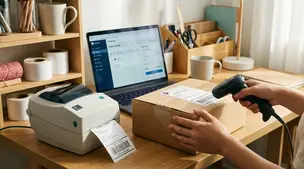
How to Use Barcodes and Labels to Speed Up Etsy Fulfillment
Barcodes and labels streamline picking, packing, and shipping for Etsy orders with simple SKU setup, scanner tips, label printers, and error-proof workflows.