
Age Grading for Toys: What Etsy Sellers Should Understand

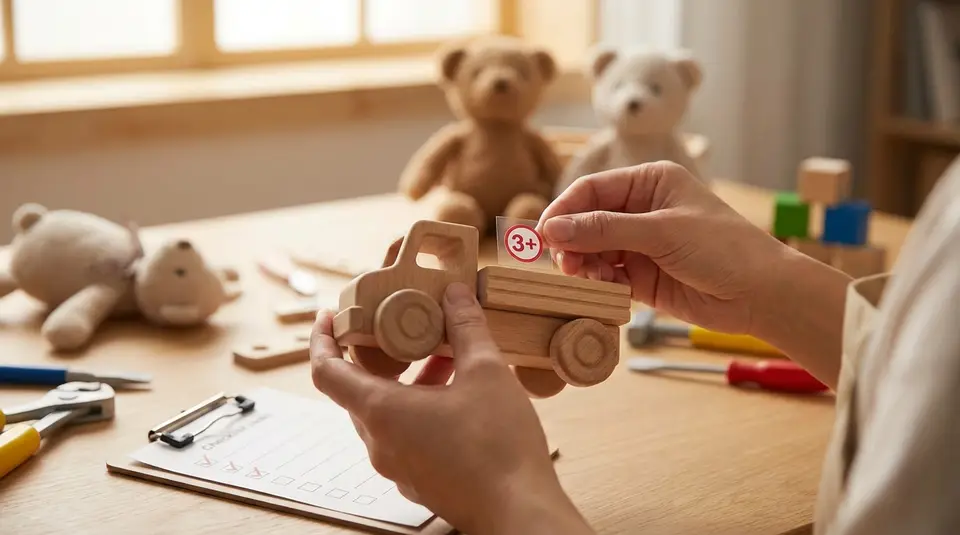
Age grading is the process of choosing and clearly stating the age range a toy is meant for, based on real play abilities and safety risks, not just how “advanced” a kid might be. On Etsy, that decision affects how you describe the item, what warnings belong in the listing, and whether it’s positioned as a children’s product or an adult collectible. Start by pressure-testing the design for obvious hazards like small parts (especially anything aimed under 3), long cords or loops, sharp points or edges, and loose magnets or batteries. In the U.S., marketing a toy for kids 12 and under can also trigger third-party testing and a Children’s Product Certificate (CPC), and a surprising number of sellers trip up by picking an age range that contradicts the toy’s actual features.
Toy age grading meaning and why Etsy listings need it
Recommended age range vs developmental suitability
A toy’s age grade is the age group the product is intended for. It is not a guess, and it is not just “what parents might buy.” It is a practical statement about who can use the toy safely and successfully.
On Etsy, age grading matters because your listing is often the only “package” a buyer sees. Shoppers use the age range to decide if the toy fits a child’s abilities, attention span, and typical play habits. If the age guidance is vague or unrealistic, you get more returns, more disappointed reviews, and more safety questions.
It also helps to separate two ideas that get mixed up:
- Recommended age range: the age you market to (for example, “ages 6+”).
- Developmental suitability: whether the toy matches real skills at that age (fine motor control, reading ability, frustration tolerance, and so on).
When those don’t match, the listing feels untrustworthy. A complicated DIY-style craft labeled “ages 3+” is a common example. It may be developmentally mismatched even if it is technically “simple.”
Age grading vs safety warnings
Age grading and warnings work together, but they are not the same thing.
- Age grading tells buyers who the toy is for.
- Safety warnings call out specific hazards that can exist even in age-appropriate play (like choking risk from small parts, or functional sharp points on certain hobby tools).
On Etsy, it helps to treat warnings as part of accurate product information, not scary fine print. If your toy includes small components, magnets, batteries, or anything that could reasonably be misused by younger children, a clear warning in the description can prevent misunderstandings and protect buyer trust.
A good rule of thumb: pick an age grade you can defend based on how the toy is built and how it’s likely to be used, then add warnings that match the toy’s real risks.
Age recommendation labels sellers can put on packaging and listings
Where to show age guidance on Etsy
On Etsy, you want the age recommendation to be hard to miss and consistent everywhere it appears. Buyers skim. So place the age range where they naturally look first, then repeat it where it prevents mistakes.
Good places to show age guidance:
- Listing title (lightly): Include an age range only if it is a key buying factor, like “Wood balancing stones, ages 3+.” If it clutters the title, skip it and keep it for the description.
- First lines of the description: Put the age recommendation near the top, before materials and shipping details.
- Photos: A simple text overlay on one photo (or a close-up of the packaging label) helps shoppers on mobile.
- Variations or personalization fields: If the toy comes in “baby-safe” vs “older-kid” versions, tie the age range to the option name.
- Packaging: A small label or insert that matches the Etsy listing reduces gift returns and “I didn’t realize” messages.
If you sell items that could be considered children’s products, keep your age guidance aligned with how the item is actually designed and marketed. Etsy also expects sellers to understand and follow applicable safety rules for kids’ items, which is summarized well in Product Safety Essentials: Requirements when selling children’s products on Etsy.
Common phrasing like "Not suitable for under 3"
Common, buyer-friendly wording includes:
- “Ages 3+” (simple and widely understood)
- “Recommended for ages 6 and up” (a bit softer than a strict label)
- “Not suitable for children under 3 years. Small parts.” (use when small components are present or could come loose)
Be specific when you can. If the toy is a display piece or a collectible, say so plainly, for example: “Adult collectible, not a toy.” Avoid implying an item is safe for toddlers if it includes small parts, cords, magnets, or other higher-risk features.
Small parts and choking hazard warnings that apply to toys
What triggers a small parts warning
“Small parts” is not a vague idea. In U.S. toy safety, it has a specific meaning tied to the CPSC small parts cylinder test in 16 CFR Part 1501. If a whole toy, a detachable component, or a piece that breaks off during reasonably expected use and abuse fits entirely into that cylinder, it counts as a small part.
For Etsy sellers, the key triggers are usually practical:
- Loose, removable pieces (buttons, beads, tiny game tokens, doll accessories, miniature food, felt eyes, screws, caps, etc.).
- Parts that can come loose over time (glued-on decorations, snap-in pieces, poorly secured fasteners).
- Materials that can tear or crumble into smaller bits with rough play (some foams, brittle resins, weak seams).
If your item is marketed for children under 3, small parts can be a deal-breaker. If it is intended for older kids but includes small parts, you may need a clear choking hazard warning. Etsy’s own children’s product guidance highlights that toys for under 3 should not have loose small parts and should be made to resist breaking into small parts during “use and abuse” style handling. Etsy’s Product Safety Essentials for children’s products is a helpful baseline for sellers.
Other common hazard statements for toy categories
Small parts are not the only reason buyers expect a safety statement. Depending on the toy type, these are common hazards Etsy shoppers look for in the description and sometimes on the packaging:
- Balloons, small balls, and marbles: These have special choking risk concerns and age-related warnings. If you include them as accessories, mention it plainly.
- Magnets: Small, strong magnets deserve a prominent warning because ingestion can be extremely dangerous.
- Button batteries: If the toy contains a coin/button cell, add a clear battery hazard note and keep the battery compartment secure.
- Cords and loops: Long strings, laces, or necklace-style cords can raise strangulation concerns for younger children.
- Sharp points/edges: Common with wooden toys, metal components, or craft kit tools. If it is a functional sharp edge for older users, say so and age-grade accordingly.
- Projectiles and launchers: If something shoots, pops, or launches, include basic eye safety language and a sensible age minimum.
The simplest way to stay consistent: match the warning language to the toy’s real components and the youngest age you are targeting in the Etsy listing.
How to determine the right age grade for a toy
Physical and motor skill considerations
Start with what hands and bodies can realistically do at the ages you want to list. This is where many Etsy toys drift into “wishful” age ranges.
Check the basics:
- Mouthing behavior: Kids under 3 still explore with their mouths. If the toy has small components, fragile add-ons, or anything that can snap off, “under 3” is usually not defensible.
- Grip and coordination: Tiny knobs, tight clasps, complex lacing, or precise stacking can push the appropriate age up, even when the toy looks simple.
- Strength and durability: If a child can twist, pull, drop, or throw it, assume they will. If that abuse creates sharp points, broken pieces, or loose parts, raise the age grade or redesign.
- Size and weight: Large, heavy, or awkward items may be safe but still frustrating for younger kids to manage without help.
Cognitive and play pattern considerations
Next, look at the mental “work” your toy requires.
Ask yourself:
- Does the toy require reading, multi-step sequencing, or careful rule-following?
- Is it a toy that relies on patience (waiting turns, long setup, or precise arranging)?
- Is the fun in pretend play, collecting, building, or solving? Those play patterns tend to show up at different ages.
A helpful Etsy reality check: if your product photos show an adult’s hands doing the tricky part (threading, tying, assembling, painting details), consider whether the buyer should expect adult help. If yes, label it clearly and choose an age grade that matches supervised play, not independent use.
Social and emotional considerations
Some toys are physically safe but still a poor fit because of how kids share, cope, and engage.
Consider:
- Turn-taking and cooperation: Board games and group activities usually need more emotional regulation than solo toys.
- Frustration tolerance: Toys with “failure states” (collapse-prone builds, hard puzzles, delicate models) often work better for older kids.
- Themes and intensity: Loud sounds, jump-scare surprises, or realistic tools/weapons can be inappropriate for younger children even when the mechanics are simple.
Using the Age Determination Guidelines
When you want a more structured method, use the CPSC’s 2020 Age Determination Guidelines. It breaks age grading into physical, cognitive, and social-emotional development, plus product-type examples.
For Etsy sellers, the biggest value is consistency. If your listing says “ages 3+,” your photos, description, complexity, and hazards should all support that same story.
U.S. toy safety rules tied to age grading and labeling
CPSIA and CPSC basics sellers should know
In the U.S., toy safety is regulated by the Consumer Product Safety Commission (CPSC). Age grading matters because it helps determine whether what you sell on Etsy is a children’s product (designed or intended primarily for kids 12 and under) and whether it is a toy (marketed as a plaything for kids under 14). Those categories trigger different compliance duties, and the way you describe your item on Etsy is one of the factors regulators consider when deciding intended age. The legal definition and factors used to determine a “children’s product” are laid out in 16 CFR 1200.2.
CPSIA is the big law that drives many children’s product requirements, including limits around lead content and other safety rules. Practically, if you list something as “for toddlers” or “ages 3+,” you should be prepared to support that claim with a product design that fits that age group and the required compliance steps.
ASTM F963 and when it applies
ASTM F963 is the core toy safety standard in the U.S., and it is mandatory for children’s toys under federal rule. The CPSC’s business guidance notes that ASTM F963 is required under 16 CFR Part 1250, and it also explains which version is currently mandatory and how effective dates work. See the CPSC’s Toy Safety Business Guidance.
For many Etsy sellers, this is the turning point: if you are truly selling a toy for kids under 14, your age grade and marketing should line up with toy-standard expectations, not “handmade exception” assumptions.
CPC and recordkeeping for sellers
If your Etsy item is a children’s product subject to CPSC-enforced rules, you generally need a Children’s Product Certificate (CPC). A CPC is not something you “apply for.” It is a certificate you create to certify compliance, and it is typically based on required testing (often third-party testing, depending on the rule).
Keep your compliance records organized, including test reports, your CPC, and documentation that supports your age grading choices. If a marketplace request, buyer question, or safety issue comes up later, having that paperwork ready can save a lot of time and stress.
EU and international age labeling shoppers may expect
"Not suitable for under 36 months" label meaning
If you ship toys to the EU (or sell to EU buyers on Etsy), you will often see the “under 36 months” line because EU toy labeling treats under-3 as a special risk group. In the EU Toy Safety Directive, toys that might be dangerous for children under 36 months must carry a warning like “Not suitable for children under 36 months” (or “under three years”) or the familiar 0–3 pictogram, and it must be paired with a brief reason for the restriction (for example, choking risk from small parts). This warning is meant to influence the buying decision, so it is expected to be visible before purchase, including for online sales. That framework is spelled out in the EU’s Toy Safety Directive (2009/48/EC).
In plain terms: “36 months” is not a marketing flourish. It is a safety-based age limitation that should match the toy’s real hazards and how younger children typically play (especially mouthing).
Selling cross-border on Etsy without overpromising compliance
International buyers often assume that “ships to my country” means “fully compliant with my country’s toy rules.” Be careful with your wording.
On Etsy, it’s safer to:
- State your age grade and hazards clearly, and keep them consistent across photos, description, and packaging.
- Avoid compliance claims like “CE certified” or “EU compliant” unless you have the documentation and labeling to back it up.
- Use accurate, specific language: “Recommended for ages 6+ due to small parts” is clearer than a vague “not for little kids.”
- Be honest about what you are selling: if it is an adult collectible, say so upfront.
Etsy also expects sellers to follow applicable product safety requirements, especially for children’s items, and summarizes those expectations in its children’s product safety guidance.
Etsy policy touchpoints: accurate descriptions, age groups, and buyer trust
Common mislabeling mistakes that get listings flagged
On Etsy, age grading problems usually show up as inconsistencies. The listing says one thing, the photos show another, and the physical product suggests a third. That is where buyer complaints and policy flags tend to start.
Common mislabeling mistakes include:
- Listing “ages 3+” while including small parts. If the toy has loose or detachable small components, “toddler-friendly” language is risky. Etsy also prohibits items intended for children under 3 that present a choking hazard, including items with loose small parts that fit the small-parts cylinder. This is spelled out in Etsy’s Children’s Clothing and Products policy.
- Calling something a “toy” when it is really a collectible. If it is a display miniature, shelf decor, or a fragile model, label it as such. Don’t rely on “for ages 14+” as a shortcut if the item is not meant for play.
- Mixed signals between title, tags, and description. “Montessori baby toy” in tags, “ages 6+” in the description, and photos showing tiny beads is the kind of conflict that confuses buyers fast.
- Using age ranges as pure marketing. “All ages” and “safe for toddlers” can create expectations you cannot support.
Clear age guidance in titles, tags, and descriptions
Clarity beats cleverness. Aim for one age message, repeated consistently:
- Use a simple format like “Recommended age: 6+” near the top of the description.
- If there’s a reason, state it in plain language: “6+ due to small parts.”
- Keep tags honest. If it is not appropriate for babies or toddlers, avoid baby and toddler keywords, even if they bring traffic.
- In photos, consider one image that visually confirms the age grade and any key warning, especially for mobile shoppers.
Done well, age guidance becomes a trust signal, not just a compliance detail.
Related posts
Keep reading
Best Packaging Supplies for Etsy Sellers
Discover budget-friendly, eco-friendly Etsy packaging supplies—cute mailers, custom boxes, tissue, stickers, and inserts that protect products and delight buyers.
Dimensional Weight: What Etsy Sellers Need to Know
Learn how dimensional weight affects Etsy shipping costs, packaging, and pricing so you protect profits, reduce fees, and delight customers on every order.

Holiday Shipping Deadlines for Etsy Sellers (Planning Guide)
Holiday shipping deadlines guide for Etsy sellers with USPS, UPS, FedEx cutoff dates, processing times, packaging tips, and planning strategies to avoid late deliveries.

What Is a 1099-K? What Etsy Sellers Need to Know
1099-K for Etsy sellers: when you’ll get one, what counts as gross sales, and how to reconcile totals with shop records at tax time, and state limits.

How to Write Etsy Image Alt Text for Accessibility and SEO
Etsy image alt text that names materials, size, and key views, replaces Etsy's auto descriptions, and improves accessibility plus Google image search.

California Prop 65 Basics for Etsy Sellers (When Warnings Apply)
California Prop 65 for Etsy sellers: when warnings apply, which materials commonly trigger them, and where to place a clear-and-reasonable notice online.