
SpySeller

USPS vs UPS vs FedEx for Etsy: Which One Is Best?

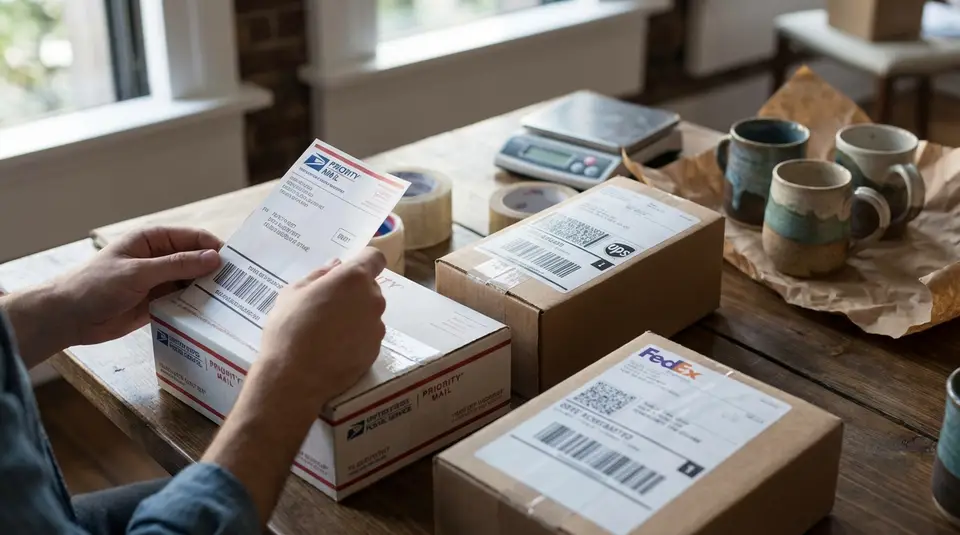
Choosing between USPS vs UPS vs FedEx for Etsy shipping starts with understanding what you actually ship. For most Etsy sellers sending small, lightweight handmade items, USPS usually wins on price and reach, while UPS and FedEx shine for heavy, bulky, high-value, or rushed packages with stronger tracking and delivery guarantees.

As an Etsy shop owner, you also need to factor in residential surcharges, delivery speed expectations, and how often buyers ask for tracking updates or express shipping. Different carriers excel in different situations, so the smartest sellers often mix services instead of picking just one. Let’s break down when USPS, UPS, or FedEx is truly best for Etsy.

What should Etsy sellers think about before picking a shipping carrier?

How shipping affects profit, reviews, and repeat buyers

Shipping is not just “getting the order out the door.” For an Etsy seller, your shipping choices shape your profit margin, your reviews, and whether buyers come back.

Every carrier prices by a mix of weight, box size, distance, and surcharges. A few dollars extra on each label can quietly erase your profit, especially on low‑priced items. USPS is often cheapest for small, light packages, while UPS and FedEx tend to win on heavier or bulkier boxes, but usually add more residential and extra‑handling fees.

Buyers, on the other hand, mostly care about three things:

  1. “Is shipping affordable?”
  2. “Did it arrive when you said it would?”
  3. “Can I see where it is?”

If your shipping is slow, expensive, or poorly tracked, you will see it in your star ratings and “item not received” messages. Strong tracking and realistic delivery estimates reduce “Where is my order?” convos and help protect you if a package is delayed or lost. All three major carriers include tracking on the main parcel services Etsy supports.

Happy repeat buyers usually remember that their order arrived quickly, safely, and in good shape. That often matters more than saving them 50 cents on postage. The sweet spot is choosing a carrier that keeps your costs predictable while still delivering within the time frame you promise in your listings.

Key differences between USPS, UPS, and FedEx for Etsy shops

For most US‑based Etsy shops, these are the big practical differences:

  • USPS Best for small, light packages and broad residential coverage. Services like Ground Advantage and Priority Mail are usually the most affordable for parcels under about 2 pounds, especially when you use Etsy’s discounted labels and cubic pricing for compact boxes. USPS also offers free or low‑cost pickups and naturally reaches PO boxes and rural addresses.

  • UPS Strong choice for heavier, bulkier, or higher‑value items where you want sturdy handling and detailed tracking. UPS Ground and the newer Ground Saver options on Etsy cover most domestic needs, with faster guaranteed air services when buyers pay for express. Rates can be very competitive on mid‑ to large‑size boxes, but residential and extra‑handling surcharges add up, so dimensions matter.

  • FedEx Often shines for larger boxes, fragile or time‑sensitive shipments, and some international orders. With Etsy’s direct FedEx label integration, you can now ship up to 150 lb packages and choose from Ground, Home Delivery, and several express options without leaving your shop dashboard. FedEx can be pricier at small sizes but attractive for big, delicate, or urgent shipments where speed and specialized handling are worth the cost.

In short: USPS usually wins for light Etsy orders, UPS and FedEx start to shine as weight, size, and urgency go up. The “best” carrier for your shop is the one that fits your typical package profile while still giving your buyers a smooth, reliable delivery experience.

Quick comparison: USPS vs UPS vs FedEx at a glance for Etsy

Side‑by‑side overview of price, speed, and reliability

For most Etsy sellers in the US, USPS is usually the cheapest for small, light packages, especially under 1–2 lb. Ground Advantage typically delivers in about 2–5 business days and is priced for budget‑friendly ecommerce shipping, while Priority Mail offers faster 1–3 day delivery at a mid‑range price point and includes tracking and built‑in insurance.

UPS and FedEx tend to cost more per package at low weights, but they become competitive or cheaper as boxes get heavier, bulkier, or travel long distances. Their ground services usually deliver in 1–5 business days, similar to USPS Ground Advantage, but with strong performance on heavier parcels and business‑to‑business lanes.

On reliability, all three carriers deliver the majority of packages on time. USPS has improved its service standards and still targets 2–5 days for Ground Advantage and up to 3 days for Priority Mail, while UPS and FedEx ground networks are built around consistent 1–5 day windows across zones.

A simple way to think about it for Etsy:

  • USPS: Best mix of low price + decent speed for small parcels.
  • UPS: Strong for heavier boxes, higher‑value items, and business addresses.
  • FedEx: Great when you need time‑definite express options or specialized handling.

Which carrier fits digital downloads with the occasional physical item

If you mostly sell digital downloads and only ship a physical item once in a while, you usually want the simplest, lowest‑friction option. For most US Etsy shops, that is USPS, because:

  • You can ship a light item (like a print, sticker sheet, or small charm) via Ground Advantage or First‑Class–type services at a low cost.
  • You can drop packages in a mailbox or schedule free pickup, which is handy if you are not shipping daily.

UPS or FedEx can still make sense if your “occasional” physical item is heavy or high value (for example, a rare framed print or a big custom sign). In that case, paying a bit more for sturdier handling, detailed tracking, and easier claims can be worth it.

When “best overall” is different from “best for your niche”

There is no single “best overall” carrier for every Etsy shop. USPS often wins on paper for small ecommerce packages because of its lower base rates and broad 2–5 day coverage.

But your niche can flip that answer:

  • If you sell heavy candles, large decor, or bulk gift boxes, UPS or FedEx ground may beat USPS on both price and damage rates once you cross a few pounds.
  • If you sell urgent gifts or time‑sensitive items, FedEx and UPS offer more guaranteed express options than USPS’s single Express tier.
  • If you sell budget‑friendly, lightweight handmade goods, USPS is usually the best fit, even if another carrier looks “better” in a generic comparison chart.

So instead of asking “Who is best overall?”, ask: “For my typical order weight, box size, and buyer expectations, who is best?” That answer is what will actually protect your profit, your reviews, and your repeat Etsy customers.

When does USPS make the most sense for Etsy sellers?

USPS is usually the best fit for Etsy sellers who ship small, light, and lower‑value items inside the United States. It shines when you care about keeping shipping affordable, using free or low‑cost packaging, and being able to drop packages at a local post office or mailbox instead of driving to a carrier hub.

Best types of Etsy items for USPS (lightweight, small, under 1–2 lb)

USPS is ideal for:

  • Jewelry, stickers, pins, keychains
  • Small stationery, cards, prints, and zines
  • Lightweight baby items like bows or pacifier clips
  • Small soaps, wax melts, and light skincare
  • Fabric labels, sewing notions, and small craft supplies

Anything that can fit in a padded mailer or small box and stays under about 1–2 lb usually gets the best rates with USPS, especially when you use Etsy’s discounted labels. For very light items under 1 lb, USPS is often cheaper than private carriers, even when you compare ground services.

How USPS Ground Advantage and Priority Mail work for Etsy orders

For most Etsy packages, you will use one of two USPS services:

  • USPS Ground Advantage This is the go‑to option for packages up to 70 lb, but it is especially good for small Etsy orders. It includes tracking and typically delivers in about 2–5 business days within the US. Prices are based on weight, distance (zone), and package size. For items under 1 lb, Ground Advantage is usually the cheapest trackable option.

  • USPS Priority Mail Priority Mail is best when your package is a bit heavier, needs to arrive faster, or fits well in a flat rate box. Delivery is usually around 1–3 business days in the US, with tracking and up to a modest amount of built‑in insurance. For many Etsy sellers, Priority Mail becomes more cost‑effective once a package is over 1 lb, especially if it is going a long distance.

On Etsy, you simply choose the service when you buy the label. Etsy will show you the USPS options and prices based on the buyer’s address and your package details.

Using USPS flat rate boxes and cubic pricing for handmade goods

USPS offers flat rate and cubic‑style pricing that can be very friendly to Etsy shops shipping dense or heavy handmade items in small boxes.

  • Flat rate boxes With flat rate, you pay one set price as long as your item fits in the specific USPS box and stays under the weight limit. This can be great for:
  • Heavy candles in jars
  • Stoneware mugs or small pottery pieces
  • Bundles of soap or bath products

If your item is heavy but compact, flat rate can beat regular weight‑based pricing, especially for long‑distance zones.

  • Cubic‑style pricing (small, dense packages) When you ship a small box that is heavy for its size, cubic‑style pricing (which Etsy may surface automatically through its USPS label options) can lower your cost. The price is based more on the outer dimensions of the box than the exact weight, up to a limit. This is helpful for things like multiple candles, small resin art, or metal hardware that packs tightly into a small carton.

The key is to experiment with a few box sizes and compare what Etsy shows you for Ground Advantage, Priority Mail, and any flat rate or cubic‑style options.

USPS tracking, delivery times, and customer experience on Etsy

USPS labels bought through Etsy include tracking that automatically appears on the order page and in buyer notifications. That means:

  • Buyers can click straight from Etsy to see where their package is.
  • You get fewer “where is my order?” messages.
  • Etsy can see the scan history if there is a dispute.

Typical delivery times:

  • Ground Advantage: about 2–5 business days in the US
  • Priority Mail: about 1–3 business days in the US

Most Etsy buyers are used to seeing USPS tracking and are comfortable with it. They often recognize the tracking format and know they can sign up for text or email updates on the USPS tracking page if they want extra alerts.

However, scan timing can vary. Sometimes a package is not scanned until it reaches a sorting center, which can make it look “stuck” for a day even though it is moving. Setting clear expectations in your shop policies and messages helps keep reviews positive.

USPS pros and cons specifically for home‑based Etsy shops

For home‑based Etsy sellers, USPS has some very friendly advantages, along with a few trade‑offs to keep in mind.

Pros:

  • Post offices and blue collection boxes are widely available.
  • You can often schedule free or low‑cost pickups with your regular mail.
  • Great pricing for small, light packages under 1–2 lb.
  • Free or low‑cost branded boxes and envelopes for certain services.
  • Tracking integrates smoothly with Etsy labels.

Cons:

  • Service quality can vary by local post office and route.
  • Tracking scans are not always as detailed or as fast as some private carriers.
  • Claims for lost or damaged packages can feel slow and paperwork‑heavy.
  • Larger or very heavy boxes may be cheaper with another carrier.

If most of your Etsy orders are small, light, and going to US addresses, USPS will usually be your default carrier. You can then add another carrier later for the occasional big, heavy, or high‑value shipment that does not fit USPS as well.

When is UPS the better choice for your Etsy shop?

UPS tends to shine when your Etsy orders are heavier, bulkier, or more expensive to replace. While USPS is often the go‑to for small, light parcels, UPS can save you money and headaches once weight, size, or value start to climb.

Types of Etsy products that ship better with UPS (heavy, bulky, higher value)

UPS is usually a strong fit for:

  • Heavy items over about 5 lb, especially 10 lb and up.
  • Bulky boxes that are large but not extremely light, like big decor pieces.
  • Higher value orders where you want stronger tracking and insurance options.

Think of things like large candles in glass, multi‑piece mug sets, big wall art, furniture pieces, tools, or premium electronics accessories. Once your package is both “substantial” and “not cheap,” UPS often beats USPS on both handling and perceived security.

UPS Ground vs air services for Etsy orders

For most Etsy sellers, UPS Ground is the workhorse. It is usually:

  • Cost effective for medium to heavy boxes.
  • Fast enough for most buyers, often 1–5 business days within the US.

Air services (like 2‑day or next‑day options) make sense when:

  • A buyer pays extra for rush shipping.
  • You sell time‑sensitive gifts or event items that must arrive by a specific date.
  • The package is very valuable and the buyer expects premium service.

A simple rule: default to Ground for standard orders, and only upgrade to air when the buyer’s deadline or the item’s value truly justifies the extra cost.

How UPS surcharges and residential fees hit small Etsy businesses

UPS pricing can look great at first, then jump once surcharges are added. Common extras include:

  • Residential delivery fees for home addresses.
  • Additional charges for large or awkward boxes.
  • Fuel and peak season surcharges.

For a small Etsy shop, these fees can quietly erase your profit if you do not build them into your shipping prices. It helps to:

  • Check the full “all‑in” rate before listing a shipping price.
  • Test a few sample labels to see how size and weight changes affect the final cost.
  • Consider slightly smaller boxes or smarter packing to avoid oversize fees.

UPS tracking, reliability, and dealing with lost or damaged Etsy packages

UPS is known for detailed tracking and reliable delivery scans, which can reduce “where is my order?” messages. Buyers can usually see each step of the journey, and delivery confirmation is clear.

If a package is lost or damaged, UPS offers a claims process, but it can take time and documentation. Keep photos of how you pack, save receipts, and upload clear proof of value. Communicate with your buyer early, offer a replacement or refund according to your shop policies, and then pursue the claim in the background so the customer is not left waiting.

When you are shipping heavier, bulkier, or higher‑value Etsy orders, UPS can be the safer, more professional‑feeling choice, as long as you stay on top of surcharges and protect your margins.

When should Etsy sellers choose FedEx instead?

FedEx tends to shine when your Etsy orders are fragile, time‑sensitive, or physically large. If you sell items that really cannot arrive late or smashed, it is worth running the numbers with FedEx, even if the base rate looks higher at first glance.

Etsy product types that are a good fit for FedEx (fragile, time‑sensitive, larger boxes)

FedEx is often a strong choice for:

  • Fragile decor and art in larger boxes, like framed prints, mirrors, glassware, or custom neon signs.
  • High‑value electronics or equipment that need solid tracking and careful handling.
  • Perishable or temperature‑sensitive goods that must stay within a safe range, such as certain foods, cosmetics, or wellness products, when paired with the right packaging and service level. FedEx offers dedicated temperature‑control options and guidance for ambient, cold, and frozen shipments, which can be helpful if your shop grows into that space.

If your average box is bigger than a shoebox or your items are both delicate and pricey, FedEx is usually worth a close look.

FedEx Ground vs Home Delivery vs Express for Etsy customers

For most Etsy sellers in the United States, you will mainly see three FedEx services:

  • FedEx Ground: Delivers to commercial addresses. It is typically the base option for heavier or larger shipments going to businesses.
  • FedEx Home Delivery: This is FedEx’s residential version of Ground. It serves houses and apartments, usually in 1–5 business days for most of the continental U.S., with delivery windows that can extend into the evening.
  • FedEx Express services (like Overnight or 2‑Day): These are the “rush” options. They cost more but are ideal when a buyer pays for expedited shipping or when you are sending something perishable or time‑critical. FedEx itself recommends next‑day services for many temperature‑sensitive shipments.

A simple way to think about it:

  • Use Home Delivery / Ground for standard, non‑urgent orders in bigger or heavier boxes.
  • Offer Express as an upgrade when buyers need guaranteed speed or when the product cannot sit in a truck for several days.

Special cases like oversized, specialty, or temperature‑sensitive items

FedEx is built to handle oversized and specialty shipments that might be awkward or expensive with other carriers. Packages up to 150 lb and large dimensions can still go through standard FedEx services, though extra‑large boxes trigger oversize or additional‑handling fees.

This can be a good fit if you sell:

  • Large furniture pieces, big wall art, or bulky props.
  • Sculptures or installations that need careful packing and may exceed normal size limits.
  • Temperature‑sensitive products, where you combine insulated packaging with FedEx’s temperature‑control and cold‑chain options. FedEx offers solutions for controlled room temperature, refrigerated, frozen, and deep‑frozen shipments, plus monitoring services for more advanced needs.

If your Etsy shop ever grows into shipping pallets or very heavy items, FedEx’s freight and specialized services can also become part of your long‑term mix.

FedEx pricing quirks and common gotchas for small sellers

FedEx can be fantastic, but there are a few pricing quirks Etsy sellers should watch closely:

  • Dimensional weight (DIM) pricing: FedEx charges based on the higher of actual weight or dimensional weight. As of August 18, 2025, they round every fractional inch up to the next whole inch before calculating DIM weight, which can quietly increase costs for lightweight but bulky boxes.
  • Oversize and additional‑handling fees: Long or very large boxes can trigger significant surcharges once they pass certain length or girth thresholds. This is common with big art pieces or furniture.
  • Residential surcharges: Shipping to homes (which is most Etsy orders) usually adds a residential fee, especially through Home Delivery. That can make a FedEx quote look fine at first, then jump once surcharges are included.

To avoid surprises, always:

  1. Measure boxes carefully and round up when you enter dimensions.
  2. Check how the rate changes if you use a slightly smaller box or different packing style.
  3. Compare the final price (including surcharges) with other carriers for a few test orders.

If your Etsy products are fragile, large, or time‑sensitive, FedEx can absolutely be the right choice. You just want to understand how their pricing works so those strengths help your shop, not your shipping bill.

How Etsy shipping labels work with USPS, UPS, and FedEx

Etsy shipping labels are meant to keep everything in one place: you buy the label, print it, and Etsy automatically adds tracking to the order. You can use Etsy labels for USPS, UPS, and FedEx on eligible orders, then drop packages off or schedule pickups with the carrier. The big perks are built‑in discounts, automatic tracking, and having all your shipping data tied to your shop.

Which carriers you can buy labels for directly in Etsy

For US‑based sellers, Etsy currently lets you buy domestic and (in many cases) international labels for:

  • USPS: the default option for most small and lightweight Etsy orders.
  • UPS: mainly for heavier, bulkier, or higher‑value shipments.
  • FedEx: available to many US sellers, especially for faster or larger‑box services.

Exactly which services you see depends on your location, the buyer’s address, and the package details you enter. Etsy only shows services that can actually handle that shipment.

Etsy label discounts vs going straight to the carrier site

When you buy USPS, UPS, or FedEx labels through Etsy, you usually get commercial or platform‑level discounts that are better than walking into a post office or retail counter. For many small Etsy packages, USPS services bought through Etsy are noticeably cheaper than retail rates.

However, carrier websites sometimes run their own negotiated or promo rates, especially if you ship high volumes or open a business account. In rare cases, that can beat Etsy’s price for certain zones or weights. A smart approach is to:

  1. Check Etsy’s label price for a few “typical” orders.
  2. Compare with the same shipment on the carrier’s site.

If Etsy is close or cheaper (it often is for small sellers), the convenience of automatic tracking and order integration usually wins.

Adding your own UPS or FedEx labels and tracking to Etsy orders

You are not locked into Etsy labels. If you buy a UPS or FedEx label elsewhere, you can still:

  1. Mark the order as shipped in Etsy.
  2. Choose the correct carrier from the dropdown.
  3. Paste in the tracking number.

Etsy will then show tracking updates to the buyer just like it would for an Etsy‑purchased label. The trade‑off is that you lose Etsy’s built‑in label discounts and some protections that only apply when you buy labels through Etsy.

What Etsy’s protections and policies cover (and what they don’t)

Etsy’s policies around shipping focus on whether you shipped on time, provided valid tracking, and packed items reasonably well. When you use Etsy shipping labels:

  • Tracking is attached automatically, which helps in non‑delivery or “item not received” disputes.
  • Some carriers include limited insurance; you can often add more coverage at purchase.
  • Etsy can see the exact scan history, which may help if there is a case or chargeback.

However, Etsy’s protections are not a blanket guarantee. They typically do not cover:

  • Packages scanned as delivered that a buyer claims were stolen from their porch.
  • Damage caused by poor or unsafe packaging.
  • Losses above the carrier’s included or purchased insurance limits.

Think of Etsy labels as a helpful tool: they simplify shipping, often lower your costs, and make it easier to prove you shipped on time. But you still need good packaging, realistic handling times, and clear policies in your shop to fully protect yourself.

Comparing real costs: small, medium, and heavy Etsy packages

Under 1 lb: who’s usually cheapest for typical Etsy jewelry or stickers?

For Etsy packages under 1 lb, USPS is usually the clear winner on price, especially when you use Etsy’s discounted labels. Lightweight items like jewelry, stickers, keychains, and small accessories often ship cheapest with:

  • USPS Ground Advantage for parcels up to 15.999 oz
  • USPS First‑Class Large Envelope / Flats for very slim, bendable mailers that still qualify as merchandise

In many cases, a 3–8 oz package will cost less with USPS than with UPS or FedEx, even after their discounts. UPS and FedEx tend to have a higher minimum charge for small parcels, so they rarely beat USPS on tiny Etsy orders unless you have a special negotiated rate.

If you ship a lot of under‑1‑lb orders, focus on keeping packaging light and compact so you stay in USPS’s cheapest weight tiers.

1–5 lb: best options for candles, mugs, and home décor

In the 1–5 lb range, the “best” carrier starts to depend more on distance and box size. For many Etsy sellers:

  • USPS Priority Mail is often cost‑effective for small but dense items like candles, mugs, and small home décor, especially when they fit in a cubic‑priced or flat‑rate style box.
  • UPS Ground frequently becomes cheaper than USPS for heavier boxes going farther across the country, particularly for zones 5–8.
  • FedEx Ground / Home Delivery can be competitive for 3–5 lb boxes, especially if the package is a bit larger.

A good rule of thumb:

  • Short distance + compact box → USPS often wins.
  • Longer distance + slightly heavier box → UPS or FedEx often pull ahead.

Over 5–10+ lb: which carrier wins for large or bulky handmade items?

Once your Etsy package is over 5 lb, especially 10 lb and up, UPS and FedEx usually beat USPS on price, particularly for:

  • Large wall art
  • Multiple candles in one box
  • Heavy home décor or bulk orders

USPS prices climb quickly with weight and distance, and large boxes can trigger dimensional pricing. UPS Ground and FedEx Ground/Home Delivery are built for heavier parcels and often offer better rates and handling for big, sturdy boxes.

For very large or awkward packages, it is common for Etsy sellers to default to UPS Ground or FedEx Ground/Home Delivery and only use USPS for smaller, lighter orders.

How zones, distance, and surcharges quietly change the “cheapest” option

Even when one carrier looks cheapest on paper, shipping zones, distance, and surcharges can flip the result:

  • Zones & distance: A service that is cheapest for a nearby state might be much more expensive for cross‑country orders. USPS can be great for regional shipping, while UPS or FedEx may win for long‑haul heavy boxes.
  • Dimensional weight: Large but light boxes (like wreaths or pillows) may be billed as if they weigh more, especially with UPS and FedEx. That can erase any price advantage.
  • Residential and rural fees: UPS and FedEx often add residential or extended‑area surcharges that do not apply the same way with USPS. Those extra dollars can make a “cheaper” rate suddenly more expensive.
  • Fuel and peak surcharges: Around holidays or during fuel spikes, extra fees can change which carrier is truly lowest.

Because of all these quiet add‑ons, the smartest approach is to compare real quotes for your exact weight, size, and destination instead of assuming one carrier is always cheapest for a given weight range. Over time, you will see clear patterns for your own Etsy shop and can build simple rules like “USPS under 1 lb, UPS over 5 lb, compare in the middle.”

Shipping speed and reliability your Etsy buyers will actually feel

Average delivery times by carrier for US Etsy orders

For most US Etsy orders, buyers mainly feel two things: how fast the package shows up and whether it arrives when the tracking said it would. In general, USPS Ground Advantage is usually 2–5 business days, while USPS Priority Mail is often 1–3 business days for domestic shipments. UPS Ground and FedEx Ground / Home Delivery typically land in the 1–5 business day range, depending on distance.

In real life, that means:

  • Short‑distance shipments often arrive in 1–2 days with any of the three carriers.
  • Cross‑country packages are more likely to take 3–5 days, sometimes a bit longer for rural areas.

What your buyer remembers is not the exact service name, but whether the order arrived roughly when your Etsy estimate said it would.

On‑time performance during busy seasons and holidays

During peak season (especially November and December), all three carriers slow down, but not always in the same way. USPS tends to feel the crunch on lower‑priced services like Ground Advantage, while Priority Mail and Express usually hold up better. UPS and FedEx often keep stronger on‑time performance for ground and air services, but they can still see delays in certain regions or after big weather events.

For Etsy sellers, the key is to pad your handling and transit estimates a bit during the holidays and clearly communicate “order by” dates. If you know your local post office gets swamped, you might switch higher‑value or last‑minute gifts to UPS or FedEx for a more predictable delivery window.

How tracking quality reduces “where is my order?” messages

Good tracking is almost as important as speed. USPS, UPS, and FedEx all offer end‑to‑end tracking on the main services Etsy sellers use, but the experience feels different:

  • USPS scans can be a little patchy in some areas, yet they usually show key steps like acceptance, in transit, out for delivery, and delivered.
  • UPS and FedEx often show more detailed scans and time‑stamped movements, which can reassure anxious buyers.

Clear, frequent tracking updates mean fewer “where is my order?” messages, because buyers can see progress themselves. Make sure you:

  • Buy services that include tracking.
  • Upload tracking numbers correctly and ship on the day you mark the order as sent.
  • Encourage buyers to check tracking in Etsy messages instead of guessing.

Balancing speed vs cost when buyers choose Standard vs Express

When a buyer picks Standard shipping, they are usually saying, “I want a fair price and I’m okay waiting a few days.” For most Etsy shops, that means USPS Ground Advantage, USPS Priority Mail, UPS Ground, or FedEx Ground / Home Delivery. These options balance cost and speed well for everyday orders.

When a buyer pays for Express or “rush” shipping, they are paying for a promise. That usually means USPS Priority Mail Express, UPS 2nd Day Air / Next Day Air, or FedEx Express services. Before you offer these, check:

  • How much faster they really are for your typical zones.
  • Whether the extra cost still leaves you a profit after Etsy fees and packaging.

A simple rule: use the cheapest reliable ground option for non‑urgent orders, and reserve express services for time‑sensitive gifts, event items, or when a buyer specifically asks and agrees to the higher price. This way, your Etsy shipping feels fast enough, fair, and trustworthy without quietly eating your profit.

International Etsy orders: USPS vs UPS vs FedEx

Cheapest ways to send small Etsy items overseas

For small, low‑value Etsy items like jewelry, stickers, pins, or lightweight accessories, USPS is usually the cheapest way to ship internationally from the United States.

For packages under 4 lb and under about $400 in value, First‑Class Package International Service is the budget workhorse. It is slower and has limited tracking to some countries, but its base price is typically far below private carriers for the same weight and destination.

If you ship a bit more volume or buy labels through a discounted platform, commercial USPS rates can drop further, which keeps small Etsy orders affordable. UPS and FedEx do offer economy international services, but for truly tiny parcels they usually cost more than USPS unless you have strong negotiated discounts.

A simple rule of thumb:

  • Under 4 lb, not super urgent, and not very high value → USPS is usually your best first quote.
  • Over 4 lb or very high value → start comparing UPS and FedEx as well.

When to upgrade to UPS or FedEx for international shipments

There are times when paying more for UPS or FedEx is worth it:

  • Your Etsy order is time‑sensitive (wedding items, event decor, gifts with a hard date). Express services from UPS or FedEx often deliver faster and with more predictable transit times than postal networks.
  • The package is heavier or bulkier, where USPS pricing jumps and private carriers become competitive.
  • You want end‑to‑end tracking and better customs handling, especially to countries where postal tracking is spotty or delayed.
  • You want to ship Delivered Duty Paid (DDP) so the buyer pays everything upfront at checkout and does not get a surprise bill on delivery. Many UPS and FedEx services support DDP options, while postal shipments are more often Delivered Duty Unpaid.

If you sell higher‑priced goods or ship to regions with frequent postal delays, testing a UPS or FedEx economy service on a few orders can quickly show whether the extra cost is worth the smoother experience.

Customs forms, duties, and surprise fees your buyers might face

For every international Etsy order, you must complete accurate customs forms: clear item description, quantity, value in USD, weight, and country of origin. Incomplete or vague descriptions can cause delays or returns.

Buyers may face:

  • Import duties and tariffs based on the item type, value, and destination country.
  • VAT or GST in regions like the EU, UK, Australia, and New Zealand. In many of these markets, Etsy now collects VAT at checkout for qualifying low‑value orders and passes it to tax authorities, but customs may still charge duty on higher‑value packages.
  • Carrier handling or brokerage fees, especially when the shipment is Delivered Duty Unpaid.

Etsy’s help docs explain when Etsy itself collects VAT or similar taxes and when the buyer will pay their local customs office instead. As the seller, you are still responsible for following export rules and including any required tariff (HS) codes, especially for shipments into the EU.

To reduce “surprise fee” drama:

  • Add a short note in your listings and shipping policies that buyers are responsible for customs, duties, and local taxes unless otherwise stated.
  • For key markets where buyers hate surprise bills, consider using a DDP option with UPS or FedEx and building that cost into your shipping price.

Handling delayed or lost international packages gracefully

International Etsy orders will occasionally be delayed, misrouted, or even lost, no matter which carrier you choose. How you respond can turn a stressful situation into a loyal repeat customer.

A simple approach:

  1. Set realistic expectations upfront. For USPS First‑Class Package International, delivery time “varies by destination” and can stretch well beyond the estimate, especially during holidays or disruptions.
  2. When a buyer asks “Where is my order?”, respond quickly with:
  • The tracking link and what the latest scan means.
  • A friendly explanation that customs and local postal processing can add days or weeks.
  1. If tracking has not updated for a long time, open an inquiry with the carrier and tell the buyer exactly what you are doing and when you will update them.
  2. Decide in advance when you will refund or reship. Many Etsy sellers pick a time frame like 30–45 days after the last scan, depending on destination.
  3. For higher‑value orders, use insurance or carrier options that include better loss coverage, so you are not fully out of pocket if a package disappears.

Staying calm, proactive, and transparent about customs and carrier delays makes international shipping feel much less scary for both you and your Etsy buyers.

How to choose the best carrier mix for your unique Etsy shop

Simple decision tree: which carrier for which order

A simple way to pick a carrier is to walk through four quick questions for every Etsy order:

  1. How heavy and big is it?
  • Under 1–2 lb and small: usually start with USPS.
  • Over 5 lb or bulky: check UPS and FedEx first.
  1. How fast does the buyer need it?
  • Standard delivery: USPS Ground Advantage or UPS/FedEx Ground.
  • Rush / guaranteed by a date: look at UPS or FedEx air and show the higher price clearly.
  1. How valuable or fragile is it?
  • Low value, not fragile: cheapest tracked option is fine, often USPS.
  • High value or fragile: compare UPS and FedEx, add insurance, and choose the one with better tracking and delivery guarantees to the destination.
  1. Where is it going?
  • Short distance in the US: USPS is often very competitive.
  • Long distance or remote areas: compare all three; sometimes UPS or FedEx wins on reliability even if the label is a bit more.

Over time, you will see patterns and can turn this into your own “if X, then Y carrier” rule set.

Testing different carriers on a few orders without hurting your reviews

You can safely test carriers if you:

  • Keep delivery estimates honest. Never promise faster shipping than the service usually provides.
  • Start with low‑risk orders. Try new carriers on lower‑value, non‑urgent items first.
  • Tell buyers what to expect. A short note like “This order will ship with UPS Ground and should arrive in about 3–5 business days” sets clear expectations.
  • Watch tracking and messages. If “where is my order?” messages spike after a change, that carrier or service level may not be a good fit.

A small test batch of 5–10 orders per carrier type is usually enough to see patterns in speed, damage, and buyer reactions.

Using third‑party shipping tools to compare rates in one place

Third‑party shipping tools can be very handy for Etsy sellers who ship with more than one carrier. They typically let you:

  • Enter weight, box size, and destination once.
  • See USPS, UPS, and FedEx rates side by side.
  • Spot surcharges, residential fees, and delivery estimates before you buy.

This makes it easier to choose the best option for each order instead of guessing. Many tools also store your package presets, so you can quickly compare rates for your “standard candle box” or “mug box” without retyping details every time.

When it makes sense to use more than one carrier long‑term

Most growing Etsy shops end up with a carrier mix instead of a single “forever” carrier. Using more than one makes sense when:

  • You sell both light and heavy items (for example, stickers and big gift boxes).
  • You ship fragile or high‑value pieces that feel safer with a premium ground or air service.
  • Your orders go to a mix of local and long‑distance buyers, and one carrier is clearly better in certain regions.
  • You want backup options during peak season if one carrier slows down or raises surcharges.

A common long‑term setup is: USPS for small, light, everyday orders; UPS or FedEx for heavy, bulky, or high‑value shipments; and a flexible third‑party tool to compare rates and print labels. With a little testing and tracking, you can build a carrier mix that protects your profit, keeps buyers happy, and still feels simple to manage.

Related posts

Keep reading