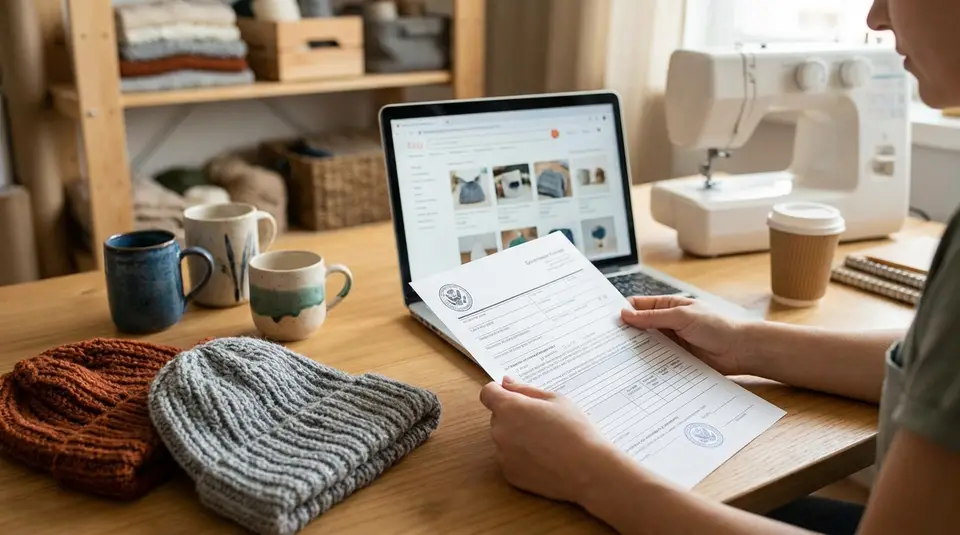
Do You Need a Business License to Sell on Etsy?
Selling on Etsy as a US creator means balancing creativity with some real‑world rules about business licenses, permits, and taxes. While Etsy does not itself require a business license just to open a shop, your state, county, or city may require one if you’re truly running a business rather than a casual hobby.
In this article, we’ll walk through how to tell if your Etsy shop is a hobby or a business, when local governments usually expect a business license to sell on Etsy, how sales tax permits and home‑based business rules can apply, and what US tax basics every Etsy seller should know. By the end, you’ll clearly understand whether you need a business license to sell on Etsy.
Quick answer: do you actually need a business license to sell on Etsy?
Short version: Etsy itself does not require a business license to open a shop, but your city, county, state, and the IRS might treat you as a business anyway. If what you are doing is more than a casual hobby and you intend to make a profit, you should assume you may need some kind of business license or registration, even if Etsy never asks for it.
What Etsy itself requires (and what it doesn’t)
Etsy’s own rules focus on what you sell and how you behave on the platform. They care that:
- Your items fit their categories (handmade, vintage, or craft supplies).
- You follow their seller policies, pay fees, and obey applicable laws.
They do not ask you to upload a business license when you create a shop, and they do not decide whether you are a “hobby” or a “business” for legal or tax purposes. Etsy basically says: you are responsible for following local laws, taxes, and licensing rules where you live.
When your Etsy shop is just a casual hobby
An Etsy shop is closer to a hobby when:
- You sell only once in a while, with low and irregular income.
- You mainly list items for fun or to clear out supplies, not to build profit.
- You do not rely on the money to pay your regular bills.
- You are not running it in a very “businesslike” way (no real planning, marketing, or systems).
For U.S. taxes, the IRS says a hobby is something you do for pleasure, without a real intent to make a profit. You still must report any income, but hobby income is treated differently from business income and you generally cannot deduct hobby expenses like a business can.
If your Etsy activity truly stays at this casual level, many local governments will not require a formal business license. But that line can shift over time as you sell more.
When your Etsy shop is legally considered a real business
Your Etsy shop is usually considered a business once you are trying to make a profit on purpose, even if you are still small. The IRS looks at several factors, such as:
- Do you run the shop in a businesslike way (keeping records, tracking costs, adjusting prices)?
- Do you put real time and effort into making it profitable?
- Do you depend on the income, or expect it to grow over time?
- Does the shop make a profit in some years, or do you reasonably expect it to?
If the honest answer is “yes, I’m trying to build income here,” then you are likely operating a business, even if you still call it a side hustle. At that point:
- You generally report your Etsy income as business income (often on Schedule C as a sole proprietor).
- Your city, county, or state may expect you to register and get a business license, just like any other small business in your area.
So the real test is not “Does Etsy ask for a license?” but “Am I actually running this like a business?” If the answer is yes, it is time to check your local rules and treat your Etsy shop like a real business from a legal and tax point of view.
How Etsy’s rules and your local laws work together
Etsy’s seller policies vs. government requirements
Etsy’s own rules focus on what you can sell, how you treat buyers, and how you use the platform. Their seller policy does not say “you must have a business license” before you open a shop. Instead, Etsy tells you that you are responsible for following any laws that apply where you live, including tax and licensing rules.
Government rules work very differently. City, county, and state agencies decide when an activity counts as “doing business” in their area. Once it does, they may require things like:
- A general business license
- A home‑occupation permit if you work from home
- A state sales tax or seller’s permit
Those rules apply whether you sell on Etsy, at local markets, or from your own website.
So Etsy’s seller policies are only half the picture. The other half is whatever your local government expects from any small business.
Why “Etsy doesn’t ask for a license” is not the full story
Many new sellers assume: “If Etsy doesn’t ask for a business license, I must not need one.” That is a risky shortcut.
Etsy is a marketplace, not a government agency. They are not checking zoning rules for your neighborhood, or whether your state wants you to register for sales tax. In fact, legal guides are very clear that you may still need licenses or permits even though Etsy itself does not require them.
In some places, any ongoing retail activity counts as a business, even if it is small or part‑time. In others, you only need a license once you pass a certain sales threshold or start storing inventory at home. If you ignore those rules, you could face fines, back taxes, or even “operating without a license” charges, depending on your state.
So “Etsy doesn’t ask for a license” really means “Etsy leaves compliance up to you.”
Simple steps to check your city, county, and state rules
You do not need a lawyer to get a basic answer. A short checklist usually does the trick:
-
Look up your state’s business and tax sites. Search “[Your State] department of revenue seller’s permit” or “[Your State] business license online.” Most states explain when online or home‑based sellers must register, and how sales tax works for marketplace sellers.
-
Check your city and county business pages. Go to the official website for your city and county and look for sections labeled “business license,” “occupational tax,” or “home‑based business.” Many places have a simple FAQ or a one‑page form for small online shops.
-
Call or email a real person. If the website is confusing, contact:
- The city or county business license office
- The zoning or planning department (for home‑occupation rules)
- Your state’s small business or economic development office
Tell them: “I run a small Etsy shop from my home. I ship everything by mail and do not have customers coming to the house. Do I need a business license or home‑occupation permit?” They answer this kind of question all the time.
- Write down what they tell you. Note the date, the office, and the person you spoke with, plus any forms they mention. This gives you a clear record that you tried to comply in good faith.
A little checking now keeps your Etsy shop on the happy side of both Etsy’s rules and your local laws.
How to tell if your Etsy shop is a hobby or a business
Easy signs your shop is more than a hobby
A hobby Etsy shop is something you do for fun, with a little money coming in now and then. A business is something you run with the goal of making a profit.
Your Etsy shop is probably more than a hobby if several of these feel true:
- You regularly restock, plan launches, or follow a schedule.
- You track costs, set prices on purpose, and care about profit margins.
- You reinvest earnings into supplies, tools, ads, or branding.
- You market your shop on social media, email, or paid ads.
- You keep records of sales and expenses, even in a simple spreadsheet.
- You depend on the income to help pay bills, debt, or savings goals.
One or two of these alone does not automatically make it a business, but the more you treat your Etsy shop like a real operation, the more likely the law will see it that way too.
What the IRS looks at when deciding hobby vs. business
For U.S. sellers, the IRS does not use one single test. Instead, it looks at your intent to make a profit and your overall behavior. Key factors include:
- Do you run the shop in a businesslike way (records, separate accounts, budgeting)?
- Do you put in time and effort that shows you want it to be profitable?
- Do you depend on the income for your livelihood?
- Have you made a profit in some years, or do you expect to soon?
- Do you change your methods to try to improve profits (new products, pricing, marketing)?
- Do you have experience or get advice to help you run it better?
There is also a “3 out of 5 years” guideline: if an activity shows a profit in at least three of the last five tax years, the IRS may presume it is a business, not a hobby. That is not a guarantee, but it is an important clue.
How this decision affects licenses, permits, and taxes
Whether your Etsy shop is treated as a hobby or a business affects more than just labels. It changes how you handle taxes and often whether you should have licenses or permits.
If it is a hobby:
- You still must report income, but you generally cannot deduct hobby expenses like a business.
- Local officials are less likely to see it as a formal business, but they still can, especially if neighbors complain or traffic increases.
If it is a business:
- You report income and can usually deduct ordinary and necessary business expenses.
- You may need a general business license, a home‑based business permit, and possibly a sales tax permit, depending on your state and city.
- You are expected to keep better records, collect and remit any required sales tax, and follow zoning and home‑business rules.
A simple way to think about it: the moment you start treating your Etsy shop like a real source of income, it is time to assume the law might treat it like a real business too, and to check what licenses, permits, and tax steps apply where you live.
Common licenses and permits Etsy sellers may need in the U.S.
General business license for home-based Etsy shops
A general business license is the basic “permission to operate” that many cities or counties require, even for a small home-based Etsy shop. It usually has nothing to do with how big you are. Some places want you to register as soon as you are regularly selling with the intent to make a profit, even if you only make a few sales a month.
In many areas, this license is issued by your city hall or county clerk’s office. Fees can be low for tiny businesses, and sometimes there is a special category for home-based or very small operations. Other places do not require a general license at all, so it really depends on your local rules.
If you are advertising, taking custom orders, or treating your Etsy shop like a real side business, it is smart to check whether a general business license is required where you live.
Home occupation or cottage industry permit for working from home
Because you are running your Etsy shop from home, your local zoning rules may require a home occupation permit (sometimes called a cottage industry permit). This is about how you use your home, not about Etsy itself.
Cities and counties use these permits to make sure home businesses do not create parking problems, noise, or safety issues. They may limit things like:
- Having customers pick up orders at your house
- Hiring employees who come to your home
- Storing large amounts of inventory or supplies
Many Etsy sellers get approved easily, especially if they only ship items out and do not have walk-in customers. But if you use tools, equipment, or materials that could be noisy or hazardous, a home occupation permit is even more important to look into.
Sales tax permit / seller’s permit for product sales
If you sell physical products and your state has a sales tax, you may need a sales tax permit (also called a seller’s permit, resale permit, or sales and use tax license). This is what lets you collect sales tax from buyers and send it to the state.
Etsy now collects and remits sales tax for many U.S. states on online marketplace orders, but that does not automatically mean you never need your own permit. You may still need one if:
- Your state requires all businesses to register, even if the marketplace collects tax
- You sell in person at craft fairs or markets
- You buy supplies or inventory tax-free for resale
Each state has its own rules and thresholds, so it is worth checking your state’s department of revenue website to see whether a small Etsy shop needs a sales tax permit.
When you might need a DBA (“doing business as”) name
A DBA (doing business as) is a way to legally use a business name that is different from your personal legal name. You might need a DBA if:
- Your Etsy shop name is not just your first and last name
- You want to open a business bank account under your shop name
- Your state or county requires registration of any “fictitious” or trade name
For example, if your legal name is Taylor Smith and your shop is called “Moonlight Clay Co,” your state or county may ask you to file a DBA for “Moonlight Clay Co.” This filing does not create a separate legal entity like an LLC. It simply tells the public who is behind the business name.
Not every state requires a DBA for every situation, and the process is usually simple and low cost. If you plan to build a brand around your Etsy shop name, checking whether you need a DBA is a smart early step.
Special rules for what you sell on Etsy
Extra licenses for food, cosmetics, candles, and children’s items
Some types of products on Etsy are more heavily regulated than others, especially in the U.S. If you sell food, cosmetics, candles, or children’s items, you may need extra licenses or inspections on top of any basic business license.
For food and drink, many states treat you as a food business, even if you bake at home. You may fall under a “cottage food” law, which can require registration, a permit, an inspected kitchen, and limits on what you can sell (for example, shelf‑stable baked goods but not refrigerated items). You are also responsible for safe production, storage, and shipping so products do not become contaminated or spoiled.
For cosmetics like soaps, lotions, balms, and makeup, U.S. federal law requires proper labeling and safe ingredients. Labels must include things like an ingredient list, product identity, net contents, and the name and contact information of the maker or distributor. Misbranded cosmetics are illegal to sell, and some ingredients and color additives are restricted or banned. States can add their own chemical rules on top of that.
Candles are treated as fire‑risk products. While you do not usually “register” candles with the government, you are expected to follow safety standards such as ASTM F2417 for candle fire safety and to use proper warning labels (for example, “Burn within sight. Keep away from things that catch fire. Keep away from children.”). Containers must be stable and able to withstand heat without shattering.
Anything marketed for children (toys, clothing, decor, teethers, etc.) can trigger federal safety rules, testing, and tracking labels under U.S. consumer product safety laws. Etsy also bans recalled or unsafe items and can remove listings that appear hazardous.
If you are in any of these categories, it is smart to check both federal rules and your state or local health or consumer safety agencies before you list a single item.
Safety and labeling rules handmade sellers should know
Even if your handmade product seems simple, you are still responsible for product safety and accurate labeling.
For U.S. cosmetics, labels must not be false or misleading and must include required information in the right place and format. Missing or incorrect labels can make a product “misbranded,” which is illegal to sell.
For candles and many home products, safety warnings should be clear, visible, and durable. Candle labels should include a standard fire‑safety warning and any extra instructions (trim the wick, keep away from drafts, etc.), and the candle itself should be designed to burn safely without tipping or overheating the container.
If you sell craft materials or kits that include chemicals, colorants, or food ingredients, you may need hazard warnings, ingredient disclosures, or child‑resistant packaging, depending on what is inside. U.S. laws like the Federal Hazardous Substances Act and Poison Prevention Packaging Act can apply, and Etsy may remove listings that look unsafe or non‑compliant.
In short:
- Be honest and specific in your descriptions and labels.
- Include ingredients and clear warnings where required.
- Avoid banned or restricted ingredients and unsafe designs.
Doing this protects buyers, keeps you aligned with Etsy’s policies, and reduces your risk of complaints or recalls.
What to watch for with vintage, branded, or fan art products
Vintage and “inspired” items can be fun to sell, but they come with intellectual property and safety traps.
For vintage items, Etsy requires that they be at least 20 years old. You also cannot sell recalled or dangerous products, so be careful with old toys, electronics, or decor that might not meet modern safety standards.
For branded items (logos, characters, team names, designer patterns), copyright and trademark law still apply. Using someone else’s logo or character on your handmade goods or digital designs without permission is usually infringement, even if you drew it yourself or changed it a bit. Rights holders can send takedown notices, Etsy can remove your listings or close your shop, and in serious cases you could face legal action.
That means:
- “Fan art” of movies, games, sports teams, or brands is risky unless you have a proper license.
- Fabric or supplies printed with licensed characters often come with terms that do not allow you to sell finished products commercially.
- Phrases, logos, and shapes can be protected trademarks, not just images.
If you want to sell items that feature someone else’s brand or characters, the safest path is to either:
- get written permission or a license, or
- avoid using protected material and create your own original designs instead.
Paying attention to these special rules for what you sell on Etsy keeps your shop safer, more professional, and much more likely to grow without surprise takedowns.
Do you need an LLC or EIN to start selling on Etsy?
You can start selling on Etsy in the U.S. without an LLC and without an EIN. Most new sellers begin as simple sole proprietors using their own legal name and Social Security number. The key question is not “What does Etsy require?” but “What structure and ID number make the most sense for my situation?”
Selling as a simple sole proprietor under your own name
For many beginners, sole proprietorship is the default and easiest path:
- You do not file special formation papers to “create” a sole proprietorship. If you sell on Etsy under your own legal name and you are not incorporated, you are a sole proprietor by default.
- Etsy will ask for tax information so it can report your income to the IRS when required. As a sole proprietor, you can usually provide your SSN and your legal name.
- Your Etsy income is reported on your personal tax return, typically on Schedule C with your Form 1040.
This setup works well if you are just testing the waters, making small sales, or not ready to invest in a formal business structure. The main downside is that there is no legal separation between you and the business. Debts and certain legal claims can reach your personal assets.
When it makes sense to form an LLC for your Etsy shop
An LLC (limited liability company) is not required to sell on Etsy, but it can be helpful once your shop grows or your risk increases. It may be worth forming an LLC if:
- Your shop is earning consistent, meaningful profit, not just occasional pocket money.
- You carry inventory, hire helpers, or sign contracts (for example, wholesale or supply agreements).
- Your products carry higher risk, such as skincare, candles, or items for children, where injuries or property damage are more of a concern.
- You want a clearer line between “me” and “the business,” both for liability and for how you present yourself to customers and partners.
An LLC can help protect your personal assets if the company is sued or cannot pay its debts, as long as you keep business and personal finances properly separated and follow state rules. It can also make it easier to open a business bank account and sometimes looks more professional to buyers or collaborators.
However, an LLC comes with state filing fees, possible annual reports, and sometimes extra taxes or franchise fees, depending on where you live. If your Etsy shop is very small or experimental, those costs may not be worth it yet.
Using an SSN vs. getting an EIN for your Etsy business
In the U.S., Etsy and payment processors need a taxpayer ID for reporting and verification. You usually have two options:
Using your SSN
- Easiest for a one-person sole proprietorship using your own name.
- No extra registration is required.
- The downside is that you are sharing your personal number with platforms, banks, and sometimes vendors, which some people find uncomfortable from a privacy standpoint.
Getting an EIN (Employer Identification Number) An EIN is a federal tax ID issued by the IRS. You can get one even if you are a one-person sole proprietor with no employees. It can be a good idea if:
- You want to avoid using your SSN on business forms whenever possible.
- You formed an LLC or partnership; in many cases, those entities are expected to use an EIN.
- You plan to hire employees or may do so in the near future.
- Your bank requires an EIN to open a business account in your shop’s name.
Applying for an EIN is free and done directly with the IRS. It does not, by itself, change your tax structure or make you a company. It simply gives your Etsy shop a separate tax ID you can use instead of your SSN in most business contexts.
In short: you can absolutely start selling on Etsy as a sole proprietor using your SSN. As your shop grows, you can later decide whether an LLC and an EIN make sense for better protection, privacy, and professionalism.
What happens if you sell on Etsy without the right license?
Possible fines, penalties, and legal trouble
Selling on Etsy without the right business license or permits does not usually land you in handcuffs, but it can get expensive and stressful fast.
If your city, county, or state requires a business license, sales tax permit, or home‑based business approval and you skip it, you can face:
- Fines and back fees for operating an unlicensed business
- Back taxes, interest, and penalties if you should have been collecting and remitting sales tax
- Orders to stop operating until you get compliant (a “cease and desist” letter)
In more serious cases, especially for regulated products like food, cosmetics, or children’s items, agencies can seize products, revoke permits, or ban you from selling in that category. Most places will let you fix things, but they are not required to be gentle about it.
Risk to your shop, your reviews, and your personal assets
Even if the government has not contacted you yet, selling on Etsy without the right license can quietly put a lot at risk.
If a customer gets hurt, has an allergic reaction, or claims your product damaged their property, you could be personally responsible for refunds, medical bills, or legal claims. Without proper licensing and insurance, there is no real wall between your shop and your personal money, savings, or home.
There is also risk to your Etsy shop itself. If a buyer complains to Etsy or a government agency flags your listings, Etsy can:
- Remove specific listings
- Temporarily suspend your shop
- Permanently close your account for policy or legal violations
Once that happens, you lose your reviews, your traffic, and often your shop name. Rebuilding from scratch on the same platform can be very hard.
How to fix things if you’ve already started without a license
If you have already been selling on Etsy without a business license, do not panic. Many sellers start this way and then clean things up. The key is to act now, not ignore it.
A simple way to get back on track is:
-
Pause and review Look at what you sell, where you live, and how much you earn. Make a quick list: physical products, digital products, any food, cosmetics, candles, or kids’ items, and your city/county/state.
-
Contact the right offices Call or check the website for your city or county business licensing office and your state tax or revenue department. Ask what licenses or permits a small, home‑based online seller needs. Be honest that you have already been selling a bit. Many offices will help you register and may even waive or reduce penalties if you come forward on your own.
-
Register and get current Apply for the required business license, sales tax permit, or home occupation permit. If you should have been collecting sales tax, your state may ask you to file back returns and pay what is due.
-
Update your Etsy shop details Once you have your license or tax ID, keep that information in your records and, where needed, in your Etsy tax settings. Make sure your shop policies and product descriptions follow any labeling or safety rules that apply to your niche.
-
Start clean going forward From now on, collect and remit any required sales tax, renew licenses on time, and keep simple records of income and expenses. If you are unsure about past years or larger amounts, talking with a tax professional can be worth it.
Fixing licensing issues early usually costs far less than waiting until a letter, audit, or complaint forces the issue. Getting legal now lets you focus on the fun part: creating and selling, without that “uh oh” feeling in the back of your mind.
Easy steps to make your Etsy shop legal from day one
Quick checklist before you open your Etsy store
Before you hit “open shop,” it helps to run through a simple legal checklist so you are not scrambling later:
- Decide how you will sell legally
- Most new Etsy sellers in the U.S. start as sole proprietors under their own legal name.
- If you want extra liability protection or have partners, talk with a professional about forming an LLC.
- Choose your shop name and see if it is available
- Check that no one nearby is already using that name for a similar business.
- If you will not use your own legal name, you may need a DBA (doing business as) with your city, county, or state.
- Check local business license rules
- Many cities or counties require a general business license, even for home-based Etsy shops.
- Some also require a home occupation permit if you work from home.
- Look into sales tax
- In most states, if you sell taxable products and have “nexus” (a legal connection) there, you need a sales tax permit.
- Etsy collects and remits sales tax for many states, but you may still need a permit and to file returns, depending on where you live.
- Confirm any special rules for what you sell
- Items like food, cosmetics, candles, and children’s products often have extra safety, labeling, or health department rules.
- Set up a simple system for money
- Open a separate bank account for your shop if you can.
- Decide how you will track income, expenses, and inventory from day one.
Starting with this checklist makes it much easier to stay legal and organized as your Etsy shop grows.
Who to contact locally to ask about licenses and permits
You do not have to guess about licenses. The best answers usually come from local offices that handle small businesses every day. In the U.S., good starting points are:
-
Your city or town business licensing office
-
Search for “[your city] business license” or “[your city] business tax office.”
-
Ask: “Do I need a business license or home occupation permit to run a small online shop from my home?”
-
Your county clerk or county business office
-
Some areas license at the county level instead of the city.
-
They can tell you about county business licenses and DBAs.
-
Your state’s small business or tax agency
-
Look for the state department that handles sales tax or revenue.
-
Ask whether you need a sales tax permit for online product sales and how Etsy’s marketplace collection fits into your state rules.
-
Local Small Business Development Center (SBDC) or similar programs
-
These groups often offer free or low-cost help for new business owners.
-
They can walk you through which forms apply to a home-based Etsy shop.
When you contact them, keep it simple. Explain that you:
- Work from home,
- Sell physical or digital products on Etsy, and
- Want to know which licenses, permits, and registrations are required in your city, county, and state.
Take notes on who you spoke with, the date, and what they said. That record can be helpful if rules are ever questioned later.
Simple record-keeping habits that make tax time painless
Good records do not have to be fancy. A few small habits, started early, can save you hours of stress at tax time:
1. Separate business and personal money Use a dedicated bank account or at least a separate payment card for Etsy expenses. This makes it much easier to see what truly belongs to your shop.
2. Track income regularly Once a week or once a month, record:
- Etsy sales revenue,
- Shipping income, and
- Any refunds or discounts.
You can use a spreadsheet, a notebook, or simple accounting software. The tool matters less than being consistent.
3. Save every business receipt Keep receipts for:
- Materials and supplies,
- Packaging and shipping costs,
- Equipment (printers, tools, etc.),
- Fees you pay to Etsy or payment processors.
Store them in a labeled folder (paper or digital). Snap photos of paper receipts so they do not get lost.
4. Note the “what and why” of each expense On each receipt or in your spreadsheet, add a short note like “cardboard boxes for shipping mugs” or “printer ink for shipping labels.” This makes it easy to prove that an expense was business-related.
5. Keep a simple mileage or travel log, if it applies If you drive to the post office, supply stores, or craft fairs for your Etsy shop, write down the date, miles, and purpose.
6. Review your numbers every month Take 15–30 minutes to look at:
- Total sales,
- Total expenses,
- Profit (what is left after expenses).
This quick review helps you spot trends, plan for taxes, and decide when it might be time to adjust prices or invest more in your shop.
With these easy habits, your Etsy shop will feel less like a mystery and more like a real, well-run business. Tax time becomes a matter of printing reports and sharing clear records, not digging through old emails and crumpled receipts.
U.S.-specific tips for Etsy sellers
Why rules can change from state to state and even city to city
In the U.S., your Etsy shop is affected by layers of government: federal, state, county, and city. Each level can set its own rules for business licenses, sales tax, zoning, and home-based businesses. That is why two Etsy sellers in different cities can have very different requirements, even if they sell the same thing.
Some states require a statewide business registration or sales tax permit for almost any ongoing business. Others are more relaxed and focus mainly on sales tax. Then your city or county might add a general business license, a home occupation permit, or special rules about customer visits, signage, or parking.
So, you might see other Etsy sellers say “I didn’t need anything,” but that only reflects their location. In the U.S., you always have to check the rules where you actually live and work.
Selling from a rental, condo, or HOA home without headaches
Even if your city is fine with a home-based Etsy shop, your landlord, condo association, or HOA can still limit what you do. They are allowed to set stricter rules than the local government.
Common things they care about include:
- Extra traffic or customers coming to your home
- Storing inventory or supplies in shared spaces
- Using hazardous materials (for example, certain chemicals or large candle-making setups)
- Visible signs, noise, or frequent package pickups
To avoid problems:
- Read your lease or HOA/condo rules for any “no business” or “home occupation” clauses.
- If the rules are vague, ask in writing whether an online-only Etsy shop with no customer visits is allowed.
- Emphasize that you are not running a retail storefront and that shipping carriers are just doing normal residential pickups.
Getting clear permission up front is much easier than trying to fix a conflict after a neighbor complains.
Shipping across state or country lines and what that means for you
When you ship Etsy orders across state lines, a few extra U.S.-specific issues pop up:
- Sales tax
- You always collect and pay sales tax according to the rules of the state(s) where you have nexus (a tax connection, usually where you live or have a physical presence).
- Many marketplaces now handle some sales tax collection for you, but you are still responsible for understanding when your own state expects you to register for a permit and file returns.
- State and local restrictions on products
- Some states have special rules for items like food, cosmetics, children’s products, or anything with certain ingredients.
- If you sell regulated items, check both your own state’s rules and any states you ship to frequently.
- International shipping
- When you ship outside the U.S., your package may be subject to customs forms, import taxes, and product rules in the buyer’s country.
- You are usually responsible for filling out customs forms accurately and following basic export rules, while the buyer may owe import duties or VAT.
In short, selling on Etsy from the U.S. is absolutely doable and can stay simple, but the moment you cross city, state, or country lines, it is smart to pause, check the rules, and make sure your shop is set up to follow them.
Related posts
Keep reading
Can You Use Drop-Off / Parcel Locker Services for Etsy?
Discover how to ship Etsy orders via parcel lockers and drop-off points using USPS, UPS Access Points, Evri, InPost and more for secure, flexible delivery.
Best Packaging Supplies for Etsy Sellers
Discover budget-friendly, eco-friendly Etsy packaging supplies—cute mailers, custom boxes, tissue, stickers, and inserts that protect products and delight buyers.
How Etsy Payments Work for Sellers
Discover how Etsy Payments pays sellers—payout schedules, payment methods, fees, taxes, deposits, and tips to keep your handmade shop cash flow happy.
How to Break Even Faster on Etsy
Learn how to break even faster on Etsy with smart pricing, fee-cutting tactics, bestseller research, SEO-powered listings, and affordable Etsy Ads strategies.
How Long Does It Take to Make Money on Etsy?
Discover how long it really takes to make money on Etsy, with realistic timelines, proven shop-setup tips, SEO keywords, and fast first-sale strategies.
What Products Can You Sell on Etsy?
Discover exactly what you can sell on Etsy—from handmade crafts and digital downloads to vintage treasures and craft supplies—and start growing a joyful shop today.