
How to Build a Size Guide for Etsy Listings (Examples)

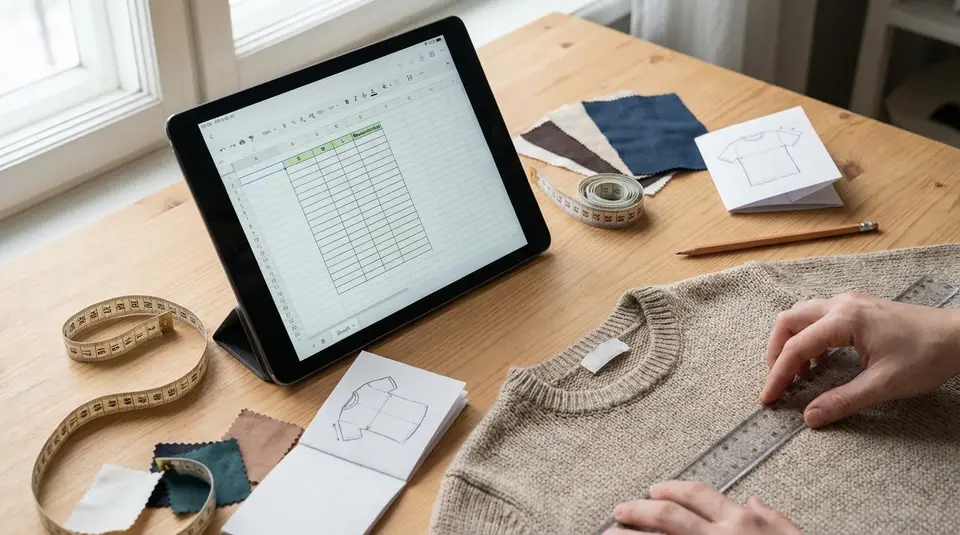
An Etsy size guide is a simple, visual reference that tells shoppers exactly which option to pick before they click Add to cart. Done well, it cuts down on “Will this fit?” messages and prevents avoidable returns by making sizing feel unambiguous. The most helpful size chart pairs a clean table (in and cm) with a quick “how to measure” graphic that labels the measurement points, then clarifies whether numbers are body measurements or finished-item measurements, plus any small fit variation to expect. Place it in your listing photos for fast scanning, mirror the key dimensions in the description, and make sure your variations use the same names, because the easiest mistake is offering S, M, L with no definition.
What measurements should your Etsy size guide include?
Apparel measurement list buyers expect
For most apparel listings on Etsy, buyers want the same core measurements they see on major retail sites. Start with the basics, then add only what matters for your specific item.
A solid default set for clothing includes:
- Bust/Chest
- Waist
- Hips
- Length (top length, dress length, or outseam for pants)
- Sleeve length (for long sleeve styles)
- Inseam (for pants, leggings, and some jumpsuits)
Then add “problem-solver” measurements that reduce questions for certain styles, like shoulder width (structured tops), rise (high-rise vs low-rise bottoms), or armhole (fitted woven pieces). If you sell hoodies or tees, a simple pit-to-pit and body length can be easier for buyers to compare to a favorite garment.
Finished product vs body measurements
Be explicit about whether your chart shows body measurements (the buyer’s body) or finished product measurements (the item laid flat). Mixing the two without labeling them is a common reason shoppers choose the wrong size.
- Use body measurements when the fit is designed around the wearer (many fashion patterns do this).
- Use finished measurements when the buyer will compare to something they own, when the item is oversized, or when it is made-to-order.
If you use finished measurements, include a short note about ease (extra room built into the garment) and mention a realistic variance (for example, small differences can happen from cutting and sewing).
Fit notes that prevent sizing mistakes
A size chart is the numbers. Fit notes are the “how it actually wears.” Add 2 to 4 quick lines that answer the usual doubts:
- Is it true to size, slim, relaxed, or oversized?
- Does the fabric have stretch, and if so, is it light or significant?
- Any shrinkage expectations after washing (especially cotton).
- If sizes are chosen from a dropdown, keep naming consistent with your Etsy variations so buyers select the right option at checkout (Etsy variations require a selection before adding to cart). Etsy variations help keep sizing choices clear and trackable.
Size chart formats that look clean in Etsy listings
Table layout buyers can scan fast
The cleanest Etsy size chart is a simple grid with sizes down the left and measurements across the top. Keep it wide enough to read on mobile, since many Etsy shoppers never open a desktop view.
A layout that usually works well:
- Column 1: Size (XS, S, M, L, XL or 0-24, etc.)
- Columns 2 to 5: Key measurements only (Bust, Waist, Hips, Length)
- Optional last column: Recommended fit (Slim, Regular, Oversized), only if it truly helps
If you need more measurements, it is often clearer to split into two charts (for example, “Body measurements” and “Garment measurements”) rather than squeezing 8 columns into one tiny image.
Consistent units, ranges, and rounding
Pick a standard and stick to it across every listing. Consistency is what makes your shop feel professional.
Practical formatting rules that keep charts readable:
- Show inches and centimeters in the same chart when you can, or offer two charts with identical structure.
- Use one rounding style (for example, whole inches and whole centimeters, or 0.5 in increments). Mixing 32, 32.5, and 33 in the same table looks messy.
- If sizing is flexible, use ranges (like “Bust: 34-36 in”) and clarify what the range means (body measurement range vs stretch range).
- Keep labels short: “Chest” beats “Chest circumference measured around fullest part.”
Copy-ready size chart wording for descriptions
Paste this under your size chart image in the description so buyers see sizing details even if they skip the photos:
Sizing: Please choose your size using the chart in the listing photos. Measurements are in in/cm.
How to measure: Measure a similar item you own laid flat, or measure your body at the marked points on the chart.
Fit: This style fits (true to size / slim / relaxed / oversized). If you are between sizes, size (up / down) for the best fit.
Notes: Minor measurement differences may occur due to handmade production. If you want help choosing a size, message me with your chest, waist, hips, and preferred fit.
Placing size info on Etsy: photos, description, and personalization
Adding a size chart image that stays readable
On Etsy, the size chart works best as one of your listing photos, not buried in the description. Many buyers swipe photos first, then decide.
To keep a size chart image readable on mobile:
- Design it like a simple poster: large type, high contrast, and plenty of spacing.
- Use a clean grid and limit it to the most important measurements.
- If you need extra details (how to measure, fit notes, conversion), make it a second “info card” image instead of cramming everything onto one chart.
- Export your chart at a high resolution so text stays crisp when Etsy compresses images. Etsy recommends listing images be at least 2000 pixels wide or tall for best results, which is a good baseline for text-heavy graphics like charts, too, and your first photo should meet their minimums to avoid display issues in search. You can confirm the current image guidance in Etsy’s Requirements and Best Practices for Images in Your Etsy Shop.
Keeping sizing details near the variation dropdown
Treat the variations area (Size, Length, etc.) as the decision point. Make the sizing language match your dropdown exactly. If the buyer chooses “Medium” but your chart says “M”, that small mismatch can create hesitation.
In your description, repeat a short version of the sizing rules right at the top, before long brand story text. A good pattern is: “Pick your size from the chart in photo #2. Measurements shown are (body/garment) measurements. If between sizes, size up for a relaxed fit.”
Using personalization to collect custom measurements
Personalization is useful when you truly need custom inputs, like inseam length, wrist size, or a made-to-measure bust/waist/hips set. Keep it structured so you do not invite back-and-forth.
Ask for only what you will actually use, and format the prompt so buyers answer consistently, like: “Bust (in/cm): __, Waist: __, Hips: __, Height: __, Preferred fit: fitted/regular/loose.”
If you can offer standard sizes, do that first. Use personalization for exceptions, not as a substitute for a clear Etsy size chart.
International sizing and unit conversion without confusing buyers
Metric vs imperial in one chart
If you sell to international buyers, the simplest approach is to make measurements the “source of truth”, then support both unit systems. Size labels (like “US 8” or “EU 38”) vary by brand. Inches and centimeters are much easier for shoppers to verify.
To keep a dual-unit chart readable:
- Put one unit per line inside each cell (for example, “34 in / 86 cm”), or create two matching tables (one in inches, one in cm).
- Convert cleanly and round consistently. If you round inches to the nearest 0.5, do the same across the whole chart.
- Add a one-line reminder: “If you are outside the US, choose by measurements, not the size label.”
If space is tight, prioritize the unit most of your buyers use in your market, then include the other unit in parentheses.
US, UK, EU size label mapping tips
If you include US/UK/EU labels, treat them as helpers, not guarantees. A few practical rules keep this from backfiring:
- Map by measurement range, not by “one size equals one size.” For example, connect each label to a bust/waist/hip range.
- Use the same “anchor” point everywhere, like bust for tops and waist/hips for bottoms, so the mapping feels consistent.
- For shoes, include foot length (cm) when possible. It is often clearer than a US or EU number.
When in doubt, keep the chart measurement-based and add only the most common label equivalents your buyers ask for.
Calling out conversion limits and fit differences
Conversions have limits because fit is not just math. Fabric stretch, ease, and pattern style all affect how a garment wears.
Add a short note like: “International size labels are approximate. Please choose based on the measurements in the chart. Fit can vary by style and fabric, and handmade items may have small measurement differences.”
That one paragraph sets expectations, reduces sizing disputes, and encourages buyers to self-check before they order.
Size guides by product type: clothing, accessories, and home goods
Clothing and shoes sizing specifics
For clothing, the most useful Etsy size guide combines a clear chart with one sentence on how to choose. For basics like tees, hoodies, and sweatshirts, many shoppers compare to a favorite item, so garment measurements (pit-to-pit, body length, sleeve length) often reduce questions. For fitted dresses, bodysuits, and tailored pieces, body measurements plus a short fit note (“fitted through waist, relaxed at hips”) tends to work better.
For shoes, do not rely on a size label alone. Include the measurements buyers can verify at home: foot length (and foot width if the shape runs narrow or wide). If you offer EU/US/UK labels, treat them as approximate and point buyers back to foot length as the deciding factor.
Jewelry and accessories measurements (rings, bracelets, hats)
Accessories sell more smoothly when you show exactly what the number represents.
- Rings: Include inner diameter (mm) or circumference (mm) and a quick “how to measure” note (string around finger, then measure). If you list US ring sizes, pairing them with mm measurements helps international buyers.
- Bracelets: Provide total bracelet length and the recommended wrist size range. If the bracelet is adjustable, state the min and max length.
- Necklaces: List chain length and, if relevant, extender length. A simple “where it sits” note (collarbone, mid-chest) can help.
- Hats: Give head circumference (in/cm) and explain where to measure (around forehead and above ears). If a hat has stretch or an adjustable band, include the usable range.
If you can, add one lifestyle photo that makes scale obvious, like a bracelet on a wrist, alongside the measurement chart.
Home decor and furniture dimensions buyers need
For home goods, buyers care about “Will it fit in my space?” more than a size label. Your Etsy size guide should prioritize:
- Overall dimensions: height, width, depth (or length)
- For wall art: frame size, print size, and orientation
- For pillows: cover size and insert size (if you recommend one)
- For shelves and furniture: interior clearance, leg height, and weight capacity only if you can state it confidently
Always label units clearly and include depth when it matters. A sign that is “12 x 18” is very different when it is 0.25 inches thick versus 1.5 inches thick, especially for frames, floating shelves, and tabletop decor.
Handling variations and made-to-order sizing at scale on Etsy
Multi-size and multi-color variation naming
When you scale beyond a few listings, the biggest sizing problem is inconsistency. On Etsy, your variation names become the “language” buyers use at checkout, so keep that language identical everywhere.
Use one clear pattern for size and color, and do not improvise between listings:
- Sizes: “XS, S, M, L, XL” or “Small, Medium, Large” (pick one and stay with it)
- Colors: use simple, shopper-friendly names (“Navy” instead of “Midnight 07”)
Etsy lets you add variations for up to two item attributes in a listing, like Size and Color, so plan your naming around that limit. Etsy listing variations also let you link photos to a visible attribute like color, which can cut down on “Which shade is this?” messages.
Made-to-measure workflow that reduces back-and-forth
Made-to-order sizing can work smoothly if you ask for the minimum info in one place, with one format. In your size guide image and description, state:
- what measurements you need,
- how to measure them,
- how buyers should submit them (personalization box or message),
- what happens if measurements are missing.
Use a template prompt like: “Bust, waist, hips, height, and preferred fit (fitted/regular/loose). Include in/cm.” Then confirm you will follow up only if something looks off (for example, missing units or an unusual mismatch between bust and waist).
Standardizing size guides across many listings
Build one “master” size chart layout per product type (tee, hoodie, dress, pants) and reuse it. Standardize:
- measurement points and wording (always “pit-to-pit,” not “chest width” in one listing and “bust” in another)
- rounding rules (whole inches or 0.5 inches, but not both)
- fit notes (same meaning, same phrasing)
This makes it easier to duplicate listings, train helpers, and keep your Etsy shop feeling consistent and trustworthy as you add more products.
Size guide templates and example layouts you can copy
Simple apparel size chart example
Use this when you sell standard sized tops (tees, sweaters, lightweight hoodies). Decide first whether these are body measurements or garment measurements, then label it clearly.
Size chart (garment measurements, laid flat):
| Size | Chest (pit-to-pit) | Body length | Sleeve (from shoulder) |
|---|---|---|---|
| XS | 18 in / 46 cm | 25 in / 64 cm | 7 in / 18 cm |
| S | 19 in / 48 cm | 26 in / 66 cm | 7.5 in / 19 cm |
| M | 20 in / 51 cm | 27 in / 69 cm | 8 in / 20 cm |
| L | 22 in / 56 cm | 28 in / 71 cm | 8.5 in / 22 cm |
| XL | 24 in / 61 cm | 29 in / 74 cm | 9 in / 23 cm |
Fit note: Fits (true to size / oversized). Compare to a similar item you own for best results.
Jewelry ring size guide example
Rings are easiest when you give both the familiar size label and a measurement buyers can verify.
Ring size guide (choose one method and keep it consistent):
| US size | Inside diameter (mm) | Inside circumference (mm) |
|---|---|---|
| 5 | 15.7 | 49.3 |
| 6 | 16.5 | 51.9 |
| 7 | 17.3 | 54.4 |
| 8 | 18.1 | 57.0 |
| 9 | 19.0 | 59.5 |
How to measure (simple wording): Wrap a strip of paper around your finger, mark where it meets, then measure that length in mm (circumference).
Home goods dimensions guide example
For home decor, buyers want clarity on what they will receive and what will fit their space.
Dimensions (finished item):
| Item | Width | Height | Depth/Thickness |
|---|---|---|---|
| Small | 8 in / 20 cm | 10 in / 25 cm | 0.75 in / 2 cm |
| Medium | 12 in / 30 cm | 16 in / 41 cm | 0.75 in / 2 cm |
| Large | 18 in / 46 cm | 24 in / 61 cm | 0.75 in / 2 cm |
Short note to include: Colors and scale can look different on screens. Please measure your space and compare to the dimensions above before ordering.
Related posts
Keep reading

Why Your Etsy Listings Get Views but No Sales
Turn your Etsy views into steady sales with better keywords, pricing, photos, and conversion-focused listing tweaks that build trust and boost shop revenue.

How to Use FAQ Images in Etsy Listings to Reduce Questions
Etsy FAQ images that answer shipping, sizing, and customization upfront, with readable mobile-friendly design, order, and wording tips to cut repeat messages.

How to Set Up SKU Numbers for Etsy Listings (Beginner-Friendly Guide)
Etsy SKU numbers made simple: add them in Inventory and Pricing, set SKUs for variations, and pick a clear 4-8 character system to track stock fast every day.

How to Add Credentials and Experience to Etsy Listings (Without Overclaiming)
Etsy listing descriptions that signal expertise: add certifications, process details, and honest experience notes while avoiding risky medical or legal claims.
Business Cards for Etsy Sellers: What to Print (and What to Avoid)
Business cards for Etsy sellers: smart basics like shop link or QR code, logo, and socials, with cardstock tips and pitfalls like clutter and pushy review asks.

How to Answer Etsy Messages Faster With Saved Replies (Templates)
Etsy saved replies help you answer buyers in seconds: create snippets for shipping, customs, and order updates, add placeholders, and stay Star Seller-ready.