Shipping Insurance for Etsy Orders: Is It Worth It?
Shipping insurance for Etsy orders can feel confusing when you’re already juggling Etsy Purchase Protection, carrier coverage, and tight profit margins. Many sellers wonder if shipping insurance for Etsy orders is really necessary when most low‑value packages arrive safely and some services already include limited insurance.
In this guide, we’ll walk through what Etsy’s protection actually covers, how carrier and third‑party insurance work, when insurance makes sense for higher‑value or fragile items, and how to calculate whether the extra cost is worth it for your shop. By the end, you’ll know exactly when shipping insurance for Etsy orders is truly worth it.
What does shipping insurance actually cover on Etsy?
Shipping insurance on Etsy is there to protect the value of the order while it is traveling to your buyer. In plain terms, it can reimburse you (or your buyer) when something goes wrong in transit and you meet the policy rules. It usually covers the item cost plus shipping, up to the amount you insured, not your time or profit.
The difference between carrier insurance, third‑party insurance, and Etsy’s own protections
Carrier insurance is coverage that comes directly from the shipping company, like USPS, UPS, or FedEx. Some services include a small amount of insurance by default. For example, USPS Priority Mail, Priority Mail Express, and Ground Advantage typically include up to 100 dollars of coverage for domestic packages, and Priority Mail International / Priority Mail Express International include up to 200 dollars for many destinations. If a covered package is lost or damaged, you file a claim with the carrier and they pay out according to their rules.
Third‑party insurance is separate coverage you buy in addition to (or instead of) carrier insurance. On Etsy, when you purchase labels for USPS, UPS, or FedEx, you can add parcel insurance through a third‑party provider such as Shipsurance. This coverage is designed to protect against “all risks of physical loss or damage from an external cause” while in transit, up to the insured value you choose, subject to exclusions like prohibited items or poor packaging. Claims are usually filed through your Etsy account and handled by the insurer, not the carrier.
Etsy’s own protections are different. Etsy Purchase Protection is a program where Etsy may refund the buyer and let you keep your earnings on qualifying orders up to a certain limit (often 250 dollars, and up to 500 dollars during some promotional periods) when items are lost, arrive late, or arrive damaged, as long as you meet all eligibility rules. This is not traditional “insurance” you buy per package; it is a platform policy that sometimes removes the need to file a carrier or third‑party claim for smaller orders.
Common problems it can protect you from (lost, stolen, damaged, porch theft)
Most shipping insurance on Etsy focuses on problems that happen in transit:
-
Lost in transit: The tracking never shows delivery, or the package disappears somewhere between acceptance and the buyer’s address. Carrier and third‑party insurance can reimburse the insured value when the package is officially considered lost. Etsy Purchase Protection may also cover qualifying lost orders under its value limit.
-
Damaged items: If your handmade mug arrives in pieces or a print is bent and creased, insurance can cover the cost of the item and shipping, as long as you packed it reasonably well and can show photos of the damage and packaging. Both carrier and third‑party policies require proof, and Etsy Purchase Protection may cover the first damaged‑in‑transit case per calendar year for eligible orders.
-
Stolen or “porch theft” situations: These are trickier. Many carrier policies treat a package that shows as “Delivered” as successfully completed, which means theft after delivery is often not covered. Some third‑party policies may cover theft in limited situations, but you must read their exclusions carefully. Etsy Purchase Protection may help when a buyer never receives their package and the situation meets Etsy’s criteria, but it is not a blanket guarantee for every porch theft claim.
-
Shortage or missing contents: If a box arrives but part of the order is missing and the packaging shows signs of tampering or damage, third‑party insurance can sometimes cover the shortage, again depending on documentation and policy terms.
In every case, shipping insurance on Etsy is there to soften the financial hit when shipping goes wrong. It does not replace good packaging, accurate addresses, and clear communication, but it can keep one bad shipment from wiping out the profit on many good ones.
How Etsy’s Purchase Protection changes the need for insurance
Etsy’s Purchase Protection is like a built‑in safety net for many everyday orders, but it does not replace shipping insurance for everything. It covers certain problems up to a set order value, as long as you and the buyer follow Etsy’s rules. For higher‑value or more complex orders, you still need to think about your own insurance plan.
What Etsy Purchase Protection covers for sellers and when it kicks in
For qualifying orders within the coverage limit, Etsy may refund the buyer and let you keep your earnings if:
- The package never arrives (lost in transit).
- It arrives after the estimated delivery window.
- It arrives damaged, for the first damaged order you have in a calendar year.
To be covered, the order must meet Etsy’s eligibility rules. In short, you need to:
- Ship on time, within your stated processing time.
- Use valid tracking and/or a label bought through Etsy.
- Have an estimated delivery date on the listing.
- Package items carefully and describe them accurately.
- Use Etsy Payments and keep your shop in good standing.
Purchase Protection only “kicks in” after the buyer contacts you, then opens a case and asks Etsy to step in. Etsy reviews the order and decides whether it qualifies. If it does, Etsy funds the refund instead of you.
Order value limits and when Etsy tells you to get your own insurance
Etsy sets a hard cap on how much it will cover per order. Normally, Purchase Protection covers orders up to 250 USD including shipping and tax. Around peak holiday periods, Etsy has run promotions that temporarily raise this cap to 500 USD for orders placed in that window.
Anything over the current coverage limit is not protected. Etsy’s own help docs explicitly recommend that sellers buy shipping insurance for orders above that amount, because Etsy will not reimburse you if something goes wrong.
So, if you regularly ship items above the cap, Purchase Protection should be treated as a bonus for smaller orders, not your main risk plan.
When an order is not eligible and you’re on the hook as the seller
Even under the limit, some orders will not qualify, and in those cases you are responsible for any refund or replacement. Common reasons an order is not eligible include:
- The order total is above the current coverage cap (for example, over 500 USD during a promo period, or over 250 USD when the standard limit applies).
- You missed one of the eligibility requirements, such as late shipping, no tracking, no estimated delivery date, or not using Etsy Payments.
- The item truly does not match your listing description or photos. In that case, Etsy expects you to handle the refund.
- You already have carrier or third‑party insurance and are expected to claim through that first.
When an order falls outside Etsy’s Purchase Protection, any loss comes out of your pocket unless you have your own shipping insurance or you choose to “self‑insure” and accept the risk. That is why understanding the limits and exclusions is so important before you decide whether extra insurance is worth it for a particular shipment.
Built‑in shipping coverage you might already have
USPS, UPS, FedEx and how much free insurance they include by default
You may already have some shipping insurance without realizing it. Most major US carriers include a bit of built‑in coverage, especially when you buy labels through an online platform like Etsy.
For USPS, Priority Mail and Priority Mail Express usually include up to a small amount of insurance (often around 50–100 dollars of coverage for loss or damage, depending on how and where the label is purchased). First‑Class packages do not include any automatic insurance, so those low‑cost shipments are typically uninsured unless you add coverage.
UPS and FedEx do not really call it “insurance,” but they include a limited declared value by default, often up to about 100 dollars per package. That means if a package is lost or damaged and you can prove the value, you may be able to recover up to that amount without buying extra coverage.
The exact limits and rules change over time, so it is always smart to check the current terms for the specific service you are using before you rely on that “free” protection.
Extra insurance you can add when you buy Etsy shipping labels
When you buy Etsy shipping labels, you can usually add extra shipping insurance right in the label purchase flow. After you enter the package weight, size, and service, Etsy will show an option to add coverage and the cost for that order.
You can choose a coverage amount that matches the order’s value, including product price and sometimes shipping, up to the maximum allowed. The fee is usually a small percentage of the declared value, so higher‑priced orders cost more to insure.
This built‑in option is convenient because:
- You do not have to visit a separate site.
- The insurance is tied to that specific label and tracking number.
- Claims are usually filed with clear instructions through the platform or the carrier that backs the policy.
If you ship a mix of low‑ and high‑value orders, you can simply toggle insurance on for the ones that would really hurt to replace out of pocket.
When third‑party policies (like Shipsurance) make sense
Third‑party shipping insurance can be a good fit when your Etsy shop has needs that carrier coverage or Etsy’s label add‑ons do not handle well. It can make sense when:
- You ship high‑value orders often and want consistent rates and rules across different carriers.
- You send a lot of international packages, where carrier limits, exclusions, and claim success rates can be frustrating.
- You sell items that carriers may treat as “restricted” or “high risk” (for example, some fragile or collectible goods) but that a third‑party insurer is more willing to cover.
- You want a single place to manage claims instead of dealing with each carrier separately.
In those cases, a third‑party policy can give you clearer coverage terms and sometimes lower cost per 100 dollars of value, especially if you insure many packages every month.
When is shipping insurance worth it for Etsy orders?
Shipping insurance is most worth it when a single lost or damaged package would really hurt your profit or your relationship with the buyer. Think about three things together: order value, how replaceable the item is, and where it is going. When those three start to feel “ouch,” that is your sign to add insurance.
Order value thresholds where insurance usually pays off
Many Etsy sellers use a simple price line in their heads. While every shop is different, a common pattern looks like this:
- For very low‑value orders (for example under about 20–25 USD), insurance often costs a big chunk of your profit, so most sellers skip it.
- For mid‑range orders (around 25–75 USD), it depends on how often you have shipping issues and how fragile the item is. Insurance can make sense if your margins are thin or your buyer is a first‑timer.
- For higher‑value orders (often 75–100 USD and up), insurance usually starts to pay off, because one bad shipment can wipe out the profit from several good ones.
If you sell a lot of small, repeatable items, you might set your personal “always insure” line higher. If you sell fewer, pricey pieces, you might insure anything above 40–50 USD. The key is to choose a threshold that matches your average profit per order and stick to it.
Fragile, one‑of‑a‑kind, and custom items that are harder to replace
Even a modest‑priced order can deserve shipping insurance if the item is:
- Very fragile, like ceramics, glass, or delicate decor
- One‑of‑a‑kind vintage that you cannot simply remake
- Custom or personalized, where you would have to spend time and materials to recreate it
In these cases, the real “cost” is not just the sale price. It is your time, your creative energy, and sometimes rare materials. Insurance helps cover the money side so you can afford to remake or refund without feeling sick about it.
If you know you would absolutely remake or refund the buyer if something went wrong, that is a strong sign insurance is worth adding, even if the ticket price is not sky‑high.
Domestic vs international orders and higher risk destinations
Where the package is going matters almost as much as what is inside.
For domestic U.S. orders, major carriers are usually quite reliable, and tracking is strong. Many sellers only insure above their chosen value threshold or for very fragile items.
For international orders, the risk usually goes up:
- Packages pass through more hands and customs checks.
- Tracking can be patchy once the parcel leaves the U.S.
- Delivery times are longer, which means more chances for things to go missing or get delayed.
Because of that, many Etsy sellers insure international shipments at a lower value threshold than domestic ones. For example, they might skip insurance for a 40 USD domestic order but insure a 40 USD package going overseas.
It can also be smart to insure shipments going to higher‑risk destinations, such as:
- Countries where you have had repeated delays or losses
- Remote areas where carriers hand off to local postal services
- Addresses with a history of porch theft or delivery disputes
If you find yourself worrying about a package after you print the label, that is usually your gut telling you shipping insurance would be a good idea for that order.
How to quickly estimate the cost vs benefit
Simple way to compare insurance cost to your average loss rate
Think of shipping insurance like any other business expense: it only makes sense if it saves you more money than it costs over time. A quick way to compare is to look at two numbers for your Etsy orders:
- What you spend on insurance
- What you usually lose to shipping problems (lost, stolen, or badly damaged orders)
A simple approach:
- Pick a recent period, like the last 3–6 months.
- Add up the total value of orders you shipped in that time.
- Count how many orders you had to refund or replace because of shipping issues, and total the value of those losses.
- Divide your total loss by your total shipped value.
That gives you your average loss rate.
Example: If you shipped 2000 dollars of orders and lost 60 dollars to shipping problems, your loss rate is 3 percent.
Now compare that to the percentage you would pay for insurance. If insurance would cost around 1 percent of order value and you are losing 3 percent, insurance is probably worth it. If your loss rate is under 1 percent and insurance would cost 2–3 percent, you might be overpaying for peace of mind.
You do not need perfect math. You just want a rough sense of “Do I lose more to problems than I would spend on coverage?”
Running a quick break‑even example for a typical Etsy shop
Let us walk through a simple break‑even example you can copy for your own shop.
Imagine:
- Average order value: 50 dollars
- You ship 100 orders per month (so 5000 dollars in goods)
- Insurance for higher‑value or fragile orders would average about 1 dollar per insured package
- You decide you would insure half your orders (the more expensive or fragile ones), so 50 insured orders
Your monthly insurance cost would be: 50 insured orders × 1 dollar = 50 dollars
Now look at your history. Maybe in a typical month you:
- Lose 1 package worth 60 dollars, or
- Have 2 damaged orders that cost you 30 dollars each to refund or remake
Either way, that is 60 dollars of loss.
So:
- Without insurance, you lose about 60 dollars per month.
- With insurance, you would pay 50 dollars per month and (if claims are approved) get most or all of that 60 dollars back.
In that case, you are better off insuring, because your expected loss (50 dollars) is lower than your current loss (60 dollars).
If your real numbers look more like 1 lost 20‑dollar order every few months, then your average loss might be closer to 7–10 dollars per month. Paying 50 dollars for insurance to avoid 10 dollars of loss would not make sense.
How often packages really go missing or arrive damaged
Most Etsy sellers find that serious shipping problems are the exception, not the rule, especially for domestic orders with tracking. Many shops see only a small percentage of orders go missing or arrive badly damaged over a year.
However, the risk is not the same for everyone. You are more likely to see issues if you:
- Ship internationally, especially to countries with less reliable postal systems
- Send very fragile items like glass, ceramics, or detailed decor
- Use economy services with longer transit times and more handling
A practical way to judge your own risk is to track it for a while. For the next few months, keep a simple note of:
- Total number of orders shipped
- Number of orders with serious shipping problems
- Total dollar value you had to refund or remake
After even 2–3 months, you will have a clear picture of how often things actually go wrong in your shop. Then your insurance decision is based on your real data, not scary stories or one bad week.
Who should usually skip shipping insurance?
Not every Etsy order needs shipping insurance. For many shops, paying to insure every single package would cost more than the rare problem it actually covers. Here are the situations where it usually makes sense to skip it and keep things simple.
Low‑priced, easy‑to‑replace items under a certain dollar amount
If your average order is low value and easy to remake, shipping insurance often does not pay off.
A common rule of thumb: if the item value is under about 20–30 USD, and you can remake or restock it without much pain, you can usually skip insurance and just budget for the occasional loss.
Insurance is less useful when:
- Your materials are cheap and easy to get.
- You can recreate the item quickly.
- You already build a small “oops” buffer into your prices.
In those cases, it is often cheaper to simply refund or resend the rare lost order than to insure every package.
Orders already well covered by Etsy and the carrier
Some orders already have a safety net, so extra shipping insurance may be overkill.
You may be able to skip extra coverage when:
- The order qualifies for Etsy’s protections and is within their value limits.
- You shipped with a carrier service that includes default insurance (many priority or express services include a set amount of coverage).
- The order total is low enough that, between Etsy’s help and the carrier’s built‑in coverage, you would be made whole if something goes wrong.
In that situation, adding a separate policy often just duplicates coverage you already have.
Situations where self‑insuring your own losses makes more sense
“Self‑insuring” means you do not buy shipping insurance at all. Instead, you accept that a small percentage of packages will have issues and you cover those costs yourself.
Self‑insuring can make sense when:
- Your overall loss/damage rate is very low.
- Your profit margins are healthy, so the occasional refund does not hurt your business.
- You prefer simple workflows and fewer claims, forms, and waiting periods.
Many sellers set aside a tiny slice of revenue as a “shipping oops fund.” If a package is lost or damaged, they use that fund to refund or replace the order quickly. Buyers are happy, the shop keeps moving, and there is no time spent arguing with carriers or insurers over small claims.
How to add shipping insurance to your Etsy orders
Turning on insurance options when you buy an Etsy shipping label
When you buy an Etsy shipping label, you can usually add shipping insurance in the same flow, so you do not need a separate tool or account.
After you click “Get shipping labels” for an order, look for a section labeled something like Shipping insurance or Add insurance on the label purchase screen. There you will typically see:
- Whether basic coverage is already included from the carrier
- An option to add extra insurance for a small fee based on the package value
If you want coverage, make sure the toggle or checkbox is turned on before you buy the label. Double‑check that the declared value of the shipment matches what you want insured, including item price and, if you choose, shipping and tax.
If you use a different carrier account outside Etsy, you will not see those Etsy insurance options. In that case, you would add insurance directly through the carrier or a third‑party provider when you create the label there.
Choosing the right coverage amount for each package
A simple way to choose the coverage amount is to ask: If this vanished today, what would it cost me to make it right for the buyer?
For most Etsy orders, that usually means:
- The item price (or the total of all items in the box)
- Any custom work time you would need to redo
- Optional: shipping cost, if you plan to refund that too in a worst‑case scenario
Many sellers insure at least the full order subtotal. For one‑of‑a‑kind or very time‑intensive pieces, you might insure a bit higher to reflect the real cost of replacing your work, as long as it stays honest and within the insurer’s rules.
Avoid under‑insuring to “save a little” because claims are often capped at the amount you declared. On the other hand, there is no need to insure for more than the buyer actually paid unless your insurer specifically allows it and you have a clear reason.
What documents and photos you should always keep on file
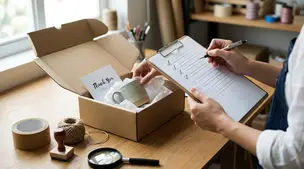
Good records make insurance claims much smoother and faster. For every insured Etsy shipment, try to keep:
- Order details: invoice or order page showing buyer name, address, items, and total paid.
- Proof of shipment: the Etsy label receipt or carrier receipt, plus the tracking number.
- Packaging photos: quick pictures of the item before packing, the packing materials, and the sealed box with label visible.
- Value proof: screenshots or exports from your Etsy orders showing the price paid, plus any receipts for high‑value materials if relevant.
- Damage evidence (if something goes wrong): clear photos of the damaged item, inner packaging, and outer box, including any dents, tears, or “Received damaged” stickers.
Store these in simple folders by month or by order number. That way, if a package is lost or arrives broken, you can file a claim with the carrier, Etsy’s insurer, or a third‑party provider quickly, without scrambling to find proof.
What to do when a package is lost or damaged
First steps with the buyer: tracking, timelines, and staying friendly
When a buyer says “My package never arrived” or “It showed up damaged,” respond quickly and kindly. Thank them for reaching out, apologize for the stress, and let them know you’ll look into it right away. A calm, friendly tone lowers tension and makes everything easier.
Next, check the tracking yourself and share what you see in simple language. For example: “I see it was last scanned at your local facility on Tuesday. Sometimes it moves without new scans, so let’s watch it for 1–2 more business days.”
Ask the buyer for any helpful details:
- For lost packages: confirm the shipping address, ask if anyone else at the address could have accepted it, and suggest they check with neighbors or a front desk.
- For damaged items: ask for clear photos of the box, packing materials, and the item from several angles.
Give a clear timeline for your next step: “I’ll contact the carrier tomorrow and update you within 48 hours.” Keeping the buyer in the loop makes you look professional and trustworthy, even while you’re still investigating.
Filing a claim with the carrier, Etsy, or a third‑party insurer
Once you know the package is truly lost or damaged, decide where to file the claim. This depends on how you shipped and what coverage you used.
If you used carrier insurance (like USPS, UPS, or FedEx), start with the carrier’s online claims form. You’ll usually need:
- Tracking number
- Proof of postage
- Proof of value (order receipt or invoice)
- Photos of damage and packaging (for damaged items)
If the order qualifies for Etsy Purchase Protection, you may be able to open a case or respond to the buyer’s case and let Etsy review. Etsy may refund the buyer and, if it meets their rules, reimburse you for the order amount up to their current limits.
If you bought a third‑party shipping insurance policy, follow that company’s claim process instead. They often require similar documents but may have shorter deadlines or specific rules about when you can declare a package lost.
In every case, keep the buyer updated: “I’ve filed a claim; these usually take about X days. I’ll let you know as soon as I hear back.” That simple message can prevent a lot of frustration.
Handling refunds, replacements, and keeping your shop reputation strong
While the claim is processing, decide how you want to take care of the buyer. Many Etsy sellers choose to refund or replace first, then wait for the insurance payout in the background. This feels generous to the buyer and often leads to glowing reviews, even after a shipping problem.
A simple approach:
- If the item is easy to remake or restock, offer a replacement or refund and let the buyer choose.
- If it is one‑of‑a‑kind, explain that you cannot recreate it, so a refund is the best option.
Be clear about timing: “I can ship a replacement by Friday,” or “Your refund will show on your account in a few days.”
If the carrier or insurer later denies your claim, do not take it out on the buyer. Treat it as a business cost and use it to refine your shipping, packaging, or insurance choices.
Finally, after everything is resolved, send a short, warm message: thank them for their patience, confirm what you did (refund or replacement), and gently invite them to reach out if they need anything else. Handling problems with kindness and clarity is one of the fastest ways to build a strong, long‑term reputation on Etsy.
Tips to reduce shipping problems so you rely less on insurance
Smarter packaging for fragile handmade and vintage items
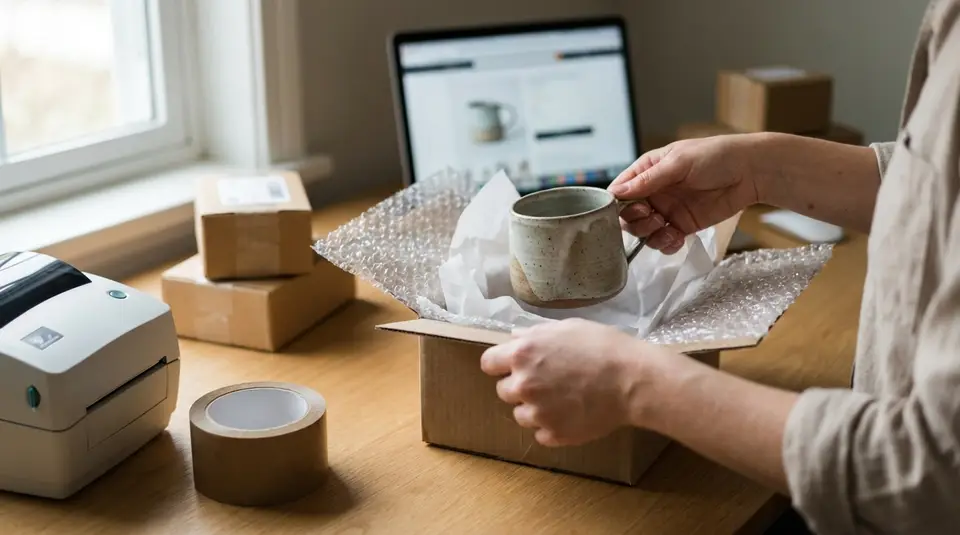
Good packaging is your first line of “insurance.” For fragile handmade and vintage items, start with a new, sturdy corrugated box that is just big enough to allow at least 2 to 3 inches of cushioning on every side. Double‑wall boxes or double boxing are smart for glass, ceramics, artwork, and heavy delicate pieces.
Wrap each item separately in bubble wrap or foam, paying special attention to handles, corners, and protruding parts. Fill the bottom of the box with cushioning, place the item in the center (never touching the sides), then fill every gap so nothing can move when you gently shake the box. Loose fill like peanuts should be used as void fill, not the only protection around the item.
Seal the box with strong packing tape in an “H” pattern across all seams, and put the shipping label on the largest, flattest side. “Fragile” stickers are fine, but do not rely on them; carriers expect your package to survive normal handling without special treatment.
If you ship sets (like teacups and saucers), use dividers or smaller inner boxes so pieces cannot collide. For high‑value or irreplaceable vintage items, consider double boxing as your default.
Using tracking, signatures, and clear shipping policies
Tracking is essential on Etsy. Orders with valid tracking are required for Etsy Purchase Protection eligibility and count toward programs like Star Seller, so always add a tracking number when you can.
For higher‑value orders, use services that include delivery scans and consider signature confirmation, especially to apartments or areas with frequent porch theft. Etsy also suggests secure options like lockers or pickup points for important packages, which you can recommend to buyers in your messages.
Clear shipping policies reduce confusion and disputes. In your shop policies and listings, spell out:
- How long you need to process an order
- Which carriers and services you use (for example, tracked, insured, signature required)
- What happens if a package is delayed, lost, or marked delivered but not found
Being upfront helps buyers choose the right shipping option and makes later conversations much easier.
Communicating delivery expectations to keep buyers happy
Friendly, proactive communication prevents many shipping headaches from turning into cases or bad reviews. When you ship, send a short note with the tracking link, the estimated delivery window, and any special tips (like “check your building’s package room”). Etsy’s tools let you include this message when you complete the order.
If tracking stalls or a package is late, message the buyer before they have to chase you. Let them know you are watching the tracking, what the carrier usually does in these situations, and when you will check in again. For international orders, set expectations that customs can add 2 to 4 weeks and tracking may update less often.
When a buyer reports a problem, stay calm and kind. Ask them to confirm the address, check with neighbors or household members, and look around common delivery spots. Share what you are doing on your side, like contacting the carrier. Clear, caring communication builds trust, and often that trust matters more than whether you used shipping insurance on a particular order.
Quick checklist to decide on insurance for your next Etsy order
Simple questions to ask yourself before you ship
Before you click “Buy label,” run through this quick mental checklist:
-
If this package vanished today, could I easily afford to replace it? If the honest answer is “Ouch, that would really hurt,” shipping insurance is worth a look.
-
Is the order value above my “no‑brainer” limit? Many Etsy sellers pick a simple cutoff (for example, 50 or 75 dollars). Above that, they almost always insure.
-
How hard is this item to remake or replace? One‑of‑a‑kind, vintage, custom, or very time‑intensive pieces are strong candidates for insurance, even if the price is not sky‑high.
-
Where is it going? International, remote, or theft‑prone areas raise the risk. If tracking is limited or unreliable, insurance becomes more attractive.
-
What protection already applies? Check whether Etsy Purchase Protection, the carrier’s built‑in coverage, or your own policies already cover most of the order value.
-
What would keep the buyer happiest if something goes wrong? If you know you would want to refund or replace quickly, insurance can help you do that without stressing your cash flow.
Answering “yes, this would really sting” to even two of these questions is a strong sign you should add shipping insurance.
A repeatable rule of thumb you can use for every order
To keep decisions fast and consistent, create a simple rule of thumb for your Etsy shop, such as:
-
Always insure:
-
Orders over a set amount (for example, 75 dollars or whatever feels right for your margins).
-
Custom, made‑to‑order, or one‑of‑a‑kind pieces.
-
International orders above a lower threshold (for example, 40–50 dollars).
-
Sometimes insure:
-
Mid‑priced items going to areas with higher theft or delivery issues.
-
Fragile items that are tricky to pack perfectly.
-
Usually skip insurance:
-
Low‑priced, easy‑to‑replace items under your comfort limit.
-
Orders where Etsy and the carrier already cover almost the full value.
Write your personal rule in one sentence and keep it near your packing station. For example:
“If the order is over 75 dollars, fragile, custom, or going overseas, I add shipping insurance. Otherwise, I self‑insure.”
Using the same rule every time keeps decisions quick, reduces stress, and helps you stay confident about when you do and do not buy shipping insurance for your Etsy orders.
Related posts
Keep reading
International Shipping on Etsy: Customs Forms Explained
Ship Etsy orders worldwide with confidence using clear customs forms, accurate HS codes, duties, taxes, and tariff info to avoid delays and surprise fees.
Holiday Shipping Deadlines for Etsy Sellers (Planning Guide)
Holiday shipping deadlines guide for Etsy sellers with USPS, UPS, FedEx cutoff dates, processing times, packaging tips, and planning strategies to avoid late deliveries.
Batch Shipping on Etsy: A Simple System
Streamline batch shipping on Etsy with a simple system that saves time, cuts postage costs, automates labels, and boosts order accuracy for happy repeat buyers.
How to Increase Repeat Customers on Etsy
Boost Etsy repeat customers with unforgettable unboxing, personalized messages, loyalty discounts, fast shipping, and email marketing that keeps your shop top-of-mind.
Should You Require Signature Confirmation for Etsy Orders?
Learn when to require signature confirmation for Etsy orders to prevent package theft, protect high-value shipments, keep tracking valid, and boost buyer trust.
What to Do When a Package Is Lost in Transit (Etsy Seller Guide)
Lost Etsy package? Stay calm and delight buyers with clear communication, carrier claims, Etsy Purchase Protection, smart refunds, and proactive shipping safeguards.