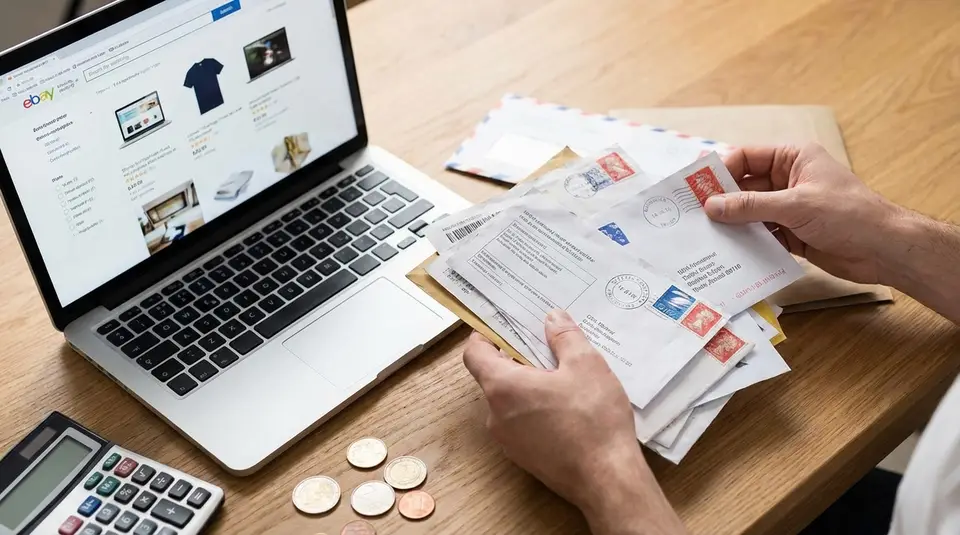
How to Handle Customs Fees and VAT for International Etsy Orders
**Handling customs fees and VAT for international Etsy orders starts with understanding who is charged, when they’re charged, and how those costs are shown at checkout. Between Etsy’s own tax collection, local import duties, and whether shipping is “delivered duty paid” or “delivered duty unpaid,” it can feel confusing—but it doesn’t have to be.
In this guide, you’ll learn how customs fees work for cross‑border Etsy sales, when Etsy collects VAT for destinations like the EU and UK, and when buyers may still be asked to pay local duties on delivery. We’ll also look at practical steps for sellers to complete customs forms correctly and help buyers avoid surprise costs on international Etsy orders.
What customs fees and VAT actually are for Etsy buyers and sellers
Quick overview of customs duties, VAT, GST and sales tax in plain language
When you sell or shop on Etsy across borders, a few different types of taxes can show up, and they all do slightly different jobs.
Customs duties are import taxes charged by a country when goods cross its border. They are based on what the item is, how much it is worth, and where it came from. Customs duties only apply to physical goods moving between countries, never to digital downloads.
VAT (value added tax), GST (goods and services tax) and similar taxes (like HST, PST, QST, JCT, etc.) are all versions of a consumption tax on what people buy. The name changes by country, but the idea is the same: the buyer pays a percentage of the price, and that tax goes to the local government. On Etsy, these VAT‑type taxes can be charged on both physical items and digital items, depending on the rules in the buyer’s country.
Sales tax in the US is another form of consumption tax. Many US states require Etsy to collect it on eligible orders and send it to the state. For buyers, it usually just appears as “sales tax” at checkout and is not something you pay later at the door.
So in short:
- Customs duty = border tax on imported physical goods.
- VAT / GST / sales tax = purchase tax on what the buyer spends, sometimes on physical and digital items.
How customs fees and VAT show up specifically on Etsy orders
On Etsy, these charges can appear in a few different ways, depending on where the buyer and seller are located and how the order is shipped.
For many countries, Etsy is now required to collect VAT, GST or sales tax right at checkout. In those cases, buyers see a separate tax line in their cart and on their receipt, and Etsy later sends that money to the correct tax authority. This is common for EU VAT on low‑value imports, UK VAT on orders up to a certain limit, GST in places like New Zealand, and sales tax in many US states and Canadian provinces.
For digital downloads, Etsy usually adds any required VAT directly into the displayed price for buyers in affected countries. The buyer sees the VAT‑inclusive price on the listing and in the cart, and the receipt breaks out the VAT amount separately.
Customs duties and import fees are different. These are often not shown at Etsy checkout, because they are calculated by the destination country’s customs office. In many cases, the buyer pays these extra charges to the postal service or courier when the parcel arrives, unless the seller has arranged a delivery method where duties are prepaid. Etsy shows a notice at checkout warning that extra customs or import taxes may apply, but the exact amount is set by the buyer’s country, not by Etsy.
So from a buyer’s point of view:
- Taxes that Etsy must collect (like VAT, GST or sales tax) appear as a clear line item in the cart or are built into the price.
- Customs duties and handling fees usually appear later, as a bill from the delivery company when the package reaches the border.
Who pays customs fees on Etsy international orders?
Customs fees on Etsy international orders are not random extra charges. They follow clear rules about who is the “importer” and whether the parcel is sent with duties unpaid (DDU/DAP) or duties paid (DDP). Once you know which one applies, it becomes much easier to explain costs to buyers and avoid awkward surprises.
In simple terms, customs fees can be paid either by the buyer at delivery or by the seller upfront, then quietly built into the item and shipping price. Etsy’s own tax collection (like VAT or GST) is a separate layer on top of that and does not always cover customs duties or handling fees.
When the buyer pays at delivery (DDU / DAP shipments)
Most small Etsy parcels are still sent as DDU/DAP: “delivered duty unpaid” or “delivered at place.” That means the package travels to the buyer’s country, customs looks at it, and then:
- The local postal service or courier may charge import duty, VAT/GST, and a handling fee.
- The buyer must pay those charges before the parcel is released or delivered.
From the buyer’s point of view, this shows up as a bill at the door, a text/email from the courier, or a notice at the post office. The Etsy checkout total will not include these customs fees, so it is important to warn buyers in your listing and shop policies that their country may charge extra on arrival.
DDU/DAP is common when you use standard postal services, do not have special customs arrangements, or ship to countries where Etsy does not collect import taxes on your behalf.
When the seller pays upfront (DDP shipments) and builds it into the price
With DDP (delivered duty paid), the seller (or the platform’s shipping partner) pays estimated import charges in advance. The parcel then arrives to the buyer with no extra customs bill in most cases.
This can happen when:
- You buy a shipping label or service that includes “duties and taxes paid.”
- A logistics partner calculates and collects import charges at the time of shipping.
- The destination country’s rules allow platforms to collect and remit import VAT or GST, and the shipping label is set up correctly.
As a seller, you usually build those costs into your item price or shipping fee. The buyer sees a higher total at checkout but enjoys a smoother delivery. It is a good idea to say something like “No additional customs fees expected on delivery for buyers in X” if you know you are using a true DDP service.
How to tell which option applies to your Etsy order
You can usually figure out who pays customs fees on an Etsy order by checking three things:
-
Checkout breakdown If the buyer sees a separate line for “import tax,” “VAT/GST on imports,” or similar, and Etsy says it will remit that tax, then at least the import VAT/GST portion is being handled upfront. That does not always cover customs duty or courier handling fees, but it is a strong clue that the order is being treated more like DDP for tax.
-
Shipping service description Look at the shipping method you are using. If it clearly says “duties paid,” “DDP,” or “no additional fees on delivery,” then the seller side is covering import charges. If it is just a regular postal or economy service with no mention of duties, assume DDU/DAP and that the buyer may be billed on arrival.
-
Your own shop policies and messages If you do not use any DDP-style services, it is safest to state that buyers are responsible for customs, VAT, and import fees in their own country. When in doubt, treat the order as DDU/DAP and explain that local authorities, not Etsy or the seller, decide whether fees are charged.
A simple rule of thumb:
- If no one collected import charges before the parcel left your hands, the buyer will probably pay at delivery.
- If you or Etsy clearly collected import tax and used the right shipping setup, the buyer is less likely to see surprise customs bills, though small handling fees can still appear in some countries.
How Etsy handles VAT, GST and sales tax at checkout
Etsy tries to handle most VAT, GST and sales tax for you right in the cart, so buyers see a clear total and sellers are not manually adding lots of different taxes. What you and your customers see depends on three things: where the buyer is, whether the item is physical or digital, and local tax rules in that country or US state.
When Etsy automatically collects VAT or GST on physical items
For many countries, Etsy is treated as a “marketplace” that must collect tax on physical goods at checkout. In those places, Etsy adds VAT or GST to the order total and remits it directly to the tax authority, instead of the seller doing it.
This applies, for example, to:
- UK imports of physical goods up to a certain value when shipped from outside the UK.
- Physical items going to countries like Australia, New Zealand, Norway, Switzerland and some others, usually below a local value threshold.
In these cases, buyers see the tax line in their cart and on their receipt, and sellers simply receive the item price (minus Etsy fees) as usual. For some countries, Etsy also requires local sellers to list prices tax‑inclusive, so the price already includes VAT or GST and no extra line appears at checkout.
How Etsy handles digital item VAT differently from physical goods
Digital downloads are treated very differently. Many countries tax digital services based on the buyer’s location, not the seller’s. Because of that, Etsy itself is usually responsible for digital VAT or similar taxes.
When a buyer in a supported country (for example the EU, UK, Australia, New Zealand, Norway, parts of Canada and several others) purchases a digital item:
- Etsy detects the buyer’s location.
- It automatically adds the correct VAT or similar tax (like GST, QST, etc.) to the listing price.
- The buyer sees a tax‑inclusive price on the listing, in the cart and on their receipt.
Etsy then withholds that VAT/GST from the payment and remits it to the relevant authority. Sellers do not need to add VAT to their digital listing prices or file that specific digital VAT themselves, although they may still have other local tax obligations.
What US shoppers see at checkout vs what overseas shoppers see
For US shoppers, Etsy mainly shows US sales tax at checkout. Under marketplace facilitator laws, Etsy automatically calculates, collects and remits sales tax on taxable orders shipped to most US states, for both physical and digital items. The tax appears as “Sales tax” in the cart and on the receipt, and sellers cannot turn this off.
Overseas shoppers usually see VAT or GST instead of US‑style sales tax. Depending on their country, they might see:
- A separate VAT/GST line added at checkout for imports where Etsy must collect it (for example, some Australian, Norwegian or UK orders).
- A note that prices already include local tax, when sellers are required to list tax‑inclusive prices.
- For digital items, a VAT‑inclusive price on the listing itself, with the tax amount also visible in the basket and on the invoice.
So in short: US buyers mostly see “sales tax,” while buyers in other countries are more likely to see VAT or GST, either baked into the price or added as a clear line at checkout, depending on their local rules.
Shipping from the US to EU buyers: VAT, IOSS and customs basics
When Etsy collects EU VAT for you and what thresholds apply
When you ship from the US to an EU buyer, Etsy usually handles EU VAT for smaller parcels so you do not have to register for EU VAT yourself.
For most physical items up to and including 150 EUR per parcel, Etsy is treated as the “deemed supplier” under the EU e‑commerce rules. That means:
- Etsy adds EU VAT at checkout, based on the buyer’s country.
- The buyer sees VAT included in the total they pay.
- Etsy then remits that VAT to the correct EU tax authority using the Import One‑Stop Shop (IOSS) system.
The 150 EUR limit is important. It is based on the intrinsic value of the goods in the parcel, not including shipping.
- At or below 150 EUR: Etsy can collect VAT via IOSS and your buyer should not pay VAT again on delivery.
- Above 150 EUR: IOSS cannot be used. EU customs will normally charge import VAT (and possibly customs duty) to the buyer when the parcel arrives.
From July 2026, the EU also plans a small 3 EUR customs duty on low‑value parcels under 150 EUR, but the basic VAT and IOSS logic stays the same.
How to mark Etsy’s IOSS details correctly on your shipping labels
If Etsy has collected EU VAT on an order, it generates an IOSS number for that specific shipment. You can see it on the order details page and in the order confirmation email.
To use it correctly when shipping from the US to the EU:
- If you buy a label through Etsy: relax, Etsy sends the IOSS number electronically to the carrier for you. It usually does not appear printed on the label, which is normal.
- If you buy postage elsewhere:
- Give the carrier Etsy’s IOSS number through their electronic customs system (online form, API, or electronic data field like “Tax ID / IOSS / VAT”).
- Do not write the IOSS number on the outside of the package. EU guidance treats it as confidential and expects it in the electronic declaration only.
- Make sure the item value is shown in EUR on the customs form, matching the order value (excluding shipping). You can print it or hand‑write it if needed.
If your carrier cannot transmit IOSS electronically, there is a higher risk that customs will ignore the prepaid VAT and charge your buyer again. In that case, it is worth considering a different service for EU parcels.
What happens if EU customs charges your buyer again by mistake
Even when Etsy collects EU VAT and you use the IOSS details correctly, mistakes can still happen. A customs office or postal operator might:
- Treat the parcel as if no VAT was prepaid, and
- Ask your buyer to pay VAT (and possibly a handling fee) on delivery.
If that happens:
-
Ask the buyer for proof A quick photo of the customs notice, receipt, or tracking page showing the extra VAT or handling fee is very helpful.
-
Check the order on Etsy Confirm that:
- The order is to an EU address.
- The total goods value is 150 EUR or less.
- Etsy shows VAT collected and an IOSS number for the order.
- Decide how you want to help Etsy’s usual approach is that customs charges are technically the buyer’s responsibility, but many sellers choose to:
- Partially or fully refund the unexpected VAT or fee as a goodwill gesture, or
- Offer a coupon or discount on a future order if the fee was small.
- Encourage the buyer to query the charge locally In some EU countries, buyers can appeal or request a correction if VAT was clearly paid at checkout and the IOSS number was used. Point them to their postal operator or customs office with:
- Their Etsy receipt showing VAT, and
- The tracking number and payment receipt for the extra charge.
To reduce repeat problems, keep a note of which carriers and services handle IOSS smoothly for your EU orders, and favor those options for future shipments.
Shipping from the US to the UK: handling the £135 VAT rule
When Etsy collects UK VAT and when UK customs charges your buyer
When you ship from the US to a UK customer, the key number is the £135 consignment value. That is the total value of all goods in the parcel, using their “intrinsic value” (item price only, without separately‑shown shipping).
For most consumer orders where:
- the buyer is in the UK,
- the goods are outside the UK at the time of sale, and
- the total consignment value is £135 or less,
Etsy is treated as the “online marketplace operator” and must charge UK VAT at checkout and send it to HMRC. Your UK buyer pays VAT upfront on Etsy, and the parcel should enter the UK without extra VAT being collected at the border.
If the consignment is over £135, Etsy does not collect import VAT. Normal import rules apply instead, so UK customs (or the courier) will usually charge your buyer import VAT and possibly customs duty and a handling fee when the parcel arrives.
How to avoid double VAT by using the right customs info
Double VAT usually happens when:
- Etsy has already collected UK VAT on an order at or under £135,
- but the parcel is not clearly marked as a marketplace VAT‑paid shipment,
- so the carrier charges import VAT again on delivery.
To reduce that risk when shipping from the US to the UK:
- Check the order total. If the goods value is £135 or less and Etsy shows VAT collected, treat it as a marketplace‑VAT order.
- Use accurate values and currency. Declare the same item values you charged on Etsy, converted correctly to GBP if your label tool needs it. Do not round up so far that the consignment appears to be over £135.
- Add clear customs notes. Where your carrier allows extra information, include wording like:
“Online marketplace has collected UK VAT at point of sale. VAT to be accounted for by marketplace.”
For consignments over £135, do not suggest that VAT has been paid through Etsy. In that case, UK customs is expected to charge VAT on import, and your buyer should be prepared for that.
If a buyer is charged VAT again on a marketplace‑VAT order, ask for a copy of the courier invoice. You can then help them dispute the charge with the carrier using their Etsy receipt that shows UK VAT already paid.
Tips to explain UK VAT and customs clearly on your listings
A little upfront clarity in your Etsy listings can prevent a lot of unhappy messages later. You can add a short section to your shop policies or FAQ, for example:
- For orders up to £135 in goods value:
“For UK customers: On orders where the total value of the items in your parcel is £135 or less, UK VAT is usually collected by Etsy at checkout. In those cases, you should not be charged VAT again on delivery.”
- For orders over £135:
“If your order total for goods is over £135, UK customs may charge import VAT, customs duty and a handling fee when your parcel arrives. These charges are set by UK customs and are paid by the buyer.”
Keep the language simple, avoid legal jargon, and always remind buyers that exact VAT and duty rates are decided by UK law and customs, not by you personally. That way, shoppers feel informed rather than surprised, and you look like a calm, organised seller who knows how the £135 VAT rule works.
Selling to Canada, Australia, New Zealand, Norway and more
When Etsy collects local tax (GST/HST/PST/QST/VAT) for you
For several countries, Etsy is treated as the “marketplace seller,” which means it must collect local tax from the buyer and send it to the tax office for you.
For Canada, Etsy may collect:
- GST/HST on eligible orders to Canadian buyers, and
- PST/RST/QST for provinces like British Columbia, Saskatchewan, Manitoba and Quebec, when local rules say marketplace platforms must do so.
For Australia and New Zealand, Etsy collects GST on low‑value imported goods shipped to buyers there, up to each country’s low‑value threshold.
For Norway, Etsy collects VAT under the VOEC scheme on qualifying low‑value imports (under 3,000 NOK) when the seller is outside Norway and the goods are not subject to excise duty.
In all these cases, the buyer sees the tax at checkout, pays it to Etsy, and Etsy remits it. You do not add that same tax again.
Extra customs and handling fees buyers in these countries might still see
Even when Etsy collects GST or VAT, buyers may still face:
- Import duties if the parcel is above the country’s low‑value threshold.
- Carrier or postal handling fees for processing customs.
- Extra VAT or GST if customs did not receive Etsy’s tax ID (like VOEC in Norway) correctly from the shipping label or electronic data, which can lead to accidental double charging.
It helps to remind buyers that Etsy‑collected tax usually covers sales tax/VAT, but not always customs duties or courier fees.
Simple wording to set expectations for buyers outside the US
You can keep your wording short and friendly. For example:
For buyers in Canada Etsy may collect GST/HST and some provincial taxes at checkout. Your total will show these taxes before you pay. In some cases, your local post or courier may still charge separate customs or handling fees on delivery.
For buyers in Australia & New Zealand Etsy may collect GST on low‑value imports at checkout. This usually covers your local tax, but higher‑value orders can still be charged extra customs or handling fees by your postal service.
For buyers in Norway and other countries Etsy may collect VAT on eligible low‑value orders at checkout. Please note that your customs office or carrier can still add import duties or handling fees, especially on higher‑value parcels.
You can adapt these lines to your shop policies and FAQs so international buyers know that Etsy often collects tax, but customs and carrier fees are separate and not under your control.
New US import tariffs and what they mean for Etsy shoppers
What changed when the US ended the de minimis exemption under $800
For years, most small parcels coming into the US could enter duty‑free if their total value was under 800 USD. This was called the de minimis exemption. It meant many Etsy shoppers in the US could buy from overseas sellers without paying extra US import duties on top of the item price and shipping.
With the de minimis exemption now largely removed for many product categories and trading partners, more incoming packages can be hit with US tariffs and customs processing fees, even when the value is well below 800 USD. The exact rules depend on what the item is, where it is shipped from, and which trade measures apply at that moment, but the big picture is simple:
- Low‑value imports are no longer automatically “safe” from duties.
- Carriers and customs brokers may charge extra handling or clearance fees when tariffs apply.
For Etsy shoppers, this means that a small, inexpensive item from abroad can now arrive with an unexpected bill attached.
How tariffs on incoming parcels can affect your Etsy orders
New or higher US import tariffs can change your Etsy experience in a few ways:
- Higher total cost: Even if the listing price looks great, tariffs and clearance fees can push the final cost above what you expected.
- Delivery delays: Parcels that need duty assessment or extra paperwork may sit in customs longer, especially during busy seasons.
- Refused or returned packages: If a buyer refuses to pay unexpected charges at delivery, the parcel may be returned or abandoned, which can create headaches for both sides.
Some carriers will collect these charges at your door, while others may send a notice or hold the parcel at a pickup point until fees are paid.
Practical tips to reduce surprise charges and shipping delays
You cannot control US trade policy, but you can make Etsy orders smoother and less stressful:
- Check the item’s origin before you buy. If it ships from outside the US, assume there might be import charges and factor that into your budget.
- Read the listing and shop policies carefully. Many well‑prepared sellers explain whether customs duties and tariffs are your responsibility.
- Ask the seller how they ship. Tracked services with proper customs forms and clear descriptions tend to move through customs faster than vague or under‑declared parcels.
- Avoid asking sellers to mark items as “gift” or undervalue them. This can cause seizures, fines, or long delays if customs flags the package.
- Order earlier than you think you need to. If a gift or event date is important, build in extra time in case your parcel is held for tariff assessment.
- Keep receipts and order details handy. If a carrier or customs office questions the value, you can quickly prove what you paid.
For sellers, it helps to add a short, friendly note in your listings for US buyers explaining that import tariffs and customs fees are set by US authorities, not by Etsy or the shop, and that buyers may be asked to pay these at delivery. Clear expectations up front go a long way toward happy reviews later.
Filling out customs forms correctly for your Etsy packages
How to describe handmade, vintage and craft supplies on customs forms
Customs officers are not Etsy shoppers, so keep descriptions simple and literal. Avoid cute names and brand-style titles. Instead, describe what the item is, what it’s made of, and how it will be used.
For handmade items, think: material + product type + main use.
- “Handmade sterling silver necklace”
- “Handmade soy wax scented candle”
- “Handmade cotton tote bag”
For vintage items, include “used” or “vintage” plus the material and type:
- “Vintage cotton T‑shirt, used”
- “Vintage ceramic vase, used home décor”
For craft supplies, focus on what the buyer will do with them:
- “Acrylic yarn for knitting”
- “Wooden beads for jewelry making”
- “Watercolor paint set for art”
Avoid vague words like “gift,” “merch,” “sample,” or “personal items” as the only description. Clear, honest descriptions reduce inspections and delays.
Using HS/tariff codes in a simple, low-stress way
HS (Harmonized System) or tariff codes are numeric categories that tell customs what type of product you are sending. Many postal services and shipping platforms can suggest a code when you type a short description like “cotton T‑shirt” or “silver necklace.”
You do not need to become a tariff expert. Aim for:
- A reasonable, close match, not perfection.
- Using the same HS code for the same type of item each time.
If you sell a lot of one product type, look up and save its HS code in a note or spreadsheet. Then you can copy and paste it into future labels. Consistency helps customs process your Etsy packages faster and with fewer questions.
Declared value, gifts and common mistakes that cause delays
The declared value should match what the buyer actually paid for the item, not what you think it is “really worth” or what you wish customs would see. Use the item price, and if required, add shipping separately where the form asks for it.
Marking a package as a gift does not magically remove customs fees. Many countries only treat it as a true gift if it is from one private person to another and under a low value limit. Etsy orders are usually seen as commercial sales, so marking them as gifts can look suspicious.
Common mistakes that cause delays or extra charges include:
- Writing “gift” instead of a real description.
- Under‑declaring the value to “help” the buyer.
- Leaving off the country of origin (where the item was made).
- Packing several different items but only describing one.
Stay honest, be specific, and keep your descriptions and values consistent with your Etsy order details. That simple approach keeps most customs forms drama‑free.
How to talk to your Etsy buyers about customs and VAT (without scaring them)
Talking about customs fees and VAT does not have to be scary or negative. Buyers mainly want two things: no surprises and clear, friendly explanations. If you set expectations early and stay calm and kind when problems pop up, most people will be reasonable, even when they are frustrated about extra charges.
Clear shop policies that explain who pays what
Your shop policies are your first line of defense, so keep them short, clear, and consistent with Etsy’s own wording that buyers may be responsible for customs, duties and import taxes on cross‑border orders.
Aim for language that is firm but friendly. For example:
Customs & import taxes Buyers are responsible for any customs and import taxes that may apply in their country. I’m not responsible for delays caused by customs or the postal service.
A few tips:
- Put this message in Shop policies, FAQ, and your Message to buyers so people see it more than once. Sellers in the Etsy community report that many buyers never read policies, so repeating it at checkout helps.
- Avoid legal jargon. Use simple phrases like “extra import fees” or “local customs charges.”
- Do not promise that there will be no fees. You cannot predict what each country’s customs office will do.
- Never suggest marking items as “gift” or lowering the value to avoid tax. Etsy’s rules and many countries’ laws require accurate customs declarations.
Sample message templates for customs fee questions and complaints
Having a few ready‑to‑send messages saves time and keeps your tone calm and consistent.
1. When a buyer asks before ordering:
Thanks so much for your message and for considering my shop!
Because this would ship from [your country] to [buyer’s country], your local customs office may charge import taxes, VAT, or handling fees when the parcel arrives. These charges are set by your country and are paid by the buyer.
I’m not able to see or control those amounts from my side, so if you’re worried, the best place to check is your local customs or postal service website. I’m happy to help with any info about the item or packaging that you need for that.
2. When a buyer is surprised by fees but still polite:
I’m really sorry for the surprise charge, I know that’s frustrating.
Customs and import taxes are set by your country’s government, and they’re usually paid by the buyer when a parcel arrives from abroad. Etsy also shows a notice at checkout that additional duties or taxes may apply on international orders.
I don’t receive any part of these fees, and I can’t see the amount in advance, but I completely understand that it’s annoying. If it helps, I can send you a copy of the customs form or invoice in case you want to query the charge with your postal service or customs office.
3. When a buyer is angry and demands a refund of customs fees:
Thank you for reaching out and I’m sorry this has been such a frustrating experience.
I’ve checked the order details and the item was shipped from [your country] to [buyer’s country], so your local customs office has applied import/VAT charges. These fees are separate from what you paid on Etsy and are collected by your postal service or courier on behalf of your government. I don’t receive any of that money.
My shop policies, which are visible before checkout, explain that buyers are responsible for any customs and import taxes and that I’m not able to refund those charges. I know that’s probably not the answer you were hoping for, but I do want to be transparent and fair to all customers by following the same policy for every order.
If you’d like to challenge the fee, I’m happy to provide copies of the customs declaration and Etsy receipt so you can contact your postal service or customs office.
You can soften or tighten this wording depending on how the buyer is speaking to you, but try to keep the structure: empathy → short explanation → reference to policy → offer a small, practical next step.
Handling disputes, refunds and “I didn’t know about these fees” messages
Even with clear policies, you will sometimes get “I didn’t know about customs fees” or even payment disputes. Etsy’s own guidance says customs charges are usually the buyer’s responsibility, and Etsy also shows warnings on cross‑border checkouts, but not every buyer notices them.
Here is a simple approach:
-
Stay calm and kind first. Start by acknowledging their feelings: “I understand this was an unwelcome surprise.” People calm down faster when they feel heard.
-
Restate the facts briefly. Explain that:
- Customs/import taxes are set and collected by their country, not by you or Etsy.
- You do not see or receive those fees.
- Your policies and Etsy’s checkout notice both mention that extra charges may apply.
- Decide when (and if) to offer a goodwill gesture. You are not required to refund customs fees. However, for a first‑time issue or a very loyal customer, you might choose to:
- Offer a small partial refund on the item price or shipping as a one‑time courtesy, or
- Offer a discount code for a future order. If you do this, say clearly that it is a special exception so it does not become an expectation.
- Know how to respond if a case or chargeback is opened. If the buyer opens an Etsy case or a chargeback with their bank, Etsy may ask you for proof of shipment and your written policies.
- Keep screenshots or copies of your policies and any messages where you explained customs.
- Provide tracking and proof that the parcel reached the destination country or was delivered.
- Protect yourself for the future. If you notice repeated confusion:
- Make your customs/VAT note even more visible in listings and FAQs.
- Add a short reminder in your shipping notification: “If your country charges import/VAT fees, they will be collected by your postal service when the parcel arrives.”
Handled with empathy and clear boundaries, even tricky customs and VAT conversations can end with a buyer who feels informed, respected, and still happy to shop handmade.
Record‑keeping and staying on the safe side with taxes
What Etsy tracks for you and what you should track yourself
Etsy does a lot of the heavy lifting, but it does not keep everything your tax office might want to see.
Etsy typically tracks and makes available in your account:
- Your gross sales by order
- Refunds and cancellations
- Fees and commissions
- Taxes that Etsy collected and remitted on your behalf (like VAT, GST or US sales tax)
- Downloadable monthly or yearly reports with order details
That is a great starting point, but you should keep your own records too. At a minimum, save:
- Copies of invoices or receipts for materials, packaging, shipping supplies and tools
- Postage receipts and shipping labels, especially for international orders with customs details
- Notes on which orders included customs or import charges that you paid
- Bank and payment processor statements that show money in and out of your business
- Any correspondence with buyers about customs, VAT or refunds related to those fees
Think of Etsy’s reports as the “front of house” view of your shop. Your own records are the backstage view that explains why the numbers look the way they do. Keeping both makes tax time calmer and helps if a buyer or tax authority ever asks questions.
When it’s time to talk to a tax professional in your own country
You do not need a tax expert for every tiny decision, but there are clear moments when professional advice is worth it. It is time to talk to someone local when:
- Your shop income is becoming a regular, meaningful part of your household budget
- You are not sure whether you should register as a business, sole proprietor, LLC or similar
- You cross, or think you might cross, a VAT, GST or sales tax registration threshold in any country
- You start selling a lot to one region (for example, many EU or UK orders each month)
- You receive a letter or notice from a tax authority and you are not 100 percent sure what it means
A local tax professional understands the rules where you live, how Etsy income is treated there, and how international sales fit into your overall tax picture. Even a one‑time consultation can save you from expensive mistakes later.
Simple checklist to review your customs and VAT settings once a year
A quick yearly check keeps your shop aligned with current rules and avoids surprises. Once a year, set aside an hour and run through this simple list:
- Download all Etsy reports for the year. Save sales, fees and tax reports in at least two places (for example, your computer and a cloud backup).
- Confirm your shop address and country. Make sure your legal address, bank details and tax region are still correct.
- Review your tax settings. Check any VAT, GST or sales tax IDs you have entered and confirm they are still valid and needed.
- Scan your listings. Make sure your shipping profiles and descriptions still explain who pays customs and import fees. Update any wording that feels vague.
- Check your main markets. Look at where most of your buyers live and note any countries where your sales have grown a lot. That is your cue to see if new thresholds or rules might apply.
- Match Etsy totals to your own records. Compare Etsy’s yearly totals with your spreadsheets or bookkeeping software and fix any gaps now, while the year is still fresh in your mind.
- Decide if you need advice. If anything in your review makes you unsure about customs, VAT or income tax, add “talk to a tax professional” to your to‑do list.
Doing this once a year keeps your customs and VAT situation tidy, your records complete, and your future self very grateful.
Related posts
Keep reading
International Shipping on Etsy: Customs Forms Explained
Ship Etsy orders worldwide with confidence using clear customs forms, accurate HS codes, duties, taxes, and tariff info to avoid delays and surprise fees.
Should You Require Signature Confirmation for Etsy Orders?
Learn when to require signature confirmation for Etsy orders to prevent package theft, protect high-value shipments, keep tracking valid, and boost buyer trust.

Shipping Insurance for Etsy Orders: Is It Worth It?
Discover when Etsy shipping insurance truly pays off, comparing seller protection, USPS coverage, Shipsurance rates, order value risks, and smart refund peace-of-mind.

Can You Use Drop-Off / Parcel Locker Services for Etsy?
Discover how to ship Etsy orders via parcel lockers and drop-off points using USPS, UPS Access Points, Evri, InPost and more for secure, flexible delivery.
How to Offer Local Pickup on Etsy
Learn step‑by‑step how to offer local pickup on Etsy, set clear policies, use coupon codes, protect Star Seller stats, and keep in‑person handoffs safe.
How to Avoid Underpaying Postage on Etsy Orders
Stop surprise USPS adjustments and postage-due notices with accurate Etsy shipping profiles, correct package weights, dimensions, zones, and tracking every time.