
Textile Labeling Basics: Fiber Content and Country of Origin (Seller Guide)

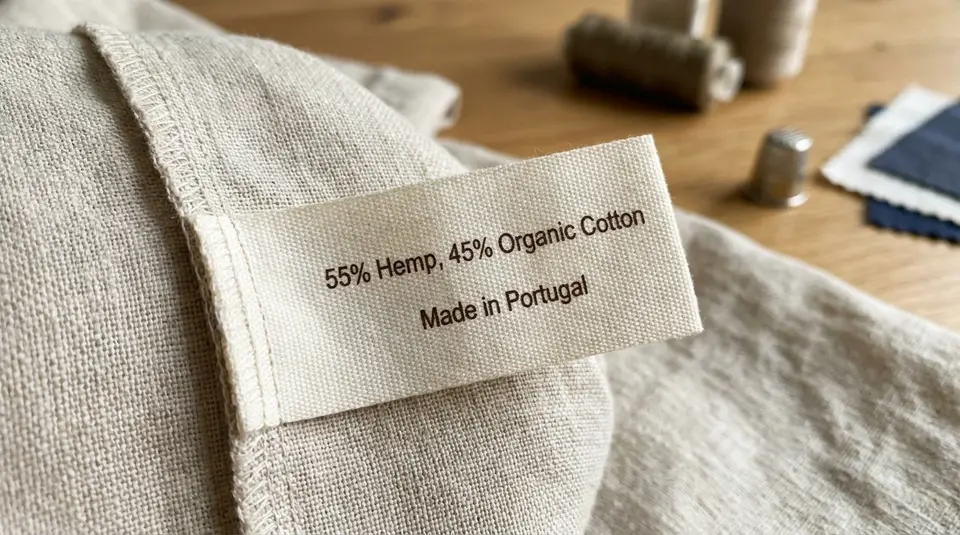
Textile labeling is the small tag that tells buyers what a product is made of and where it was made, and it’s one of the quickest ways to prevent returns, marketplace issues, and confusion at delivery. For fiber content, use generic fiber names with percentages, listed from highest to lowest by weight, and group very small amounts as other fiber unless a fiber has a clear functional role. For country of origin, state the manufacturing or processing country in clear English (for example, Made in Vietnam), keep it conspicuous and readable, and make sure the wording matches what actually happened across cutting, sewing, and finishing. Many problems start with one subtle slip: pairing a U.S. address or branding with an unqualified origin claim.
Textile and apparel labeling rules: what products are covered
Items usually included under FTC textile rules
Most everyday “textile fiber products” sold to consumers are covered by the FTC’s textile labeling rules. That includes most articles of wearing apparel (think shirts, pants, dresses, underwear, socks, and similar items), plus common household textiles like sheets, blankets, towels, curtains, table linens, rugs, and even fabric sold by the yard.
If you sell finished goods or fabric on Etsy, these rules can still apply. It does not matter if you’re a small maker, a vintage seller, or a production partner setup. If the item is a covered textile product and it’s ready for sale to the public, you’re expected to label it correctly and describe it accurately online.
For a practical, seller-friendly overview of what’s generally included, the FTC’s guide Threading Your Way Through the Labeling Requirements Under the Textile and Wool Acts is a solid starting point.
Common exclusions and non-textile products
Some items are excluded, or only become “covered” if you make a fiber claim. Examples that often surprise sellers include certain accessories and components. The key idea is this: if you choose to state fiber content for an otherwise-excluded item, you usually trigger the full disclosure rules (generic fiber names, percentages, etc.).
There are also many products that may contain fabric but are treated as non-textile products for these labeling rules, such as many bags, toys, pet items, or decorative goods. When you’re unsure, it helps to check the official coverage list in 16 CFR § 303.45.
Wool products vs textile fiber products rules
Wool has its own lane. If a product contains wool, or is represented as containing wool (including recycled wool), it may fall under the Wool Products Labeling Act rules, even when that same item would be excluded under the general textile rules.
A practical example: certain headwear or footwear is generally outside the Textile Act, but wool hats or wool slippers can be covered under the wool rules. If you use “wool,” “cashmere,” “merino,” or similar claims in an Etsy listing, make sure you’re following the wool-specific requirements, not just the general textile fiber rules.
Fiber content labels: required disclosures and accepted fiber names
Listing fibers by percentage by weight
A compliant fiber content label tells a shopper what fibers are in the product and how much of each fiber is present by percentage of weight. List the generic fiber names and their percentages in descending order (largest percentage first). If the item is truly a single fiber, “100%” is fine, and “All” is also acceptable in many cases (for example, “All Cotton”).
As a general rule, you can name only fibers that make up 5% or more of the total fiber weight. Fibers under 5% are usually grouped as “Other fiber” or “Other fibers,” unless a specific exception applies. This is one reason why “95% cotton, 5% spandex” is commonly shown, but “97% cotton, 3% spandex” is often labeled as “97% cotton, 3% other fiber.”
If you make any fiber claim anywhere a hangtag, packaging, or an Etsy listing, it needs to match what’s actually in the item. The FTC’s plain-English guide, Threading Your Way Through the Labeling Requirements Under the Textile and Wool Acts, is one of the clearest references for how these disclosures work.
Generic fiber names vs trademarked names
The FTC expects generic fiber names (like cotton, polyester, nylon, rayon, spandex). Brand or trademark names can appear, but they don’t replace the generic name. If you use a trademarked fiber name on a label or in marketing, it should appear right next to the generic name so the meaning is not confusing, for example “Lycra® spandex,” not just “Lycra®.”
Blends, linings, and multi-component products
Blends are labeled as one list, adding up to 100% (for example, 60% cotton, 40% polyester). For garments with clearly different sections, a sectional disclosure is often the cleanest approach, such as “Body: 100% cotton” and “Sleeves: 60% cotton, 40% polyester.”
Linings, interlinings, padding, and elastic areas can create surprises. If those components change the warmth, function, or customer expectations, disclosing them by section is usually the safest path. And because Etsy expects you to accurately represent materials in your listings, make sure the fiber breakdown on your physical label aligns with what you publish in your item description and attributes, per Etsy’s guidance on accurately representing listings in the Seller Handbook.
Fiber content tolerance rules and common exceptions sellers face
The 3% tolerance and when it applies
Fiber percentages are not expected to be perfect down to the decimal. Under the FTC Textile Rules, a multi-fiber product generally will not be considered misbranded if the actual fiber percentages do not deviate from the label by more than 3% of the total fiber weight (excluding permissible ornamentation).
That tolerance is there to cover small, unintentional variation in manufacturing. It is not permission to “round up” a blend to sound better. If you know a fabric is 37% cotton, labeling it 40% cotton is risky even if it might land inside the tolerance range in some lots. If the deviation is over 3%, the product is considered misbranded unless you can show it was unavoidable despite due care.
Also important: the tolerance does not let you label something “100%” when another fiber was intentionally added (for example, 97% silk and 3% polyester is not “100% silk”).
Ornamentation, trimming, and minor components
Sellers run into trouble with decoration, trims, and elastic. The rules treat certain “trimmings” as exempt in limited situations, and they allow disclosures like “exclusive of decoration” or “exclusive of elastic” when the trim or elastic meets specific conditions.
Practically, this is how you keep a label honest when the main fabric is one blend, but an applique, embroidery panel, or elastic section is different. When in doubt, sectional labeling (for example, “Shell” and “Lining”) is often clearer for buyers and easier to keep consistent across your Etsy photos and description.
Remnants, irregulars, and reclaimed materials
If you sell fabric remnants or products made from remnants, the rules give you a narrow option to label certain goods as “remnants of undetermined fiber content” or “made of remnants of undetermined fiber content,” but only when the fiber content truly is unknown or not practically determinable. If you make any fiber claim, you lose that shortcut and need a full disclosure.
Similarly, products made from scraps, rags, odd lots, secondhand materials, or waste with undetermined fiber content may use “unknown/undetermined fiber” wording, but you cannot also market them with specific fiber claims unless you can support them.
Country of origin labels: compliant wording for textiles and apparel
“Made in” and “Product of” statements
For textiles and apparel, the country of origin statement should name the country where the product was processed or manufactured, in clear English (for example, “Made in India” or “Made in Mexico”). The exact phrasing can vary, but it needs to be unambiguous and not create a false impression when your brand name, studio location, or U.S. address appears elsewhere on the item.
On Etsy, keep your country of origin story consistent across the physical label, your listing details, and any packaging copy. Etsy’s Seller Policy also expects sellers to accurately represent details like country of origin and provenance in listings and photos, which matters if you use origin claims as a selling point. Etsy Seller Policy
Split origin claims for fabric vs assembly
A lot of maker businesses do real work in the U.S. (cutting, sewing, printing) but source fabric, yarn, or components from abroad. In those cases, unqualified “Made in USA” wording can be misleading. Instead, use a qualified origin statement that tells the truth about both where the work happened and where the key textile inputs came from.
Common compliant patterns include statements like “Sewn in USA of imported fabric,” “Knitted in USA of imported yarn,” or “Imported cloth, finished in USA.” These “process + country” labels are especially helpful for Etsy shoppers because they answer the two questions buyers actually have: where it was made and how it was made.
The FTC’s textile origin rule includes several examples of acceptable split-origin wording in 16 CFR § 303.33.
When “Made in USA” claims are allowed
“Made in USA” is a high bar. For textiles, it generally fits best when the product is completely made in the United States using materials also made in the United States. If any meaningful fabric, yarn, or filling is imported, a qualified statement is usually the safer, clearer choice.
Label placement and attachment so it’s conspicuous and readable
Sewn-in labels, hangtags, and packaging labels
Your required labeling needs to be securely attached and easy for a shopper to find and read. “Securely attached” does not always mean permanent, but it does mean it should stay with the item through normal handling, sale, and delivery.
Sewn-in labels are the simplest for most apparel because they stay put and are easy for buyers to check later. Hangtags can work, but only if they are durable enough and the required info is still conspicuous. The FTC also allows a hangtag to call out a highlight fiber (like “Merino wool”) as long as the full fiber content is disclosed elsewhere, and the hangtag makes it clear it’s not the complete fiber statement, as described in the FTC’s Threading Your Way Through the Labeling Requirements Under the Textile and Wool Acts.
Placement by product type (neck, waist, side seam)
Placement is not just preference. For garments with a neck, the country of origin disclosure must be on the inside center of the neck (or very close to another label there). For items without a neck (skirts, pants, home textiles), the required info must still be on a label that’s conspicuous and readily accessible, such as inside a waistband or near an opening edge.
Avoid “hidden” spots that a buyer would not reasonably check, like inside a pocket, deep in a pant leg, or in a closed-end seam.
Visibility rules for boxed or bagged items
If you sell textiles in packaging, you may have packaging label duties too. Some packaged items need the required information on both the product and the package, unless the package is transparent and the consumer can read the label without opening it. The detailed packaging rules and special cases (like certain hosiery) are laid out in 16 CFR § 303.15.
For Etsy orders, treat your product photos and description as part of “visibility.” If a buyer can’t easily find origin and fiber details on the item, they will rely on your listing copy, so make sure it matches the physical label exactly.
Advertising and online listings: matching fiber and origin disclosures
Fiber claims in ads, catalogs, and product descriptions
If you mention a fiber anywhere a product description, a photo overlay, a hangtag shown in images, or your Etsy listing title, treat it like a labeling claim. The safest approach is simple: say the same fiber story everywhere.
On Etsy, that usually means your “Materials” and description should match your real-world label and your supplier spec. If your garment is 92% cotton and 8% spandex, don’t market it as “cotton” in one place and “cotton blend” in another. And avoid vague phrases like “luxury fabric” when you could state the actual fibers.
Etsy’s rules also expect you to accurately represent item details like materials and components in listings and photos, so inconsistencies can become a trust issue even before they become a compliance issue. See Etsy’s Seller Policy.
Country of origin claims in marketing copy
Country of origin claims work the same way: one clear statement, repeated consistently. If you sew in the U.S. using imported fabric, don’t use an unqualified “Made in USA” in your Etsy listing header or shop banner. Use a qualified statement that fits the truth, such as “Sewn in USA of imported fabric,” and keep that wording aligned on labels, packaging, and listing copy.
Also watch for implied origin. A U.S. address, “USA” in a logo, or “American made” styling can accidentally imply a U.S. origin claim if you do not clearly qualify it.
Avoiding misleading “eco” and “premium fiber” claims
“Eco,” “green,” and “eco-friendly” are broad claims. The FTC’s guidance is that broad, unqualified environmental benefit claims can be hard to substantiate and may mislead shoppers. If you want to use sustainability language, be specific: “made with 30% recycled polyester,” “OEKO-TEX certified fabric,” or “organic cotton (certified).” The FTC’s Green Guides summary explains why specificity matters.
The same goes for “premium” fiber claims. Saying “cashmere,” “silk,” or “bamboo” is not a vibe. It’s a fiber claim. Only use it when your fiber content disclosure supports it.
Recordkeeping and compliance: documents to keep and audits to expect
Supplier specs, test results, and purchase records
Good labeling starts with boring paperwork. For FTC textile compliance, you want a clean trail that supports every fiber and origin statement you make. At a minimum, keep:
- Supplier specifications (fiber breakdown by weight, construction details, and any finish that changes performance).
- Purchase records (invoices, packing slips, and POs that show what you bought, when, and from whom).
- Country-of-origin support (manufacturing invoices, cut-and-sew work orders, import documents, and production partner confirmations).
- Label proofs (the exact wording you used on sewn-in labels, hangtags, or packaging).
The FTC’s Textile Products Identification Act requires manufacturers to maintain proper records showing fiber content and preserve them for at least three years. The same three-year rule also applies if you substitute labels and remove someone else’s original label. In that case, you must keep records showing what the removed label said and who you received the goods from.
If you sell on Etsy, these records also protect you in day-to-day disputes. When a buyer questions “is this really linen?” you can respond confidently without guessing, and your listing stays aligned with Etsy’s expectation that item details are represented accurately in listings and photos, per the Etsy Seller Policy.
Updating labels after material or factory changes
Most labeling problems happen after a “small” change. A new fabric batch, a different elastic supplier, a new dye house, or switching sewing locations can all change fiber percentages or the correct country of origin statement.
Treat any material or factory change as a trigger to:
- re-check the supplier spec, 2) update the label text and your Etsy listing copy, and 3) save the dated documentation for your next three-year record cycle.
Related posts
Keep reading
Selling Apparel on Etsy: Care Label Requirements Explained
Etsy care label requirements: what goes on apparel tags, where to attach them, when hangtags work, plus US fiber content and origin basics for handmade shops.

Selling Cosmetics on Etsy: Ingredient List and Net Weight Labeling Basics
Selling cosmetics on Etsy: ingredient lists in INCI order, net weight formatting, and label placement checks to keep products compliant under U.S. rules.
Should You Require Signature Confirmation for Etsy Orders?
Learn when to require signature confirmation for Etsy orders to prevent package theft, protect high-value shipments, keep tracking valid, and boost buyer trust.

How to Set Up SKU Numbers for Etsy Listings (Beginner-Friendly Guide)
Etsy SKU numbers made simple: add them in Inventory and Pricing, set SKUs for variations, and pick a clear 4-8 character system to track stock fast every day.

Age Grading for Toys: What Etsy Sellers Should Understand
Age grading for toys helps Etsy sellers pick a defensible age range, flag choking hazards, and align listings with ASTM F963, CPC, and required warnings.

California Prop 65 Basics for Etsy Sellers (When Warnings Apply)
California Prop 65 for Etsy sellers: when warnings apply, which materials commonly trigger them, and where to place a clear-and-reasonable notice online.