
Essential Oils on Etsy: Safe Listing Practices (Avoiding Medical Claims)

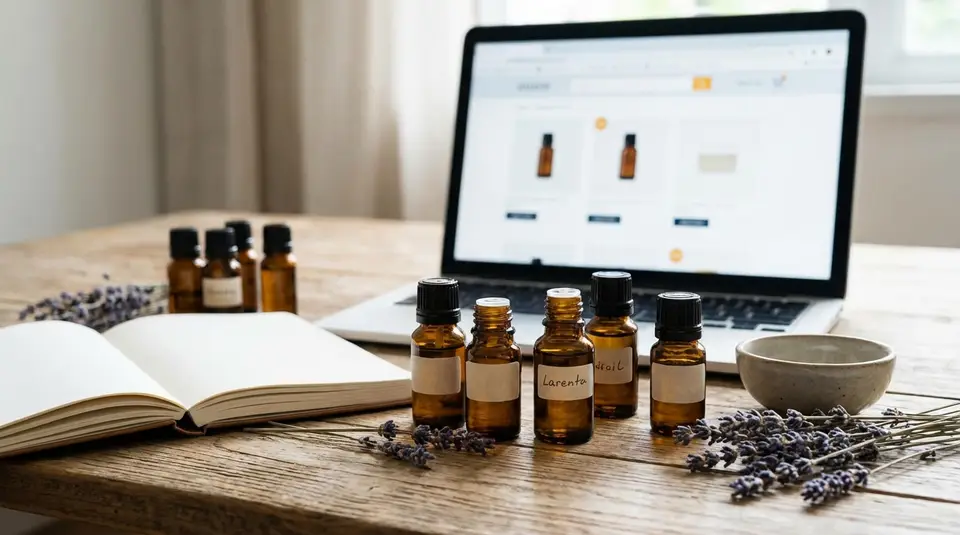
Essential Oils on Etsy can sell beautifully, but the words you choose matter as much as the bottle itself. A listing crosses the line when it states or implies the product can treat, prevent, mitigate, cure, or diagnose a disease or medical condition, which can lead to deactivation. Keep your copy grounded in clear, non-medical specifics: the botanical source, scent notes, intended use (like fragrance or cosmetic-style use), dilution guidance, and straightforward safety cautions, while avoiding condition names and symptom language such as pain, anxiety, infections, or migraines. The surprise is how often the biggest risk comes from implied claims tucked into tags, photo text, or a catchy product name.
Etsy medical claims rules for essential oil listings
Claims that turn an oil into a drug claim
On Etsy, a listing becomes a problem when it states or implies a medical claim. That includes saying the item can treat, prevent, mitigate, diagnose, or cure a disease or medical condition, or that it will affect the structure or function of the body. Etsy also looks at implied claims, not just explicit ones.
Crucially, Etsy considers the full presentation of the item, not only your description. Medical-claim wording in your title, tags, images (including text overlays), FAQs, and even customer testimonials you choose to feature can trigger enforcement. Disclaimers do not “cancel out” a prohibited claim. If the claim is there, it is still a claim.
If you want to read the rule straight from Etsy, the clearest reference is Etsy’s Medical Claims policy.
Prohibited disease and symptom wording examples
Avoid naming conditions, symptoms, or treatment outcomes. In essential oil listings, risky phrases often look like:
- “Cures migraines,” “headache relief,” “sinus infection support,” “antiviral diffuser blend.”
- “Anti-inflammatory,” “antibiotic,” “antiseptic,” “pain killer,” “decongestant.”
- “Anxiety blend,” “depression support,” “ADHD focus oil,” “insomnia remedy.”
- “Eczema relief,” “psoriasis,” “acne treatment,” “fungus,” “yeast,” “cold sore.”
Even softer language can still imply treatment when paired with a condition, like “helps with asthma” or “supports arthritis.”
Safer cosmetic and fragrance benefit phrasing
The safest approach is to describe what it is and how it’s commonly used for scent or cosmetic-style use, without promising health outcomes. Examples that usually stay on the right side of the line:
- “Fresh, herbal aroma with eucalyptus and mint notes.”
- “Great for home fragrance in a diffuser (aroma only).”
- “For DIY candles, soap making, and potpourri.”
- “For external use in properly diluted skin-care blends (see dilution guidance).”
- “Scent profile: calming, spa-like, clean, woodsy.”
When in doubt, anchor your copy in measurable facts: ingredients, scent notes, bottle size, dilution directions, and plain-language cautions.
Cosmetic vs drug classification for essential oil products
Topical blends, bath products, and perfumes
In the US, an essential oil product is usually treated like a cosmetic when it’s marketed for cleansing, beautifying, promoting attractiveness, or changing appearance, and when the “job” is mainly scent or feel. That often covers products like:
- Diluted topical blends sold as a body oil for fragrance or “skin feel”
- Bath products where the benefit is scent and enjoyment
- Perfumes and roll-ons marketed as fragrance
The moment you market that same item for a medical purpose, it can shift into drug territory because “intended use” is driven by claims and context, not the ingredient itself. The FDA’s overview of cosmetic vs drug classification is a helpful baseline for understanding this line. See Is It a Cosmetic, a Drug, or Both?.
Inhalation, ingestion, and therapeutic language risks
On Etsy, the biggest risk is not “diffuser vs topical.” It’s therapeutic language paired with any use method. “Inhale for sinus relief,” “diffuse to prevent colds,” or “take internally for immunity” reads like a medical promise. Even “aromatherapy” can become risky when it’s framed as treating sleep disorders, anxiety, depression, or pain.
Also watch implied claims in product names and bundles. A set called “Respiratory Rescue” or “Antiviral Defense” can create the same problem as an explicit claim.
When you may need extra compliance steps
If you sell essential oils as cosmetics or fragrance on Etsy, you still need solid safety basics: accurate ingredients, clear directions, and appropriate warnings. Etsy also flags certain higher-risk scenarios. For example, Etsy notes that essential oils used as massage oil or fragrance are cosmetics, but illness claims are medical claims and may trigger FDA drug regulation and removal under Etsy policy. Etsy also calls out that products containing methyl salicylate (common in wintergreen and birch oils) require child-resistant packaging under CPSC rules.
Essential oil product labeling requirements for US and EU
Required label elements sellers often miss
For essential oils and oil-based blends on Etsy, labeling is not just a “nice to have.” Etsy can ask for label copies, and missing basics can get a listing flagged or removed. Etsy’s overview in the Seller Handbook cosmetics safety guide is a good starting point.
In the US, common misses include:
- Identity statement: what the product is (example: “Essential Oil Blend” or “Body Oil (Fragrance)”).
- Net contents: the amount in the container (example: 10 mL / 0.34 fl oz).
- Business name and contact: who made/packed/distributed it, plus an address (rules allow some flexibility, but “no way to contact you” is a red flag).
- Ingredient list: especially for blends, roller oils, bath products, and anything marketed as a body product.
In the EU, the label expectations are broader and more standardized for cosmetics. Sellers often miss the batch/lot reference, durability marking (best-before or PAO “open jar”), and required precautions where applicable.
INCI naming, net contents, and responsible person
If your item is positioned as a cosmetic in the EU, ingredients should be listed using INCI names (the standardized cosmetic ingredient names). EU cosmetic labels also typically require:
- Nominal content (metric units, with limited exceptions).
- Responsible Person name and address (an EU-based contact legally responsible for compliance).
- Ingredient list, batch/lot, function (if not obvious), and durability marking.
In the US, cosmetics labeling is governed by FDA rules. The FDA’s summary of cosmetic labeling requirements lays out net contents, ingredient declarations, and business information expectations.
Claims and labeling consistency across listing and packaging
Treat your Etsy listing and your physical label as one system. If your label says “Fragrance Oil Roll-On,” but your listing says “Headache Relief,” that mismatch is exactly what triggers medical-claim scrutiny. Keep product name, intended use, ingredients, and cautions consistent across:
- Title, tags, description, and photo text
- The bottle label and any outer carton
- Inserts, usage cards, and “how to use” graphics
Safety warnings and usage directions to include on labels
Dilution guidance and external use only language
If you sell essential oils or blends on Etsy, your label should help buyers use the product safely without turning into medical advice. For topical items, include a simple dilution statement and a plain “external use” warning.
Good, label-friendly wording often looks like:
- “For external use only. Do not use undiluted on skin.”
- “Dilute before topical use. Suggested dilution for adults: 1 to 3% in a carrier oil. Patch test first.”
- “Avoid contact with eyes and mucous membranes. Do not apply to broken or irritated skin.”
If you want a defensible way to talk about dilution ranges, the Tisserand Institute dilution guidance is widely referenced in aromatherapy safety education.
Child, pregnancy, and pet cautions
Because essential oils are concentrated, a short safety block is worth the space:
- “Keep out of reach of children.”
- “If pregnant/nursing, have a medical condition, or take medication, consult a qualified professional before use.”
- “Do not use on infants/young children unless specifically directed by a qualified professional.”
Avoid giving pet dosing or “safe for cats/dogs” assurances. A safer approach is: “Use with caution around pets. Do not allow pets to ingest. Do not apply to pets.”
Phototoxicity and allergen disclosure basics
If your blend contains cold-pressed citrus oils (often expressed bergamot, lime, lemon, bitter orange, some grapefruit), add a phototoxicity-style caution:
- “May increase sun sensitivity. Avoid UV exposure on applied areas for 12 to 24 hours.”
For EU-facing cosmetic products, remember fragrance allergens: certain components (like limonene and linalool) must be listed when they exceed specific thresholds, including 0.001% in leave-on and 0.01% in rinse-off products, as set out in the EU cosmetics rules on ingredient labeling and allergens in Regulation (EC) No 1223/2009.
Essential oils specific standards that affect claims and safety
IFRA guidance for fragrance use levels
If you sell essential oils as “fragrance” in body products (perfume roll-ons, body oils, lotions, soaps), one of the most practical safety frameworks to understand is the IFRA Standards. IFRA sets maximum use levels for many fragrance materials based on how a product is used, using product categories (leave-on vs rinse-off vs non-skin-contact, and more).
Two points matter for Etsy sellers:
- Limits are based on the finished product, not just the fragrance ingredient. If an IFRA limit says 0.5%, that usually means 0.5% of the total formula in the bottle.
- You typically don’t calculate this from scratch. You ask your supplier for an IFRA Certificate of Conformity (common with fragrance oils, and sometimes available for essential oil blends), then formulate within the category limit.
IFRA’s official library is the right place to understand what the Standards are and how amendments work: IFRA Standards (51st Amendment documentation).
Common sensitizers and allergen labeling triggers
Many essential oils naturally contain constituents that can become skin sensitizers or common fragrance allergens, especially in leave-on products. Examples you’ll see often include limonene, linalool, citral, eugenol, cinnamal, and geraniol.
In the EU, fragrance allergen labeling is threshold-based. That means a blend can be “natural” and still require allergen declarations when those constituents are present over the trigger level. This is one reason supplier documentation and batch-to-batch consistency matter.
Ingredient restrictions and banned substances to avoid
For EU cosmetic sales, the legal backstop is Regulation (EC) No 1223/2009 and its annexes. Some substances are prohibited (Annex II). Others are restricted with concentration limits and specific warnings (Annex III). Because essential oils are complex mixtures, you sometimes need a supplier breakdown to know whether a restricted constituent is present.
When you are unsure, use an authoritative database rather than guess. The ECHA list of cosmetics prohibited substances is a practical way to check Annex II entries and updates.
Etsy listing wording and images that stay policy-aligned
Titles and tags that describe scent and use without medical claims
On Etsy, your title and tags are not “just SEO.” They are part of the claim Etsy evaluates. If a tag says “migraine relief” or “antiviral,” it can trigger the same medical-claims problem as a sentence in your description. Etsy’s Medical Claims policy applies to the whole listing.
Safer title and tag patterns focus on what it is and how it’s used for scent or cosmetics-style use:
- Botanical + format: “Lavender Essential Oil,” “Cedarwood Oil,” “Essential Oil Blend”
- Scent profile: “herbal,” “citrus,” “fresh,” “woody,” “spa scent,” “clean aroma”
- Use case (non-medical): “diffuser oil,” “candle making,” “soap making,” “perfume oil,” “room fragrance”
- Audience or gifting: “self care gift,” “housewarming gift” (without health promises)
If you want “calming,” keep it about the vibe of the scent, not an outcome: “calming lavender aroma” is usually safer than “calms anxiety.”
Description templates for ingredients, benefits, and cautions
A simple structure keeps you compliant and builds trust:
What it is: “A handcrafted essential oil blend for fragrance use.”
Scent notes: “Top: citrus. Middle: lavender. Base: cedar.”
Ingredients: “INCI/common names + carrier oil (if any).”
How to use: “Add X drops to a diffuser” or “Dilute before topical use.”
Safety: “External use only. Patch test. Avoid eyes. Keep from children.”
Avoid inserting conditions anywhere in the “benefits” area. Keep benefits sensory: “uplifting scent,” “fresh, clean aroma,” “spa-like.”
Product photos that support compliance and transparency
Photos can accidentally make medical claims, especially with text overlays. Keep images focused on:
- The bottle label (clear, readable, matches the listing)
- Size shots (bottle next to a coin or ruler)
- Ingredient and packaging photos (carrier oil, dropper/roller, box)
- Simple lifestyle shots that suggest “home fragrance” or “vanity/perfume,” not treatment
Skip graphics like “pain relief,” “sleep cure,” “immunity boost,” or body diagrams. If you include an instruction card in photos, keep it to directions and cautions, not therapeutic promises.
Related posts
Keep reading

How Much Money Can You Make Selling on Etsy?
Discover realistic Etsy income ranges, profit margins, fees, and proven tips to boost sales so you can grow your handmade or digital product shop confidently.

How to Break Even Faster on Etsy
Learn how to break even faster on Etsy with smart pricing, fee-cutting tactics, bestseller research, SEO-powered listings, and affordable Etsy Ads strategies.

Why Sell on Etsy? Key Benefits Explained
Discover why selling on Etsy boosts your handmade brand visibility, low startup costs, built-in traffic, loyal buyers, and flexible, low-risk income.

What Products Can You Sell on Etsy?
Discover exactly what you can sell on Etsy—from handmade crafts and digital downloads to vintage treasures and craft supplies—and start growing a joyful shop today.

How to Use Etsy “Materials” and “Occasion” Fields Strategically
Etsy Materials and Occasion fields can boost visibility when chosen for buyer filters; match category, avoid guesswork, and align tags with real intent.
Selling Cosmetics on Etsy: Ingredient List and Net Weight Labeling Basics
Selling cosmetics on Etsy: ingredient lists in INCI order, net weight formatting, and label placement checks to keep products compliant under U.S. rules.