
Etsy Password and Login Best Practices for Sellers (Simple Checklist)

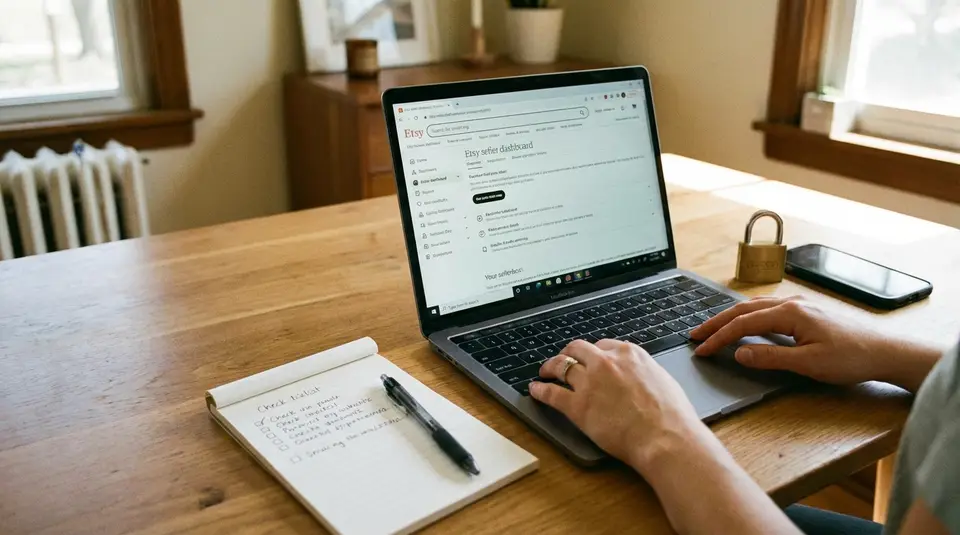
An Etsy password is your first line of defense against someone getting into your shop, changing listings, or diverting payouts, so it’s worth treating it like a business asset. The safest setup is a long, unique passphrase you do not reuse anywhere else, ideally generated and stored in a password manager so you are not tempted to pick something guessable. Then turn on two-factor authentication, save your backup codes somewhere separate from your phone, and keep the email account tied to Etsy locked down with its own strong sign-in and 2FA. The surprising slip-up is tightening Etsy security while leaving recovery routes, especially email and reset links, wide open.
Password rules that keep your Etsy seller account safe
Password length and passphrase tips
A “strong password” for an Etsy seller account should be long first, then unique. Etsy recommends at least 8 characters, but in practice, aim for a passphrase that’s much longer so it’s harder to guess and harder to crack. A simple way to do that is to combine 4 to 6 random words and add a small twist you can remember (one number, one symbol, or a deliberate misspelling).
Avoid anything attackers can predict from your shop or socials, like your shop name, your niche, pet names, birthdays, or keyboard patterns (qwerty-style). Also avoid “clever” substitutions that are common (P@ssw0rd) since attackers try those first.
If you want Etsy’s official checklist for secure passwords and shop security, Etsy covers it in Shop Security 101.
Unique passwords for Etsy and email
For sellers, your email password matters almost more than your Etsy password. If someone gets into your inbox, they can request password resets and intercept security codes. Keep Etsy and your email on separate, unique passwords. Do not reuse either password on any other site, even “small” tools like shipping apps or design platforms.
If you ever receive an unexpected Etsy security code email, treat it as a warning sign and change both passwords right away.
Using a password manager without headaches
A password manager removes the daily friction that causes weak passwords. Start simple:
- Save your Etsy login and your email login first.
- Let the manager generate long passwords for you.
- Turn on autofill only on devices you control, protected by a lock screen.
The key habit: never copy passwords into notes apps or Google Docs “temporarily”. That’s how good security setups quietly fall apart.
Two-factor authentication on Etsy: setting it up and keeping it on
Choosing an authenticator app or SMS
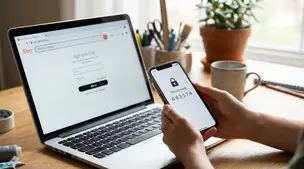
Two-factor authentication (2FA) adds a second step after your Etsy password. That way, a stolen password alone is not enough to sign in.
For most sellers, an authenticator app is the best default. It generates time-based codes on your phone and is generally less vulnerable than SMS to interception or number-based attacks. Etsy also supports verification by SMS or a phone call in many regions, but availability can vary by country.
To enable 2FA, go to your Etsy account settings, open the Security area, and turn on 2FA. Etsy will also give you backup codes during setup. Etsy’s current step-by-step flow is outlined in How to Make Your Account More Secure.
Staying signed in safely on trusted devices
Staying signed in can be convenient, but only do it on devices you fully control. Use it on your personal computer and phone, not on shared workstations, friend’s laptops, print shop computers, or public tablets.
A simple safety checklist:
- Lock every device with a PIN, password, Face ID, or fingerprint.
- Use device encryption and keep OS updates on.
- Separate “business” and “personal” browser profiles if you share a computer with family.
- Log out after any session on a device you would not feel comfortable leaving unattended.
Common 2FA setup issues and quick fixes
If SMS codes do not arrive, first confirm your phone number is correct and you have signal, then try again after a short wait. If it’s still unreliable, switch to an authenticator app when you are logged in.
If authenticator codes keep failing, the most common cause is incorrect time on the phone. Turn on automatic time and time zone, then retry.
If you lose your phone, use your backup codes to get back in, then set up 2FA again right away so your shop stays protected.
Changing your Etsy password without losing access
When to change your password right away
Change your Etsy password immediately if any of these are true:
- You got an Etsy login alert you do not recognize (new device, location, or browser).
- You received a security code you did not request.
- You clicked a suspicious link or entered your login on a page that felt “off”.
- Your email account was compromised, even if your Etsy account seems fine.
- You reused your Etsy password on another site and that site had a breach.
- A contractor, VA, or former employee ever had access to a device or browser where you stayed signed in.
Before you change it, make sure you can still access the email address on your Etsy account, since password resets and security notices go there. If you use two-factor authentication, keep your phone or authenticator app nearby, and confirm you have your backup codes saved.
You can update your password from your Etsy account settings (Security section). Etsy’s official guidance is in the Help Center article on changing your password: How to Reset Your Password.
Updating passwords across devices and browsers
After you change your password, expect to be signed out in a few places. Plan 5 to 10 minutes to cleanly re-authenticate anywhere you run your shop:
- Etsy Seller app on your phone or tablet
- Desktop browsers (Chrome, Safari, Firefox, Edge), including separate profiles
- Any password manager entries and autofill prompts
- Saved passwords in the browser (remove the old one to avoid wrong autofill)
If you use a password manager, update the saved Etsy entry once, then let it sync. If you do not, you may end up with mismatched logins across devices and lock yourself into a loop of failed sign-ins.
Etsy password reset and account recovery when emails do not arrive
Checking spam, filters, and blocked senders
If your Etsy password reset email does not show up, assume it got filtered before you assume Etsy “didn’t send it.” Start with the basics: check Spam/Junk, then search your inbox for “Etsy” and “noreply@etsy.com.” In Gmail, also check the Promotions and Social tabs.
Next, look for rules that quietly move or delete messages. Common culprits are aggressive spam filters, “clean inbox” apps, and old filters you forgot you set up. If you use a custom domain email (like you@yourshop.com), ask whoever manages your email hosting to check the quarantine or blocked sender list. Etsy also lists the sending addresses you may need to safelist in its Help Center guide on not receiving emails from Etsy.
Confirming your email address and login method
Many “no email arrived” resets trace back to one simple issue: the reset request was sent to a different email than the one on the account. Etsy accounts can also be connected to “Continue with Google,” Apple, or Facebook. If you usually sign in that way, double-check whether you’re trying to reset the password for the same login method and email that’s actually linked to your Etsy account.
If you have multiple Etsy accounts, make sure you’re not mixing up addresses between a personal buyer account and your seller login.
What to do if you cannot access your email
If you cannot access the email address on your Etsy account, your priority is regaining email access first. Work through your email provider’s recovery steps (recovery phone, backup email, identity prompts). Once you’re back in, reset your Etsy password and review security settings.
If you cannot recover the email at all, you’ll need Etsy Support help to verify you’re the account owner. Be ready to confirm details tied to the account, and do not create new logins in a panic that could complicate recovery.
Viewing sign-in history and spotting unusual logins on Etsy
Reviewing recent sessions and locations
Etsy makes it easy to sanity-check who’s been in your account. In your account settings, open the Security tab and look for Review your sign-in history. Etsy shows details for up to your 10 most recent sign-ins, including a timestamp and a rough location.
A few quick ways to read this without overreacting:
- Location is approximate. Mobile networks, VPNs, and some internet providers can make a login look like it came from a nearby city or even a different area.
- New device alerts can be legitimate. Clearing cookies, switching browsers, or using a browser update can make Etsy treat a familiar computer as “new.”
- Look for patterns, not one-offs. Repeated sign-ins you can’t explain, especially at odd hours, are more concerning than a single unfamiliar location.
If you want the exact navigation Etsy uses, the Help Center walks through it in How to Make Your Account More Secure.
Logging out everywhere and re-securing access
If you spot a sign-in you don’t recognize, act fast and keep it simple:
- End the session from your sign-in history if you see an active session you don’t trust.
- Change your Etsy password to something long and unique.
- Secure your email account next (new password and 2FA), since it’s the reset path.
- Confirm 2FA is enabled on Etsy and regenerate backup codes if needed.
After that, review key account details that affect money and fulfillment, like saved addresses and payment-related settings, and keep an eye out for new sign-in alerts for the next few days.
Backup codes and one-time security codes for emergencies
Saving and storing backup codes securely
Backup codes are your safety net when two-factor authentication is turned on but you cannot access your phone. Think of them like spare keys to your Etsy seller account. They’re meant for rare situations, but when you need them, you usually need them fast.
Best practices that actually work in real life:
- Save them in two secure places, not one. For example, your password manager plus a printed copy in a locked drawer or safe.
- Keep them separate from your phone. If your phone is lost, stolen, or wiped, anything stored only on the phone disappears with it.
- Do not screenshot and leave it in your camera roll. Photos often sync to cloud albums and shared devices.
- Never share a backup code. Etsy Support should not ask for them, and anyone requesting them is a red flag.
If you ever think your codes were exposed (or you handed one to the wrong person), treat it like a password leak. Change your Etsy password, review sign-in history, and refresh your 2FA setup so you get a new set of backup codes.
When to use backup codes vs email codes
Use backup codes when you’re at the 2FA prompt and you cannot receive the usual code (new phone number, broken phone, authenticator app removed, traveling with no service). Backup codes are designed for that exact moment.
Email security codes are different. Etsy may email you a one-time security code during sign-in checks or when you change sensitive account details. If you receive one you didn’t request, assume someone is trying to get in and reset your password right away, using Etsy’s guidance on security code emails.
Avoiding phishing and scam messages targeting Etsy sellers
Red flags in login links and verification requests
Phishing is the fastest way sellers lose Etsy accounts, because it bypasses good passwords. The message looks urgent, “official,” and pushes you to sign in or “verify” something right now.
Watch for these common red flags:
- The message tries to move you off Etsy fast (email, text, WhatsApp, Telegram, a “support portal,” or a weird payment link).
- It demands sensitive info like your password, a 2FA code, a backup code, or bank details. Etsy says it will never ask for your password or other sensitive information over Messages, and real staff messages show a From Etsy badge.
- The link goes to a lookalike domain (anything other than an Etsy-owned domain like etsy.com or help.etsy.com), or Etsy warns you you’re about to leave the site.
- It uses fear and urgency: “Your shop will be suspended today,” “final notice,” “verify in 10 minutes.”
- It includes QR codes to “confirm” an order or “restore” your account.
If you’re unsure, don’t click. Open a new tab, type etsy.com yourself, and check Shop Manager alerts there.
Protecting your email account tied to Etsy
Your email is the recovery key to your Etsy login. If your email gets compromised, an attacker can request password resets and intercept one-time codes.
Protect it like you protect your shop:
- Use a long, unique email password (never reused with Etsy).
- Turn on 2FA for your email account.
- Review recovery options (backup email, phone number) and remove anything outdated.
- Be cautious with inbox rules and “auto-forwarding,” since scammers sometimes add forwarding to steal reset emails quietly.
What to do if you clicked or shared a code
If you clicked a suspicious link, entered your Etsy password, or shared a one-time code, assume the attacker will try to sign in immediately.
Do this in order:
- Change your Etsy password right away.
- Change your email password right after that (and enable email 2FA if it’s not already on).
- Turn on or re-check Etsy 2FA, then refresh and securely store new backup codes.
- Review sign-in history and end any sessions you don’t recognize.
- If you received a security code email you didn’t request, Etsy’s guidance is to reset your password. That’s a strong signal someone is attempting access. I Received a Security Code Email from Etsy explains what it means and what to do next.
Finally, report scammy Etsy Messages as spam inside Etsy, and forward phishing emails to Etsy using the reporting address listed in Etsy’s scam and suspicious message guidance.
Related posts
Keep reading
Etsy Featured Listings: How to Curate Your Shop Homepage
Etsy featured listings help spotlight bestsellers on your Shop Home; pick 4 (or sections), order them for cohesive photos, and rotate a queued set for seasons.
Selling Jewelry on Etsy: Metal Disclosure and Allergy Considerations
Selling jewelry on Etsy: List exact metals, flag nickel sensitivity, and support hypoallergenic wording with supplier docs or testing to reduce buyer issues.
How to Use Etsy “Materials” and “Occasion” Fields Strategically
Etsy Materials and Occasion fields can boost visibility when chosen for buyer filters; match category, avoid guesswork, and align tags with real intent.

Etsy SEO Tips to Rank Higher in Search
Happy Etsy SEO tips for sellers: master keywords, titles, tags, photos, reviews, free shipping, and conversions to rank higher in Etsy search and boost sales.

How to Outsource Parts of Your Etsy Business (When It’s Worth It)
Outsource parts of your Etsy business with clear cost math, task checklists, and Etsy-compliant production partners so quality and margins stay intact.
Etsy Account Security: How to Enable Two-Factor Authentication
Etsy two-factor authentication setup: steps for web and Seller app, choosing SMS, phone, or authenticator app, plus backup codes and common sign-in fixes.