
Pinterest for Etsy Sellers: A Weekly Posting Plan That Works

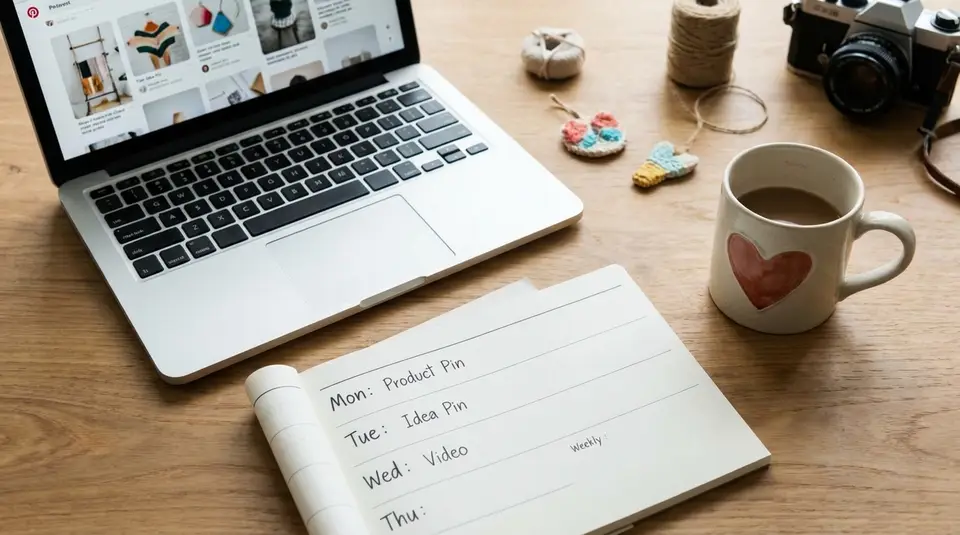
A Pinterest posting plan helps Etsy sellers turn listings into searchable Pins that keep bringing shoppers long after you hit publish. Because Pinterest behaves more like a visual search engine than a social feed, consistency and Pinterest SEO matter more than chasing daily volume. A workable week looks like this: batch 2–3 new Pin designs for your best listings, schedule 3–5 fresh Pins spaced across the week, save each Pin to the most relevant board first, and write titles and descriptions using the exact phrases buyers type into search. The sneaky mistake that derails results is pinning in one big burst or recycling near-duplicate Pins until the account starts looking spammy.
Weekly Pinterest schedule for Etsy sellers (7 day cadence)
Daily pinning rhythm that stays consistent
Aim for a steady daily cadence instead of big bursts. Pinterest tends to reward accounts that show up consistently, and Etsy also recommends pinning at least once a day and spacing pins out rather than posting them all at once in Shop marketing guidance like How to Market Your Business on Pinterest.
A simple daily rhythm that works for most Etsy shops:
- Post a few fresh Pins (new images for your listings, collections, or gift guides).
- Space them across the day using a scheduler, or by pinning morning and evening.
- Mix in a small amount of relevant non-competitive inspiration (style ideas, materials, seasonal mood) so your boards look human, not like a catalog.
Weekly time blocks for creating, scheduling, and reviewing
Keep Pinterest manageable by batching. Here is a 7 day cadence many Etsy sellers can sustain:
- Monday (60–90 min): Choose 5–10 priority listings (best sellers, high margin, seasonal, or new). Create 2–3 Pin designs per listing using different photos from the Etsy listing.
- Tuesday (30–45 min): Write Pin titles and descriptions in one sitting. Use buyer language, not internal product names.
- Wednesday (30 min): Schedule Pins for the next 7 days. Save each Pin to the most relevant board first.
- Friday (15–20 min): Quick check-in. If something is getting clicks, make 1–2 new creatives for that same listing.
- Sunday (15–20 min): Light refresh. Pin 3–5 curated, on-brand ideas that match your customers’ taste.
How many pins per day and per week
Start with what you can do consistently, then scale.
A realistic range for Etsy sellers:
- Minimum: 1 fresh Pin per day (7 per week).
- Solid baseline: 3 to 5 fresh Pins per day (21 to 35 per week).
- Higher output (only if you have the content): 5 to 10 fresh Pins per day (35 to 70 per week).
If you push volume, keep quality high and avoid repeating the same listing image to multiple boards back-to-back. That pattern can look spammy, and it usually underperforms anyway.
Batching pins fast: templates, workflows, and repurposing listings
Canva templates that match Etsy branding
Batching is easiest when your Pins look like they belong to the same shop. Build 3–5 reusable Canva templates that match your Etsy branding. Keep the structure consistent, then swap photos and text.
A practical starter set:
- Product close-up template: clean background, big product photo, short keyword title.
- Lifestyle template: in-use photo, one benefit line, small logo or shop name.
- Giftable template: “Gift for…” angle, simple icons, seasonal color accents.
- Collection template: 3–5 products in a grid, “Shop the set” style headline.
Try to pull colors and typography from your Etsy shop banner, listing aesthetic, and packaging inserts so the jump from Pin to listing feels seamless. Etsy’s own product photo guidance is also a helpful checklist when you are choosing images that will work well on Pinterest, especially for styled and lifestyle shots in your listings like in How to Style Product Photos.
Batch writing titles and descriptions in one session
Write your Pinterest copy like you are naming an Etsy listing for search, but make it readable. In one session, draft 10–30 Pin titles and descriptions.
A quick workflow:
- Pick 3 core keywords per product (one broad, one specific, one use-case).
- Write titles that lead with the keyword, then add the differentiator (material, style, recipient).
- Write descriptions that answer “what it is, who it is for, why it is special” in 1–2 short sentences.
Save your best-performing phrases in a running “keyword bank” so the next batch takes minutes.
Repinning strategy without looking repetitive
Repinning works best when you repurpose listings with real variation, not copy-paste.
Rotate these variables:
- Image angle: front, detail, scale, packaging, in-use.
- Hook: benefit, problem solved, occasion, recipient, material.
- Destination: different high-intent listings or a relevant Etsy section page (not always the same single bestseller).
As a rule, space out repeats of the same listing by several days, and avoid pinning the same creative to multiple boards back-to-back. This keeps your account looking curated, and it gives Pinterest more ways to understand what you sell.
Pin types that drive Etsy clicks: product, lifestyle, and idea pins
Standard pins for listings and collections
For most Etsy sellers, standard Pins do the heavy lifting. They are simple, fast to produce, and they send clear buying intent when the image, keywords, and destination match.
Use standard Pins for:
- Single listings: One product, one keyword theme, one clear click path to that Etsy listing.
- Collections: A “shop the set” or “best sellers” graphic that points to an Etsy shop section, so shoppers can browse without bouncing.
If you want Pinterest to display more shopping context (like pricing or availability) when it can, make sure your Pins lead to real product pages and your listings are complete and up to date. Pinterest supports Product Pins as a rich Pin type, and it can pull product details from supported platforms. Rich Pins are worth understanding if you are serious about Pinterest as a traffic source.
Lifestyle and in-use photos that sell the story
Lifestyle Pins usually earn saves and shares because they answer the buyer’s real question: “Will this look good in my life?”
A few practical angles that work well for Etsy products:
- Scale and context: Show the item being worn, held, or used on a table or wall.
- Problem solved: “Organize your entryway,” “gift-ready in 2 days,” “upgrade your packaging.”
- Recipient-driven: “Gift for new homeowners,” “teacher appreciation,” “bridal party.”
Keep the overlay text short. Let the photo do most of the selling, then use the description to clarify details like size, materials, and customization.
Idea pins for awareness and follow growth
Idea Pins (the story-style, multi-page Pins) are best for awareness. People swipe, save, and follow without necessarily leaving Pinterest right away. That makes them a strong match for Etsy sellers who want to build demand before the click.
Good Idea Pin concepts for Etsy:
- A quick “how it’s made” or “behind the scenes” sequence.
- A mini style guide: 5 ways to wear it, display it, or gift it.
- A comparison: finishes, sizes, personalization options, or colorways.
Treat Idea Pins as the top of your funnel. Use them to earn attention, then support them with standard Pins that drive the actual Etsy clicks.
Pinterest keywords for Etsy: boards, titles, descriptions, and hashtags
Finding keywords with Pinterest search and Trends
Pinterest keyword research is mostly practical, not fancy. Start in the Pinterest search bar. Type the beginning of your product phrase and watch the autocomplete suggestions. Those are real searches, written in the language shoppers use.
Then sanity-check seasonality with Pinterest Trends. If you sell Etsy products that spike at specific times (Mother’s Day gifts, fall wedding guest accessories, teacher gifts), Trends helps you see when interest typically rises so you can pin earlier and more consistently.
For Etsy sellers, the best Pinterest keywords usually map to:
- Product + material (sterling silver, linen, walnut wood)
- Product + style (minimalist, boho, cottagecore)
- Product + recipient or occasion (gift for new mom, bridesmaid gift, housewarming)
Board naming and descriptions that rank
Board SEO is underrated. Your board name should be plain and specific, like “Personalized Leather Keychains” or “Minimalist Gold Jewelry.” Avoid cute names that only make sense to you.
In the board description, write 2–3 short sentences. Use your main keyword once, then add a few close variations. Think Etsy category language, but in normal sentences. This helps Pinterest understand the board, and it reassures buyers they are in the right place.
Keyword placement that reads naturally
Use keywords where Pinterest and people both look:
- Pin title: lead with the main keyword, then add the differentiator (size, personalization, use-case).
- Pin description: one clear sentence that describes the item, then one sentence for who it’s for or how it’s used. Add 1–2 extra keyword phrases naturally.
- On-image text: keep it short and readable. One phrase is enough.
Hashtags are optional. If you use them, treat them as a light add-on, not your strategy. A couple of very specific hashtags at the end of the description is plenty, and only when they truly match the Pin.
Linking Pinterest to Etsy listings: best destinations and tracking
Listing link vs shop home vs section pages
Your destination link should match the intent of the Pin. If the Pin is about one specific item, link to the exact Etsy listing. If the Pin is more of a roundup, link to a shop section. Save your shop homepage for brand-level Pins (like “New arrivals” or “Best sellers”).
A simple rule:
- Single-product Pin: link to the listing. This is usually the highest-converting path.
- Category or gift-guide Pin: link to a relevant Etsy section page so shoppers can browse similar options.
- Brand story or “about the maker” Pin: link to your shop home only when the Pin is meant to introduce your shop, not sell one item.
This also helps your data stay clean. When every Pin goes to the shop home, it is harder to tell which products actually pulled the click.
UTM parameters for Pinterest traffic attribution
UTM parameters are small tags you add to the end of a link so you can identify Pinterest traffic in analytics tools and spreadsheets. They are especially helpful when you want to compare one Pin creative vs another, or one weekly campaign vs the next.
Two tracking layers most Etsy sellers use:
- Etsy Shop Stats: A quick, built-in view of traffic from Pinterest under social media sources.
- Google Analytics (optional): Etsy supports connecting a Google Analytics measurement ID in Shop Manager, which gives you another way to review traffic patterns and behavior from external channels like Pinterest, with some limitations because Etsy controls the storefront experience. Etsy explains the setup in How to Use Google Analytics for Your Etsy Shop.
UTM parameters for Pinterest traffic attribution
UTM naming that stays consistent week to week
Pick a naming system once, then reuse it every week. Consistency matters more than perfection.
A clean, readable format:
utm_source=pinterestutm_medium=organic_socialutm_campaign=2026_01_winter_refresh(date + theme)utm_content=pin01_lifestyle(creative identifier)
When you batch Pins, keep the campaign the same for that week, and vary only utm_content. That way, you can quickly see which Pin design and angle earned the clicks.
Seasonal pin planning for Etsy: timing, holidays, and product launches
How far ahead to pin seasonal content
On Pinterest, seasonal content needs a runway. If you pin it when the holiday is already here, you are usually late. A dependable planning window for most Etsy niches is 6 to 10 weeks ahead, with bigger retail moments (especially Q4 gifting) closer to 8 to 12 weeks ahead.
To keep it simple, build a habit of “next season” pinning:
- In late January and February, start testing spring gifting and Mother’s Day angles.
- In summer, start pinning fall styles and early holiday gift ideas.
- In early fall, ramp up your holiday and gifting content.
If you want a ready-made list of what Etsy is emphasizing by month, Etsy publishes a merchandising guide that can help you align launches and photos with upcoming themes in Etsy Success: Your Holiday Merchandising Guide.
Refreshing past seasonal winners with new creatives
Do not re-upload the exact same Pin creative and call it a refresh. Instead, keep the same strong Etsy destination (the listing or section that converted) and refresh what Pinterest “sees”:
Swap in a new lead photo, change the text overlay, and rewrite the title for a slightly different keyword angle (for example, “Mother’s Day gift” vs “gift for mom from daughter”). If your seasonal bestseller is aging, also update the Etsy listing photos and first image so the Pin click lands on something that feels current.
Evergreen pins that fill the gaps
Evergreen Pins keep your Etsy traffic steady when there is no big holiday wave. Focus on buyer-intent topics that are true year-round: “how to choose the right size,” “gift ideas for her,” “minimalist home decor,” “custom name necklace,” or “care instructions.”
A good weekly mix is seasonal content plus evergreen bestsellers. That way, you are building long-term search visibility while still showing up for holiday spikes.
Pinterest analytics for Etsy sellers: what to track and what to change
Metrics that matter: outbound clicks, CTR, saves
For Etsy sellers, Pinterest analytics can feel noisy until you focus on a few buyer-focused metrics.
Start with:
- Outbound clicks: the clearest signal that your Pins are sending shoppers to Etsy.
- CTR (click-through rate): how often people click after seeing the Pin. Low CTR usually means the image or promise is not strong enough, or the keyword intent is off.
- Saves: a leading indicator. Saves do not pay the bills, but they often predict future reach, especially for seasonal and giftable products.
Treat impressions as context, not a goal. High impressions with weak clicks usually means you are ranking for the wrong searches.
Monthly pin audit for winners and underperformers
Once a month, pull up your top Pins and sort by outbound clicks. Pick 5 winners and 5 underperformers.
For winners, look for patterns you can repeat:
- Which photo style won (close-up vs lifestyle)?
- Which keyword angle won (recipient, occasion, material)?
- Which destination converted best (listing vs section)?
For underperformers, do not delete everything. Often the product is fine, but the creative, title, or board is mismatched.
If you want a refresher on where to find the numbers and what Pinterest measures, the official overview in Pinterest Analytics is worth a quick read.
Optimization moves: new creatives, new keywords, new boards
When a Pin is not performing, change one variable at a time so you learn what moved the needle.
Three reliable fixes:
- New creatives: new lead image, new text overlay, new layout. Keep the destination the same.
- New keywords: rewrite the title and description around a clearer buyer intent phrase, closer to how you would name an Etsy listing.
- New boards: save the Pin to a more specific board first (then a broader one later). Relevance beats volume.
Over time, this turns Pinterest into a repeatable system: publish, measure clicks, then iterate on what already proved it can sell on Etsy.
Related posts
Keep reading

Etsy Featured Listings: How to Curate Your Shop Homepage
Etsy featured listings help spotlight bestsellers on your Shop Home; pick 4 (or sections), order them for cohesive photos, and rotate a queued set for seasons.
Selling Jewelry on Etsy: Metal Disclosure and Allergy Considerations
Selling jewelry on Etsy: List exact metals, flag nickel sensitivity, and support hypoallergenic wording with supplier docs or testing to reduce buyer issues.

How to Use Etsy “Materials” and “Occasion” Fields Strategically
Etsy Materials and Occasion fields can boost visibility when chosen for buyer filters; match category, avoid guesswork, and align tags with real intent.

Etsy SEO Tips to Rank Higher in Search
Happy Etsy SEO tips for sellers: master keywords, titles, tags, photos, reviews, free shipping, and conversions to rank higher in Etsy search and boost sales.

How to Organize Your Etsy Product Photos and Files (Folder System)
Organize Etsy product photos with a simple folder tree, SKU-based filenames, and versioning tips so listing images and download files stay tidy everywhere.

How to Write Etsy Image Alt Text for Accessibility and SEO
Etsy image alt text that names materials, size, and key views, replaces Etsy's auto descriptions, and improves accessibility plus Google image search.