
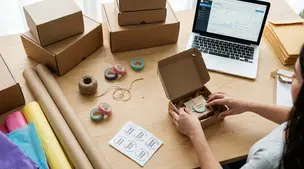
General
Best Packaging Supplies for Etsy Sellers
Discover budget-friendly, eco-friendly Etsy packaging supplies—cute mailers, custom boxes, tissue, stickers, and inserts that protect products and delight buyers.

I sell handmade lamps, night lights, and other light fixtures. Etsy has been my most reliable online channel so far, but I’ve tried adding other marketplaces and spent time and money setting them up with little or no payoff.
Some platforms were hard to get properly listed, others didn’t generate consistent sales even with promoted posts, and I’ve had issues with problem buyers and returns when selling elsewhere. I’m now testing Etsy Pattern because some in-person customers say they don’t want to buy through Etsy, and I’d like a simple online option to capture craft fair leads, out-of-town buyers, sold-out items, and custom orders.
If you’ve expanded beyond Etsy, what channels have actually worked for handmade home decor/lighting, and how do you decide when a platform isn’t worth the effort? Also, is Pattern a good long-term companion to Etsy, or should I focus on a standalone site instead?
Hi! The fastest “don’t-waste-time” way to branch out from Etsy is to pick one owned channel (your own site + email list) and one discovery channel (usually Pinterest/Instagram or Google), then run a time-boxed test with clear targets—because the biggest payoff outside Etsy usually comes from owning the customer relationship, not adding more marketplaces.
1) A simple website + email list (best long-term ROI)
If you do craft fairs, customs, or repeat styles, an email list is the lever. Even a small list of past buyers and booth visitors can outperform “starting over” on a new marketplace.
2) Pinterest (surprisingly strong for lighting/home decor)
Pinterest behaves more like a visual search engine than social media. Lamps and night lights do well because people save ideas while planning rooms.
3) Instagram (only if you enjoy it and can post consistently)
Great for brand-building and custom work because people want to trust the maker. But it’s often inconsistent for direct sales unless you’re steady with reels/stories and have a clear “order here” path.
4) Google exposure (high intent, but only worth it if your site is ready)
When someone searches “handmade walnut bedside lamp” they’re closer to buying than a casual scroller. This can work well once you have:
5) Wholesale / interior designers (high payoff if your pricing and production support it)
This is often the most underrated “beyond Etsy” channel for lighting. A couple of repeat boutique or designer accounts can beat multiple marketplaces.
Pattern can be a good “companion site” if your main goal is:
Where Pattern usually falls short long-term:
My practical recommendation: use Pattern as a “now” solution only if it helps you capture sales immediately from in-person customers and custom inquiries. If it does, keep it—just treat it like a simple brochure/storefront while you build your email list. If you’re aiming for a true second pillar business, start planning a standalone site when you have 1–2 hours/week to invest consistently.
Give each channel a 30–60 day test with a small, defined workload and a clear pass/fail.
Here are two quick ways to do it:
A) Set “effort caps”
Example: “I will spend 2 hours/week and $X/month for 6 weeks. Not more.”
B) Track only 3 numbers
If a channel creates lots of headaches (returns, damage disputes, odd expectations) and it doesn’t deliver either profit or repeatable demand, cut it fast and double down on the channel that’s building your own audience.
Outside Etsy, buyers can be more anxious because they don’t have Etsy’s familiar framework. On your site pages, be extra clear about:
If you tell me what price range your lamps are (roughly) and whether you do a lot of custom work, I can suggest the best “one discovery channel + one owned channel” combo and a simple 6-week test plan that won’t eat your time.
Related questions
I sell small handmade items on Etsy and shipping costs about $5. How do other sellers price $7 items with free shipping and still profit?
I sell small handmade items on Etsy and see similar listings with free shipping. How do sellers cover $5 postage and fees, and how should I price low-cost items?
I sell handmade items on Etsy and want to offer free shipping on small perler bead designs, but domestic shipping is about $5. How do others profit after fees?
I run an Etsy shop and share new items on Instagram, but I’m unsure if hashtags still help in 2026 or if I should focus on other visibility tactics.
I sell themed items on Etsy and reuse the same design across products. How often should I add new listings, and list variations separately or as options?
I sell original digital downloads on Etsy and found a similar listing that seems copied with minor changes. What’s the lowest-risk next step—contact them or file an IP report?
Related posts
Discover budget-friendly, eco-friendly Etsy packaging supplies—cute mailers, custom boxes, tissue, stickers, and inserts that protect products and delight buyers.
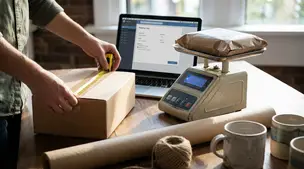
Learn how dimensional weight affects Etsy shipping costs, packaging, and pricing so you protect profits, reduce fees, and delight customers on every order.
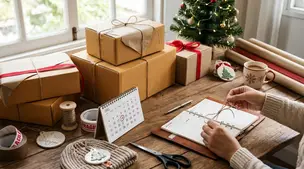
Holiday shipping deadlines guide for Etsy sellers with USPS, UPS, FedEx cutoff dates, processing times, packaging tips, and planning strategies to avoid late deliveries.

1099-K for Etsy sellers: when you’ll get one, what counts as gross sales, and how to reconcile totals with shop records at tax time, and state limits.
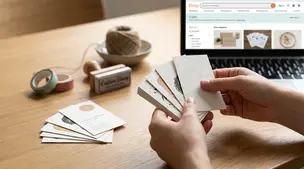
Business cards for Etsy sellers: smart basics like shop link or QR code, logo, and socials, with cardstock tips and pitfalls like clutter and pushy review asks.
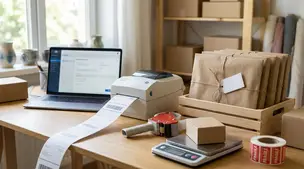
Streamline batch shipping on Etsy with a simple system that saves time, cuts postage costs, automates labels, and boosts order accuracy for happy repeat buyers.