
How to Estimate Delivery Times Without Overpromising


Delivery time estimation is the practice of predicting when an order will reach a customer, using realistic time ranges so expectations stay intact. Start by splitting the timeline into order processing, carrier pickup, and transit time, then convert everything to business days with clear cutoff times and time zones. Use historical performance and carrier service rules to publish a window like “arrives in 3 to 5 business days,” and add a small buffer for weekends, holidays, remote addresses, and typical shipping delays. Most overpromises happen when transit time gets treated as the whole story, so handling and pickup details are where accuracy quietly improves.
Delivery promise vs ETA vs delivery window: what to use when
Key terms to define early (ETA, lead time, WISMO)
Delivery promise is the commitment you make to the buyer. It is what they will remember if something goes wrong. This is best expressed as a range, not a single date, because real shipping has variability.
ETA (estimated time of arrival) is a prediction, not a promise. Treat ETA as an internal planning number (or a customer-facing hint) that can change as tracking updates and carrier scans come in.
Delivery window is the safest customer-facing format. It is a start and end date (or “3 to 5 business days”) that bakes in normal variation like weekends, weather, and carrier capacity.
Lead time is the total time from order placed to delivery. In most operations, it is processing time (pick/pack or made-to-order production) plus carrier transit time. On Etsy, this maps closely to your listing’s processing time and the carrier transit time used for estimated delivery date ranges. If you sell made-to-order items, lead time is where most underestimates happen.
WISMO stands for “Where Is My Order?” and refers to customer contacts asking for updates. Overpromising is one of the fastest ways to increase WISMO volume.
Where customers see the promise (PDP, checkout, email)
Buyers form expectations in three places:
- PDP (product detail page or Etsy listing page): Shoppers look at processing time, shipping method, and any displayed delivery range. If your processing time is too tight, you may win the click but lose trust later.
- Checkout: This is the moment the delivery window becomes a true promise. Any mismatch between what the listing implied and what checkout shows can create anxiety.
- Confirmation and shipping emails: Post-purchase messages reinforce the promise. On Etsy, buyers also see “ship by” timing and delivery estimates on their receipt and order details, which are driven by the processing times you set in your shop settings and listings (Etsy processing times and ship-by dates).
Conservative delivery windows that reduce missed promises
Using ranges instead of single dates
Single-date promises look confident, but they are fragile. A delivery window gives you room for normal variation without sounding vague. In practice, ranges also reduce support tickets because customers can self-serve the answer until the end of the window.
A good delivery window is built from two parts:
- Processing window: how long it takes you to make, pick, pack, and hand off the order.
- Transit window: how long the carrier usually takes for that service level and destination.
Then publish the combined result as a range, like “Arrives in 5 to 8 business days,” not “Arrives Friday.” If you want a single date internally, keep it as an ETA and communicate the window externally.
Cutoff times, weekends, and holidays handled correctly
Most missed promises come from small calendar mistakes, not huge delays.
Set a clear daily order cutoff time (for example, 2:00 pm local warehouse time). Orders after cutoff should count as starting the next business day. Do the same for label creation vs actual carrier acceptance, because a package that misses pickup effectively starts transit a day later.
Convert all timing to business days unless you truly ship and deliver on weekends. Then explicitly account for:
- Weekends: both your processing schedule and carrier movement.
- Holidays: both in your location and the buyer’s location when possible.
- Time zones: especially if you sell nationwide and accept late-night orders.
Buffer rules for peak season and new lanes
Buffers should be intentional, not random. Use small, consistent rules so your team can follow them and customers get predictable communication.
Two practical buffer triggers:
- Peak season: add a modest buffer to processing (and sometimes transit) during known high-volume periods when pickups, sorting, and customer demand are less stable.
- New lanes or services: if you have limited history shipping from your origin to a specific region, widen the transit range until you’ve seen enough deliveries to tighten it.
The goal is not to be slow. It’s to be accurate often enough that your “arrives by” expectations survive real-world variability.
Data inputs that make delivery estimates more accurate
Inventory accuracy and fulfillment readiness signals
Accurate delivery estimates start with knowing what you can actually ship today.
If inventory is even slightly off, your “processing time” becomes guesswork. Track simple readiness signals that let you quote a tighter delivery window without risking an overpromise: in-stock vs backordered, components available, personalization approved, and whether the item is already packed and labeled.
On Etsy, this matters because your processing time and order processing schedule feed directly into the estimated delivery date buyers see. If you routinely need extra days for made-to-order work, build that into your processing profiles instead of trying to “catch up” later. Etsy’s own guidance on how estimated delivery dates are calculated is worth aligning to if you sell there: How to Set Up Estimated Delivery Dates.
Carrier time in transit and service level data
Transit time is not one number. It changes by carrier, service level, origin, destination, and sometimes by pickup day.
To estimate reliably, you need lane-level transit history by shipping method (for example, ground vs air) and a clear rule for when transit starts (carrier acceptance scan, not label creation). If you offer multiple shipping options, keep separate performance baselines for each one, or your “expedited” promise will be dragged down by standard shipments.
Address validation and routing constraints
Bad addresses and hard-to-serve destinations quietly add days.
Validate addresses before you promise a tight window. Flag common risk patterns: missing apartment numbers, PO boxes that restrict carriers, rural routes, and international formats that fail label printing. If you know certain regions or countries consistently take longer, widen the delivery window for those lanes instead of applying one global estimate that only works for your easiest shipments.
Quantifying uncertainty so you can avoid overpromising
Confidence-based windows and percentile targets
“Uncertainty” is not a vibe. It is measurable variation in how long orders actually take to deliver. When you quantify it, you can pick delivery windows that match the customer experience you want to provide.
A practical approach is to set a confidence target for your delivery promise. For example: “We want at least 90% of orders to arrive by the last day of the window.” That target then drives how wide your window needs to be for each shipping method and destination lane.
This is also how you keep promises consistent across products. A made-to-order Etsy listing with personalization, for example, should have a different confidence-based window than a ready-to-ship item, even if they use the same carrier service.
Using P50, P75, and P90 delivery dates
Percentiles make this simple:
- P50 delivery date: 50% of orders arrive by this date. This is your “typical” outcome, but it will disappoint a lot of customers if you present it as a promise.
- P75 delivery date: 75% arrive by this date. This can be a solid internal ETA or the early part of a customer-facing range.
- P90 delivery date: 90% arrive by this date. This is a strong candidate for the end of a delivery window if your goal is to avoid overpromising.
Example: If your historical data shows a lane has P50 = 4 business days, P75 = 5, and P90 = 7, then a reasonable delivery window might be 4 to 7 business days, with your internal “expected” date around 5.
The key habit is consistency: use the same percentile rule across your shop. That way, when you tighten a processing time or add a new shipping option on Etsy, you are improving the promise with data, not optimism.
Customer-facing messaging that sets expectations without scaring buyers
Shipping options and tradeoffs explained clearly
Customers do not need a logistics lecture. They need a clear choice and a clear outcome.
When you offer shipping options, explain the tradeoff in plain language: cost vs speed vs reliability. On Etsy, this can be as simple as offering a standard method plus a paid shipping upgrade for buyers who want it faster. Keep the wording consistent across your listing, shop policies, and post-purchase messages so the delivery window never feels like it changed mid-order.
A strong pattern is: name the option, show the delivery window, then add one short qualifier. Example: “Standard shipping (arrives in 5 to 8 business days). Best value.” Etsy supports adding shipping upgrades in your shipping profiles and listings, which makes this easy to present at checkout. How to set up shipping information for listings
Delay language that preserves trust
Delay messages work best when they are early, specific, and calm.
Keep your structure simple:
- what happened (one sentence), 2) what you are doing, 3) the updated expectation (new ship date or refreshed delivery window), and 4) the buyer’s options if timing no longer works.
Avoid blamey language (“USPS lost it”) and false certainty (“it will be there tomorrow”). If the package is moving, say you are monitoring tracking. If it is not, say you are investigating and when you will follow up. Etsy’s guidance also emphasizes reaching out as soon as you expect a delay and updating ship-by timing when needed. How Etsy’s supporting sellers during postal service delays
Policies that matter: returns, lost packages, reships
Your policies do not just protect you. They reduce anxiety, which reduces WISMO.
Three policy areas matter most:
- Returns and exchanges: Make the conditions obvious before purchase (time window, item condition, who pays return shipping). On Etsy, you are required to set a return policy for physical listings, even if you do not accept returns. Refunds, returns, and exchanges for sellers
- Lost packages: Define when you consider a package “lost,” what proof you use (tracking, carrier investigation), and whether you reship or refund.
- Reships and replacements: State how you handle damaged items and address errors, and what you need from the buyer (photos, confirmation of address) to move fast.
Clear policies plus clear delivery windows let you be firm without sounding defensive.
Post-purchase tracking and proactive updates that reduce WISMO
Real-time status notifications and delivery date refreshes
WISMO drops fast when customers can see forward progress without asking.
Start by making tracking easy to find in every post-purchase touchpoint: order confirmation, shipping confirmation, and the order status page. Use plain status language that matches what carriers actually scan, like “Label created,” “Accepted,” “In transit,” “Out for delivery,” and “Delivered.” Customers understand these phases, and they map cleanly to what is happening operationally.
The other lever is a delivery date refresh. Your original delivery window is based on probabilities. Once the carrier has real scans, you can tighten the estimate. That does not mean promising a new single date every day. It means updating the window when you have meaningful new signal, like a late pickup, a missed sort, or a route exception.
On Etsy, buyers can view tracking and order status in their account, but your messages still matter because they provide context, reassurance, and next steps when something looks “stuck.”
When to message customers about a delay
Proactive messages should be triggered by specific events, not a gut feeling. Good triggers include:
- Missed ship-by or pickup: If you have not handed the package to the carrier when you said you would, message immediately with the new ship date.
- No movement after acceptance: If tracking shows “Accepted” but no scan progress for several business days, set expectations and tell the buyer when you will recheck and what you will do next.
- Exception scans: Address issues, weather disruptions, or “delivery attempted” scans deserve a same-day note, because the buyer may need to act.
- End-of-window risk: If the order is unlikely to arrive by the last day of the delivery window, message before the window ends with an updated range and options (wait, refund, replacement where appropriate).
The tone that works is simple: confirm you are watching it, share the updated expectation, and give the buyer a clear path forward.
Operational changes that shorten delivery times for real
Regional fulfillment, zone skipping, and split shipments
The fastest way to shorten delivery times is to reduce distance and handoffs.
Regional fulfillment means storing inventory closer to where buyers live, so more orders ship shorter zones. Even one small forward stock location can cut days off ground transit for a large part of the US.
Zone skipping is when you move packages in bulk to a nearer destination region, then inject them into a local carrier network. It can improve both speed and consistency, but it adds operational complexity, so it is usually best once you have predictable volume.
Split shipments can help when one item is ready and another is not. For Etsy sellers, this is most relevant if you sell bundles or multi-item orders with different production times. If you split, be clear with buyers about what ships when, and make sure the extra shipping cost does not erase the benefit.
3PLs and carrier mix to improve reliability
If you are consistently missing promises, changing the process often beats rewriting the copy.
A good 3PL (third-party logistics provider) can improve speed by offering later cutoffs, faster pick-pack, and access to multiple carriers. The right fit depends on your SKU count, storage needs, and seasonality. For many small and mid-size brands, the first win is not cheaper shipping. It is fewer “missed pickup” days and more consistent handling time.
A carrier mix also matters. Keep at least two viable options for common lanes so you are not trapped when one network slows down. Reliability is part of the promise, so judge carriers by delivered-on-time performance, not just rate cards.
Connecting OMS, WMS, and carrier systems to remove silos
Delivery promises get missed when systems disagree.
Your OMS (order management system) should know what you sold and what you promised. Your WMS (warehouse management system) should know what is actually available and ready. Your carrier tools should confirm when the package was accepted and how it is moving.
When these systems are connected, you can:
- prevent selling items that are not truly ready to ship,
- surface accurate ship-by dates based on workload,
- trigger automatic updates when pickup is missed or a shipment hits an exception.
Even if you run a smaller Etsy operation, the same principle applies: keep one “source of truth” for processing time and ship-by commitments, and make sure the person fulfilling orders is working from it every day.
Related posts
Keep reading

How to Pack Handmade Items for Safe Delivery
Pack handmade gifts like a pro with sturdy boxes, eco-friendly cushioning, snug wrapping, and clear labels to prevent cracks, crushes, and costly shipping damage.

How to Recover a Dead Etsy Listing
Revive dead Etsy listings with smart SEO, renewal timing, fresh photos and keywords that boost traffic, restore visibility and get your shop selling again.

How to Use FAQ Images in Etsy Listings to Reduce Questions
Etsy FAQ images that answer shipping, sizing, and customization upfront, with readable mobile-friendly design, order, and wording tips to cut repeat messages.

How to Use Etsy Sections to Improve Shop Navigation (and Sales)
Etsy shop sections help buyers browse faster with ease; set clear section names, sort listings, and highlight bestsellers to reduce clicks and lift conversions.

How to Handle Customs Fees and VAT for International Etsy Orders
Learn how Etsy sellers can calculate customs fees, charge VAT at checkout, avoid double taxation, set DDP vs DAP shipping, and keep international buyers happy.
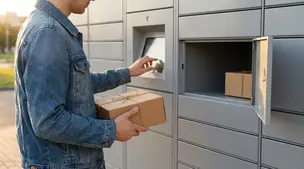
Can You Use Drop-Off / Parcel Locker Services for Etsy?
Discover how to ship Etsy orders via parcel lockers and drop-off points using USPS, UPS Access Points, Evri, InPost and more for secure, flexible delivery.