

General
Etsy Featured Listings: How to Curate Your Shop Homepage
Etsy featured listings help spotlight bestsellers on your Shop Home; pick 4 (or sections), order them for cohesive photos, and rotate a queued set for seasons.

I sell on Etsy and my shop was recently enrolled in Etsy Offsite Ads. I’m trying to figure out how much this will affect my margins so I can price my items correctly.
How frequently do Offsite Ads typically lead to sales for a shop, and what’s the best way to adjust pricing without simply increasing everything by the full ad fee percent?
Hi! Offsite Ads don’t have a “typical” sales frequency that applies to every Etsy shop—some shops see zero attributed orders for weeks, and others see a steady trickle—because it depends heavily on your niche, price point, how searchable your product is on Google, and seasonality. The good news is you don’t need to raise everything by the full Offsite Ads fee percent to protect margins; a smarter approach is to price for the expected share of orders that end up being attributed to Offsite Ads (a weighted average), and only adjust the listings that can’t absorb that variability.
A few important mechanics to price around (because they affect your real margin):
Instead of guessing, use your own ratio from recent history:
If you’re newly enrolled, give it at least a few weeks of data—early results can be noisy.
Think of Offsite Ads as an expected extra fee spread across all orders:
Expected Offsite Ads cost rate = (your Offsite Ads fee %) × (your attributed-order share)
Example: if your fee is 15% and 10% of your orders are attributed, your average added cost across all orders is about 1.5% of revenue (not 15% across the board). That’s why raising everything by the full fee is usually overkill.
What tends to work best in practice:
One more note: if your shop is under the revenue threshold, Offsite Ads are usually optional, so you can also test “on vs off” for a month and compare profit, not just sales volume. If you tell me your average item price, average shipping charge, and your rough material/labor margin, I can help you sanity-check a pricing buffer that won’t overcorrect.
Related questions
I sell digital downloads on Etsy and a buyer paid $6 for a $5 item, but the tax line is $0. What else could cause this, and can buyers add extra at checkout?
I shipped an Etsy international order via USPS, but tracking has been stuck for weeks after acceptance. What can I do, and when should I refund or replace?
My Etsy order tracking shows delivered, but the buyer says it wasn’t received. What should I do next to handle a refund, replacement, or claim?
I sell physical items on Etsy and a buyer opened a “not delivered” case, but tracking shows delivered. How do I confirm tracking and will an open case hurt my shop?
I found an Etsy shop that may be reselling mass-produced items and using car brand imagery. How do I report listings for misrepresentation or IP infringement?
I have Etsy listings with no views for months and want to update photos, titles, descriptions, and tags. Should I edit them or create new listings?
Related posts
Etsy featured listings help spotlight bestsellers on your Shop Home; pick 4 (or sections), order them for cohesive photos, and rotate a queued set for seasons.

Selling jewelry on Etsy: List exact metals, flag nickel sensitivity, and support hypoallergenic wording with supplier docs or testing to reduce buyer issues.

Etsy Materials and Occasion fields can boost visibility when chosen for buyer filters; match category, avoid guesswork, and align tags with real intent.

Happy Etsy SEO tips for sellers: master keywords, titles, tags, photos, reviews, free shipping, and conversions to rank higher in Etsy search and boost sales.
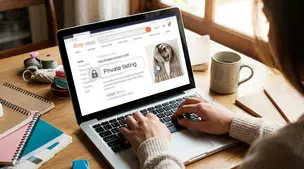
Learn how to create private Etsy custom listings step by step, reserve items for one buyer only, manage custom orders, protect pricing, and boost shop sales.

Product spec sheets for Etsy items record SKUs, materials, measurements, photos, packaging, and QC checkpoints so reorders reliably match what customers expect.