

General
How to Handle Customs Fees and VAT for International Etsy Orders
Learn how Etsy sellers can calculate customs fees, charge VAT at checkout, avoid double taxation, set DDP vs DAP shipping, and keep international buyers happy.

I sell stickers, and I’m looking into other platforms besides Etsy to reach more customers. I’m open to both marketplaces and storefront options, but I’m not sure which ones work best for sticker shops.
What are some reliable Etsy alternatives for selling stickers, and what are the main pros and cons to consider (fees, traffic, and how easy they are to set up)?
Hi! For sticker shops, the most reliable Etsy alternatives usually fall into two buckets: (1) marketplaces with built-in traffic (you “rent” the audience, pay higher selling fees, but can get sales faster) and (2) your own storefront (you “own” the customer experience, but you’ll need to bring traffic yourself). A lot of sticker sellers do best with a simple combo like Shopify (or Big Cartel) + one traffic channel (TikTok/IG) + one extra marketplace (Amazon Handmade or eBay).
Here are solid options, with the big pros/cons around fees, traffic, and setup:
Amazon Handmade
eBay
TikTok Shop (US)
Redbubble / TeePublic (print-on-demand marketplaces)
MakerPlace by Michaels / goimagine (handmade-focused marketplaces)
Shopify
Big Cartel
WooCommerce (WordPress)
Squarespace / Wix
Ko-fi Shop
If you tell me your average sticker order value (example: $6, $15, $30+) and whether you’re pre-making + shipping or POD, I can narrow it down. But as a safe starting point:
If you share (1) where you’re located (US?), (2) your top 3 sticker themes, and (3) your typical processing time, I’ll suggest the best 2–3 platform mix for your situation and what to set up first.
Related questions
I’m selling stickers in standard envelopes and Etsy calculated shipping is too high. How do I set a flat shipping rate, and what do buyers see at checkout?
I run a newer Etsy shop and I’m wondering if it’s acceptable to message a buyer a month after delivery to ask for an Etsy review without being pushy.
I run an Etsy shop and reply to customer messages late at night. Can I schedule Etsy messages to send later or draft replies to send during business hours?
I sell handmade jewelry using components from other Etsy shops and photograph the finished pieces. Do I need to credit suppliers, and are there Etsy or licensing rules?
Related posts
Learn how Etsy sellers can calculate customs fees, charge VAT at checkout, avoid double taxation, set DDP vs DAP shipping, and keep international buyers happy.

Learn how to set up Google Analytics 4 for your Etsy shop step by step to track traffic, buyer behavior, keywords, sales funnels, and marketing performance.
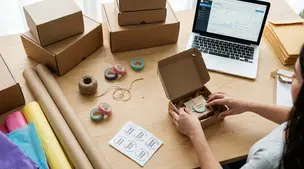
Discover budget-friendly, eco-friendly Etsy packaging supplies—cute mailers, custom boxes, tissue, stickers, and inserts that protect products and delight buyers.

Ship Etsy orders worldwide with confidence using clear customs forms, accurate HS codes, duties, taxes, and tariff info to avoid delays and surprise fees.

Streamline batch shipping on Etsy with a simple system that saves time, cuts postage costs, automates labels, and boosts order accuracy for happy repeat buyers.

Holiday shipping deadlines guide for Etsy sellers with USPS, UPS, FedEx cutoff dates, processing times, packaging tips, and planning strategies to avoid late deliveries.